Serbia’s Israel Problem
When UN Special Rapporteur Francesca Albanese visited Serbia in March, the government cast her as an interfering foreigner. Yet it was happy to back the Israeli embassy’s campaign to silence pro-Palestinian speech in Serbia.
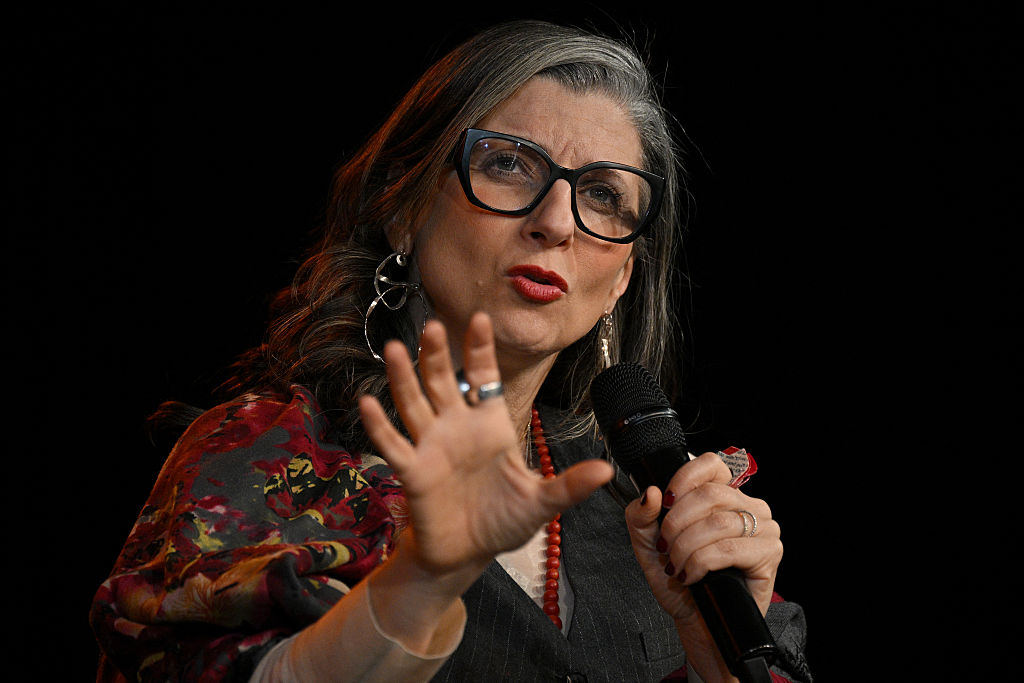
Serbia’s government is a proud Israeli ally, ramping up its weapons sales in recent years. No wonder that when Francesca Albanese visited Serbia in March, the government and the Israeli embassy tried to silence her. (Andrej Isakovic / AFP via Getty Images)
My first visit to the United States was in summer 2016. Through Darko Suvin, the legendary critic and literary historian of science fiction, I had the chance to meet another legendary thinker, Fredric Jameson. I remember the trip vividly. I traveled from New York City to New Haven, where Professor Jameson picked me up and drove me to his house somewhere in the Connecticut countryside. We spoke for hours. One of his remarks stayed with me ever since. The presidential election was coming that November, and already the possibility that Donald Trump might win hung heavily in the air. I asked Jameson how things looked to him.
“People are saying this is a new fascism,” he told me. “My answer is: not yet”.
A decade later, that cautious “not yet” echoes very differently. Trump is in his second term as president, the international order as we knew it is unraveling, and the horizon appears darker by the day. We have witnessed a genocide in Palestine, with more than seventy thousand people killed since October 7, 2023. We have seen unprecedented escalations: the US kidnapping of Nicolás Maduro on Venezuelan soil; the joint Israeli-American aggression against Iran; and even rising on-the-edge-of-war tensions over Greenland. This transformation marks the emergence of what can be described as a (global) war regime: a political condition in which coercion, necessity, and force displace democratic justification, and where the suspension of rights is no longer exceptional but structural.