The Landless Workers’ Movement, 30 Years After a Massacre
Thirty years after the Eldorado do Carajás massacre, Brazil’s landless poor still find themselves under the heel of Latin America’s most powerful and impudent rural oligarchy.
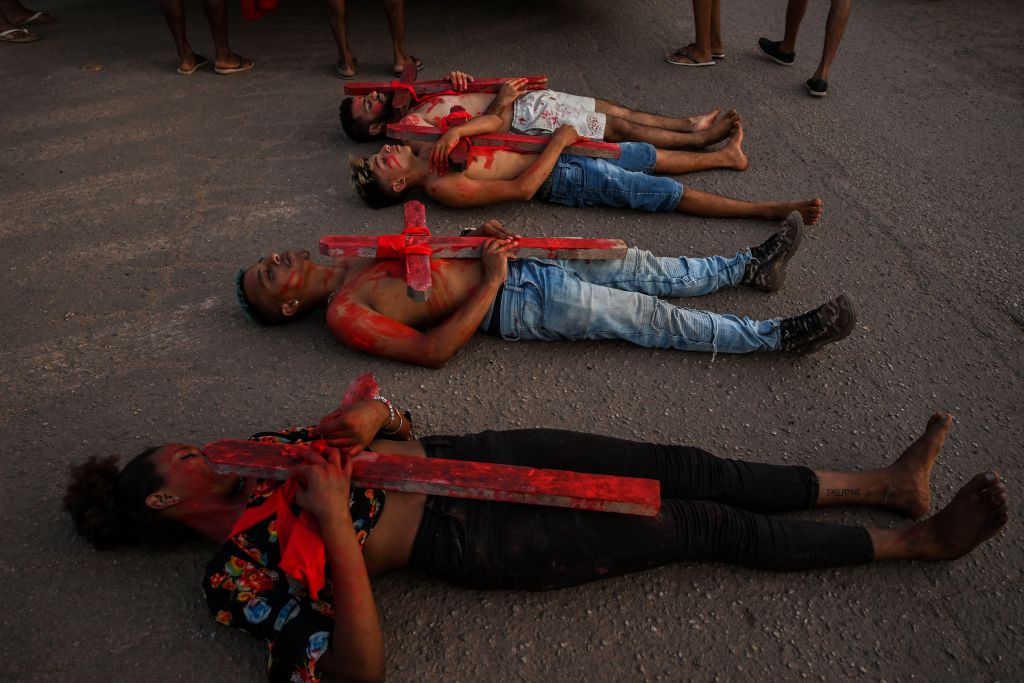
Members of the Landless Workers’ Movement (MST) protest on the PA-50 highway on the eve of the twenty-seventh anniversary of the Eldorado dos Carajás massacre on April 16, 2023. (Nelson Almeida / AFP via Getty Images)
This Friday, the landless workers of Brazil are marching two thousand strong into Salvador, a river of red crawling up the BR-324 highway. They are occupying fazendas in Madalena and in Darcinópolis, where just three years ago a hundred workers languished in modern slavery. And in Pará, three thousand landless move to occupy a stretch of highway some nine kilometers from the town of Eldorado do Carajás.
They hold up banners and wooden crosses and red flags on poles. “If we are silent,” says one sign, “the stones will scream.” They are not silent: they cry, they beat drums, they sing. Their voices are echoed in India, in Indonesia, in South Africa, where peasants and landless rural laborers likewise rally in solidarity with their Brazilian counterparts.
This phenomenal spate of political activity marks the thirtieth anniversary of the Eldorado do Carajás massacre, when Brazilian military police opened fire on a peaceful demonstration led by the Movimento dos Trabalhadores Rurais sem Terra (MST, the Landless Workers’ Movement), killing twenty-one landless activists and wounding more than sixty others. It is an atrocity in the history of the global labor struggle on par with Peterloo, Ciénaga, and Marikana — a litany attesting to the terrible power of the state against the protesting poor.