How Flint Sit-Down Strikers Built Their Confidence
We can’t revive labor without reviving workers’ confidence to take action on the job. In 1936 and into 1937, during a period of union weakness, Flint’s sit-down strikers in the auto industry figured out how to do just that.
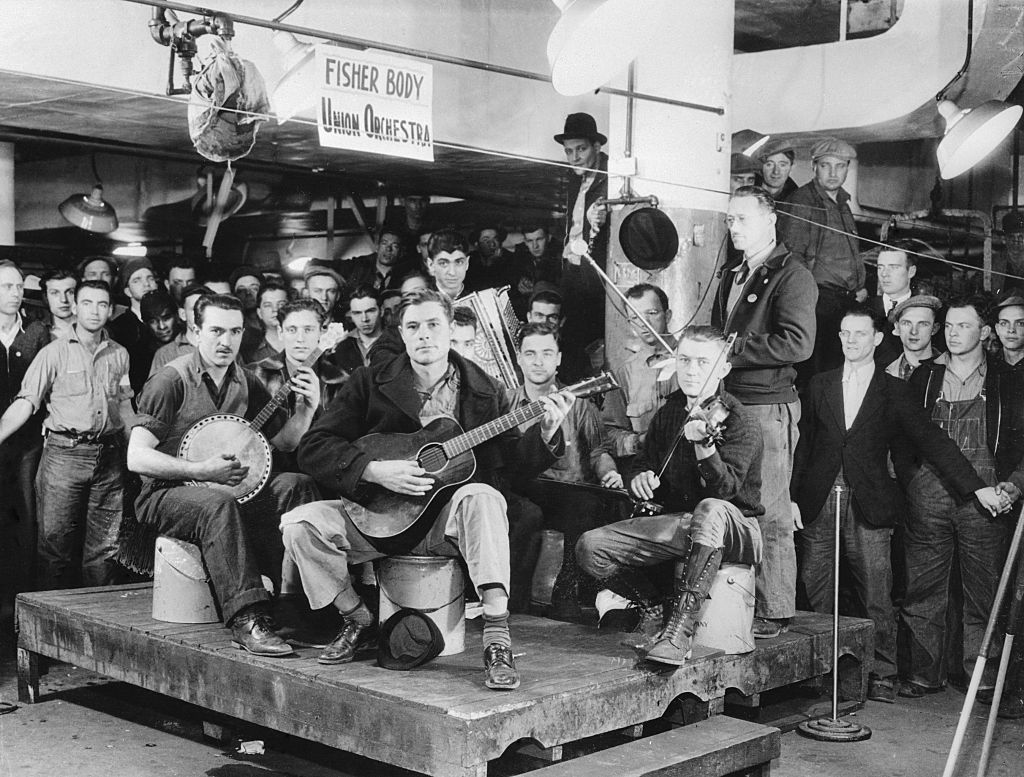
Sit-down strikers occupying one of the Fisher Body plants in Flint, Michigan. (Bettmann / Getty Images)
On February 11, 1937 — forty-four days after their occupations of the Fisher Body No. 1 and No. 2 plants began in Flint, Michigan — General Motors (GM) workers won a landmark agreement. The one-page document included commitments to union recognition and collective bargaining over wages, seniority, work-life balance, and other working conditions, and a prohibition on discrimination or retaliation against union members. In a supplementary letter sent to Michigan Governor Frank Murphy, GM also agreed, for a six-month period, not to support or bargain with company unions or any organization of GM workers other than the United Auto Workers (UAW).
Before the sit-downs, there were many reasons to believe conditions were not ripe for a breakthrough against the world’s most powerful corporation. In June 1935, only 4,481 GM workers — less than 3 percent of GM’s hourly workforce — were dues-paying UAW members. In Flint, only 757 out of over 40,000 workers were members, and many GM workers regarded this small minority as “paid agents of General Motors and would have nothing to do with them.”
General Motors routinely flouted the law to undermine union drives — illegally firing and blacklisting union activists, employing spies to surveil union activity, and calling in police to bust up union meetings and strikes. The congressional La Follette Civil Liberties Committee exposed that GM spent millions on its vast anti-union espionage network and was the largest industrial client of the Pinkerton National Detective Agency. Flint was a paradigmatic company town: city ordinances forbade the distribution of union leaflets and the use of sound equipment for union demonstrations.