Remembering the First Clash Between UAW and GM
Today’s strike at GM recalls the Flint sit-down strikes of 1936-7: a profit-hungry corporation, a fed-up workforce, and workers' willingness to take militant action to defend their rights.
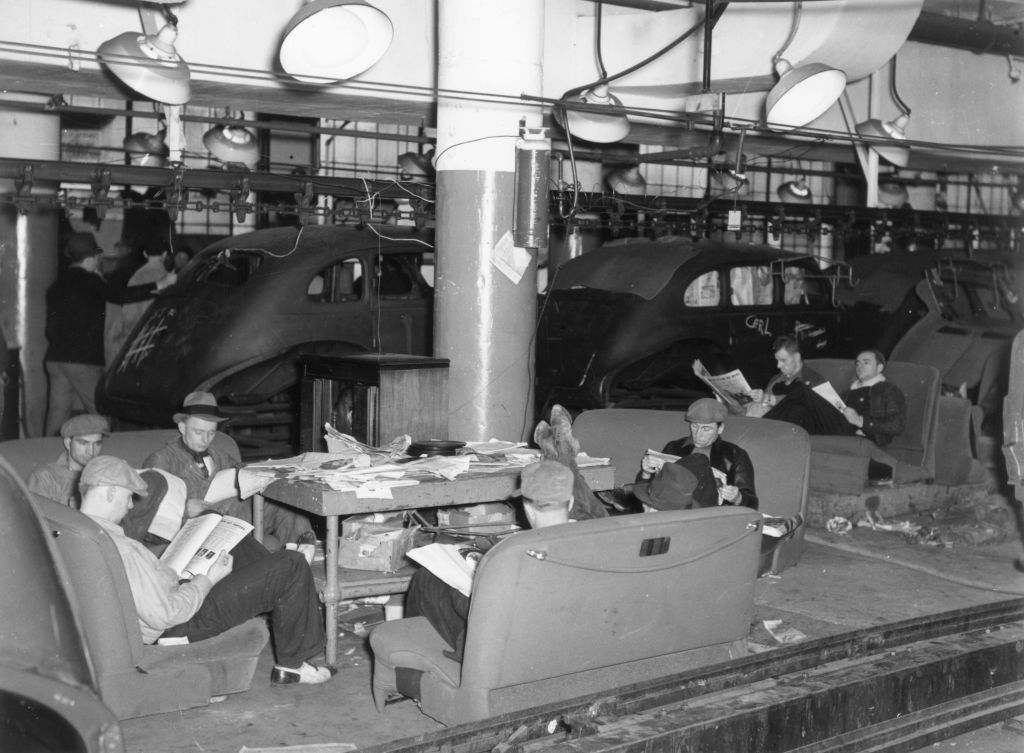
Members of the nascent United Auto Workers Union (UAW) during a sit-down strike in the General Motors Fisher Body Plant in Flint, Michigan. (Sheldon Dick / Getty Images)
The United Automobile Workers’ (UAW) strike against General Motors (GM) is in its third week. Jacobin and Labor Notes have been covering the strike: here Dianne Feeley gives a broad overview of the impetus for the strike, here Chris Brooks covers developments so far, here Jane Slaughter explains why some workers are prepared to vote no on a contract that doesn’t meet their demands, and here Slaughter and Brooks explain why it’s more complicated than one side (the union) versus the other (the company).
The UAW and GM have a long history of conflict, and on this occasion it’s worth reviewing the origins of that relationship. Though the circumstances differ in key respects, Labor Notes’ interviews with fed-up workers demonstrate that the original spirit of militancy among the rank-and-file remains to this day.
Back in 1936, workers at GM’s plants in Flint, Michigan had it rough. They were subject to constant speedups in production, taking a toll on their bodies and spirits. Jeremy Brecher’s Strike! contains the observations of a GM worker’s wife, who said of her husband, “You should see him come home at night, him and the rest of the men in the buses, so tired like they was dead.” Another said her husband, who was thirty, looked like he was fifty, so grueling was his job.