Chapo’s Comic Book Is a Riveting Political Horror Show

The Chapo Trap House comic book, Year Zero #1, is a collection of horror stories with a clear political message: liberal capitalism is not failing accidentally — it is functioning as designed, producing horror as a by-product of stability.
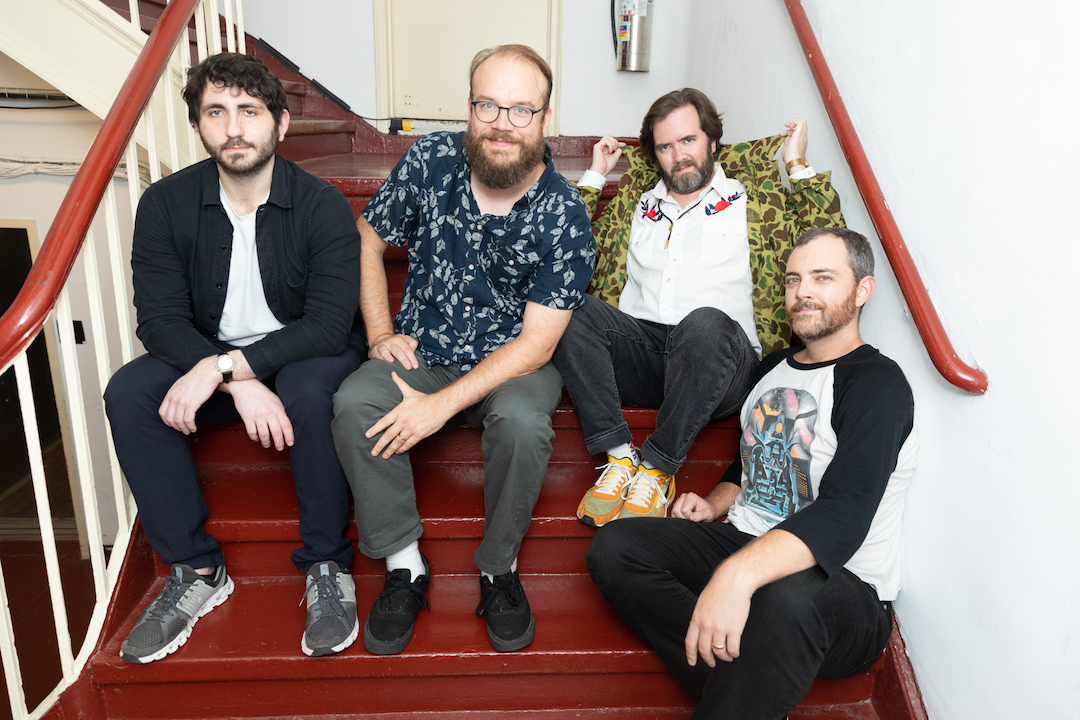
The Chapo Trap House team has produced its first comic book anthology — a set of political fables for a system that increasingly resembles dystopian fiction. (Laura June Kirsch / Chapo Trap House)

This March marks the ten-year anniversary of Chapo Trap House, the wildly irreverent and surprisingly influential podcast. Hosted by Will Menaker, Felix Beiderman, Matt Christman, and Amber A’Lee Frost, and produced by Chris Wade, the podcast embodied a new political tendency that Frost dubbed the “dirtbag left.” The Chapos have now published Year Zero #1: A Chapo Trap House Anthology, the first of a projected three-part comic book series.

The character of the dirtbag left has been more aesthetic than programmatic: anti-moralist, hostile to professional-class liberalism, contemptuous of institutional respectability, and comfortable treating American capitalism not as a policy failure but as a civilizational pathology . . . yet always believing that a better world is possible. While reveling in vulgar and scatological humor, the Chapos remain deeply committed to meaningful mutual aid, supporting social democratic campaigns such as those of Bernie Sanders and Jeremy Corbyn, and platforming critically engaged journalists.

Year Zero #1 crystallizes a moment in the development of the American left when irony, vulgarity, and genre excess fused into a coherent political sensibility. The anthology’s five comics do not merely reference that discourse; they translate it into narrative form, using horror, science fiction, folklore, and historical vignette to dramatize the core dirtbag intuition that liberal modernity is incapable of governing the forces it has unleashed.

Weaponizing Ridicule

The dirtbag left emerged in the wreckage of the Barack Obama years and the shock of 2016, when the managerial liberal consensus revealed itself as politically impotent and structurally incurious about class power. Its critique was not subtle: the Democratic Party was a graveyard of movements, the professional-managerial class functioned as capitalism’s cultural immune system, and the language of moral uplift served primarily to discipline dissent.

Chapo Trap House popularized this critique by weaponizing ridicule and genre pastiche against the sanctimonious habits of elite liberalism. Year Zero #1 extends that project into comics by abandoning topical satire and leaning instead on allegory. The result is not a collection of jokes but rather a set of political fables for a system that increasingly resembles dystopian fiction even when described straight.

As this is the first volume of a serialized trilogy, each installment introduces a world, set an engaging story in motion, and then, in classic comic form, leaves us hanging, eager for the next installment. True fans of the podcast — “grey wolves” to those in the know — will recognize the stories as coming distinctly from an individual Chapo.

Menaker draws us into an intersection of history, horror, and his beloved New York City; Biederman boyishly indulges in a mix of straight-to-video action films and esoteric late Cold War politics; Frost embraces the cultural quirks of the American rural working class; Christman, whose comic was cowritten with Frost and Josh Androsky, takes a deep dive into revolutionary history; and Wade uses science fiction to lampoon the insane reality of contemporary techno-feudalist billionaires.

Cosmic Horror

Menaker’s “Clinton Hill Horror” sets the tone. Drawing explicitly on H. P. Lovecraft’s “The Horror at Red Hook,” the story burrows beneath a rapidly gentrifying Brooklyn neighborhood to uncover a literal accumulation of historical violence. This is Menaker’s politics rendered into graphic art.

On the podcast, he often treats history as a palimpsest — imperial wars, racial terror, and class domination never disappear; they simply change zoning laws. In comic form, that sensibility becomes cosmic horror. The monsters are not metaphors for capitalism so much as its geological aftereffects, the residue left behind by centuries of extraction and conquest.

The choice to play the horror straight, rather than as parody, is instructive. The politics of dirtbag left politics are often misread as nihilistic, but Menaker’s story insists on causality: the present is horrifying because the past was never resolved.

Biederman’s “Loopjumper” is the anthology’s most kinetic piece and its most nakedly conspiratorial. Structured as an ’80s-style action narrative, it imagines a perpetual time war against the CIA and the executive branch, fought by an operative who repeatedly dies and resets through quantum mechanics. This is Biederman’s political imagination at full throttle.

Where liberal discourse treats state violence as aberration or scandal, Biederman treats it as infrastructure. The time loop becomes a narrative expression of a core dirtbag diagnosis: there is no final exposure that will end the system, no decisive revelation that collapses elite power. Instead, there is repetition, attrition, and exhaustion. Victory, if it exists at all, lies not in reform but in survival and sabotage.

Hell of a Job

Frost’s “Beat the Dang Devil” offers the anthology’s clearest class allegory. Set in Appalachia and drawing on folk horror, the story follows a coal miner who makes a pact with the devil — only to discover that damnation is less supernatural than contractual. Frost’s recurring political interest has always been the lived experience of class domination rather than its abstract description. Her formulation — that hell is not a place but a job — distills a Marxist insight into the vernacular of an action/horror film such as The Evil Dead series.

Labor under capitalism is not oppressive because it is immoral but because it is compulsory, coercive, and enforced by violence both overt and bureaucratic. The devil’s minions function like strikebreakers or debt collectors. Exploitation in late-stage capitalism is not an external event but an intrusion into the most intimate spaces of life. Frost’s story is the dirtbag left at its most earnest, stripping away irony to confront the brute fact of class power.

Christman’s “No Pasarán” departs sharply from the anthology’s genre mode. Adapted from his work on the Spanish Civil War, it unfolds as a series of illustrated historical vignettes, closer to a militant pamphlet than a horror comic. This reflects Christman’s long-standing role within the dirtbag constellation as its resident historical materialist. While others diagnose the present through satire or genre excess, Christman insists on grounding politics in concrete struggles and defeats.

The Spanish Civil War appears here not as romantic legend but as instruction manual and warning. Mass movements are built, betrayed, and crushed by identifiable forces. Liberal democracy, when pressed, sides with reaction. The inclusion of this piece functions as a corrective to the anthology’s more speculative stories: history is not just nightmare fuel; it is evidence.

A Political Mood Board

Wade’s “Crew Expendable,” cowritten with Joel Sinensky, brings the anthology back to science fiction. Set on a privatized martian colony, the story skewers the elite fantasy of exit, the idea that technological advancement will allow capital to abandon the social wreckage it has created on Earth. Wade dissects the logic of privatization by extending it into space.

Mars becomes a company town with thinner air and fewer safeguards, where human life is expendable by design. The fantasy of a fresh start collapses into the same relations of domination, merely relocated. It is a concise rebuttal to techno-libertarianism: there is no frontier beyond class struggle.

Taken together, Year Zero #1 reads less like an anthology than like a political mood board. Each story refracts the dirtbag left’s central claims through a different genre lens, but all converge on the same conclusion: liberal capitalism is not failing accidentally. It is functioning as designed, producing horror as a byproduct of stability.

What distinguishes the anthology from much contemporary left culture is its refusal of therapeutic language. There are no lessons about self-care, no appeals to civility, no belief that better messaging will resolve structural antagonism. Instead, there is dread, repetition, violence, and memory.

The only thing missing from this volume is the Chapo commitment to collective action. Hopefully the later installments won’t wallow in nihilism but urge a call to action. A better world is possible, and our comic books should tell us that.