Vilfredo Pareto’s Sociology of a Ruling Class in Decline
Vilfredo Pareto once observed that history was a “graveyard of aristocracies” as ruling elites gradually become decadent, depraved, and dysfunctional. The contemporary United States is a disturbingly neat fit for Pareto’s model.
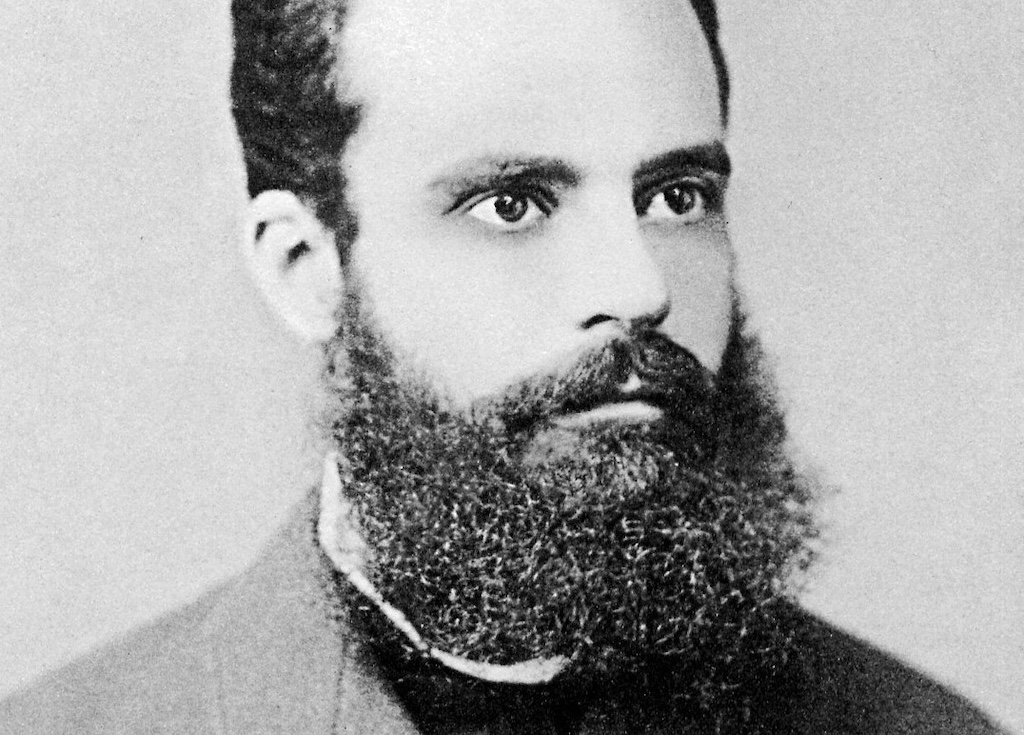
Vilfredo Pareto warned that aristocracies did not endure in the long run, despite their best efforts to persist through nepotism, heredity, educational privilege, and cooptation. (Wikimedia Commons / Public Domain)
Vilfredo Pareto’s Treatise on General Sociology has long been considered one of the seminal works of modern sociology. One list even ranked it among the hundred most influential books ever written in Western history.
Pareto’s Treatise first appeared in French between 1917 and 1919, with a second and final Italian edition in 1923. During the 1920s, there was a flurry of academic and popular writing about Pareto in the United States that became known as “the Pareto vogue.” This vogue reached its apogee in the late 1930s when his magnum opus was translated into English in 1935 and published in four volumes as The Mind and Society: A Treatise on General Sociology.
Pareto’s 2,033-page tome quickly became one of those classic texts that few scholars any longer read, although everyone purports to have read about it in some secondary source. Today Pareto’s work rarely warrants more than a few lines in books on political science and political sociology despite its enduring influence on those disciplines.
While Pareto had a significant impact on the methods and concepts of post–World War II social science, he is now remembered mostly as a founder of power elite theory. His thinking about the fate of governing elites and the ways in which they become decadent and depraved seems especially timely now in light of the contemporary US political scene.
Who Was Vilfredo Pareto?
Vilfredo Pareto was born in Paris on July 15, 1848. His father, Raffaele Pareto, was an Italian marquis from Genoa and a supporter of Giuseppe Mazzini’s nationalist revolutionary movement who had fled to France due to his anti-monarchist political views. In 1854, the Pareto family returned to Italy. Five years later, Vilfredo matriculated to the Leardi Institute to study physics and mathematics.
In 1864, Pareto graduated at the top of his class at the age of sixteen and entered the University of Turin. In 1867, he received degrees in mathematics and physics and was immediately admitted to the university’s School of Engineering, where he completed a dissertation on the theory of elasticity in solid bodies by the time he was twenty-one.
Most scholars agree that Pareto’s training in mathematics, physics, and engineering had a profound impact on his later work in economics and sociology. Upon receiving his PhD in engineering, Pareto accepted a position as a railroad engineer in Florence. In 1875, he became director of the Italian Society of Iron Works.
However, Pareto was always drawn to politics, and he preferred scholarly pursuits to practical engineering. During an early period of political activism, Pareto developed an interest in economics. From 1890 to 1905, he was a frequent contributor to the distinguished Giornale degli Economisti, where he established a rigorous scientific foundation for mathematical economics, notably influenced by the Swiss economist Léon Walras.
Despite his emerging reputation as an economist, Pareto was denied academic positions at Italian universities because he was considered too much of a maverick. He had accumulated a long list of political enemies in Italy due to his criticisms of the Italian government’s policies as well as his strident criticisms of Marxism and socialism.
However, when Walras retired from the University of Lausanne in 1893, he recommended Pareto as his replacement and Pareto was offered the university’s prestigious chair of political economy. Once ensconced in his new academic position, Pareto’s scholarly reputation spread throughout Europe, especially after he published Cours d’economie politique (1896), which introduced an equation on the distribution of income, which came to be known as “Pareto’s Law.”
Pareto’s Law claimed that the distribution of income in all societies and in all periods of history is fixed and invariable. Its originator claimed to have proved mathematically that 20 percent of the population will always control 80 percent of the wealth in any society. His work suggested that any attempt by government to change the distribution of income was hopeless and misguided — the equivalent of passing a bill abolishing the law of gravity.
Pareto was not indifferent to the plight of the working class, but he was a typical nineteenth-century European liberal. He was a strong advocate for universal suffrage, while simultaneously being firmly committed to the classical liberal ideals of limited government and laissez-faire capitalism. Pareto was skeptical about whether those who did not belong to elites had the capacity to sustain a workable democracy, which he thought depended more on the capacities of a governing class than on the working class.
At the same time, Pareto was deeply suspicious of what he considered a decadent and self-serving capitalist class, which seemed to increasingly lack the requisite qualities necessary to govern effectively. While Pareto wanted to see improvement in the conditions of the industrial working class, he believed this was best achieved through general economic growth, rather than a redistribution of income or wealth.
This placed him at odds with the general trajectory of a twentieth-century politics defined by experiments in income and wealth redistribution that ranged from the social democratic Keynesian welfare state to Soviet Communism. Pareto argued that while efforts to redistribute income might seem to be successful early on, as soon as the economy “is left to its own devices, the distribution curve will take its original form.”
The Basic Concepts of Pareto’s Political Sociology
Pareto argued that most human behavior consists of “nonlogical conduct” that originates in “sentiments.” Pareto considered sentiments to be the biologically instinctual drivers of human behavior, notwithstanding the fact that one could only infer the existence of sentiments from the observable behaviors he called the “residues” of sentiments.
For Pareto, residues or behaviors were the proper object of political science. Since sentiments primarily involve instinctual drives regarding human survival — food, shelter, and sex, for instance — their manifestation through residues appears in the form of a competitive struggle among humans (survival of the fittest).
Pareto suggested that the two most important clusters of instincts governing human conduct are the “instinct for combinations” and the “instinct for the persistence of aggregates.” The instinct for combinations is the instinct “to combine certain things with certain acts” or “to combine certain things with other things” to produce an intended outcome. He identified the instinct for combinations as the social force that generates invention and innovation across all sectors of society — economic, social, political, cultural, and intellectual — because it generates innovation and change by recombining things with things, or things with actions in novel ways.
This is largely a haphazard process of trial and error, although it is “designed for producing given effects.” For Pareto, the instinct of combinations provided humans with the capacity to adapt to an ever-changing natural, social, and political environment. It is the generative source of new ideas, new technologies, new cognitive and moral systems, new political institutions, and new cultural or social forms of action.
On the other hand, if new combinations have been found that produce a desired outcome, the instinct for the persistence of aggregates comes into play as humans seek to institutionalize these new combinations and restore equilibrium to society. Pareto considered the instinct for the persistence of aggregates to be an evolutionary screen that naturally selects what combinations will be integrated into an existing social system and carried forward as relatively permanent adaptations that persist into the future.
For political scientists, the two most important properties of Pareto’s sentiments and residues are their distribution and their varying intensity within society and across time. Pareto argued that the multiple residues corresponding to the instincts of combination and persistence of aggregates were naturally distributed in different proportions among different individuals in every society.
To illustrate his thesis, Pareto hypothesized that every individual in every branch of human activity could be assigned an index score from zero to ten, which “stands as a sign of his capacity, very much the way grades are given in examinations in school.” Those individuals who receive a score of ten are the absolute best at what they do, while anyone who receives a zero “is an out-and-out idiot.”
For example, a lawyer who wins nearly all of his cases would be assigned a ten, while a lawyer who loses most of his cases is a one. A billionaire would be assigned a score of ten, a multimillionaire a score of six or seven, a skilled workman a score of three or four, and a person who lives entirely on charity would be assigned a zero.
There is no firm cut-off point in this scaled index nor is the population divided equally into tenths, but Pareto considers those individuals who score a ten to be what he calls “the elite.” They are the wealthiest capitalists and financiers, the most powerful and high-ranking politicians, the most influential religious leaders, the most successful artists, actors, and novelists, and the most successful lay professionals and scholars.
In Pareto’s sociology, elites are simply the best at what they do. In a struggle for the survival of the fittest, elites emerge as the most successful at some type of activity, whether it be acting, sculpting, poetry, music, accumulating capital, scientific research, law, medicine, engineering, war-making, or politics and administration.
Governing and Non-Governing Elites
Pareto was among the first social scientists of the early twentieth century to abandon the concepts of the state, sovereignty, and the people as basic concepts of political science. He claimed that the concept of the state was just a legal abstraction that had no empirical reference. Similarly, he considered the question of sovereignty equally irrelevant, on the grounds that it made no difference whether political power was organized through a monarchy, aristocracy, or democracy. The reality behind these nominal forms of government was that societies were always governed by an elite.
From this perspective, the legal concept of “the people” as sovereign was nothing but an ideological illusion. Instead, Pareto anchored his political science in the allegedly asymmetrical and unequal distribution of sentiments and residues in society. He argued that if all societies are governed by an elite, regardless of its nominal governmental form, then political scientists ought to focus on the characteristics, behavior, and decisions of those who actually govern a society.
Consequently, for purposes of delimiting the scope of political science, Pareto draws a distinction between a society’s governing elite and its non-governing elite. The governing elite is that segment of the elite that “directly or indirectly plays some considerable part in government” with the “non-governing elite, comprising the rest.” A chess player may have elite capabilities in a specialized area of human endeavor, but that does not mean that he or she plays any considerable role in government, although governing elites may draw on the status, prestige, wealth, and celebrity of non-governing elites to buttress their own political power.
Importantly, Pareto assumed that the distribution of elite sentiments and residues — the instinct of combinations and the persistence of aggregates — was a statistical average within the elite and non-elite strata alike. For Pareto, this meant that an indeterminate percentage of governing elites
wear labels appropriate to political offices of a certain altitude — ministers, Senators, Deputies, chief justices, generals, colonels, and so on — making the opposite exceptions for those who have found their way into that exalted company without possessing qualities corresponding to the labels they wear.
Pareto recognized that the distribution of sentiments and residues among elites and non-elites is only a social average as there will always be individuals within both groups who deviate from that average. Thus, there would always be individual elites with a greater ratio of non-elite instincts and individual non-elites with a greater ratio of the instincts of combination.
In a hypothetical ideal-type society, a dynamic equilibrium is maintained in society when elites who lack the requisite sentiments and residues fall (or get pushed) out of the elite, while non-elite individuals who possess the requisite sentiments and residues rise into it. Both of these processes — downward mobility and upward mobility — reinvigorate the elite with the requisite capacities to govern.
Pareto called this process the circulation of elites, although today it would be referred to as social mobility. He identified its beneficial effects:
The governing class is restored not only in numbers, but — and that is the more important thing — in quality, by families rising from the lower classes and bringing with them the vigor and the proportions of residues necessary for keeping themselves in power. It is also restored by the loss of its more degenerate members.
For Pareto, social mobility was the key to maintaining the intellectual and psychological vigor of a governing elite, but it was also necessary to maintaining social stability in a “gently undulating line of equilibrium,” and as a collective utility that provided “the greatest happiness for the greatest number.” When this dynamic equilibrium was disrupted, it placed stress on the social system that could result in its violent destabilization — in other words, revolution.
The Rise and Fall of Governing Elites
Pareto suggested that every governing elite passes through four phases of political development. I call these stages aristos, decline, decadence, and depravity. In the early stages of a new civilization, when a new nation or empire is being founded and expanding its influence, the governing elite, on average, manifests sentiments and residues that can be described by the Greek word aristos — meaning literally “the best”:
The upper stratum of society, the elite, nominally contains certain groups of people, not always very sharply defined, that are called aristocracies. There are cases in which the majority of individuals belonging to such aristocracies actually possess the qualities requisite for remaining there; and then again there are cases where considerable numbers of the individuals making up the class do not possess those requisites.
In the early stages of a civilization’s development, according to Pareto, there is “only a negligible variation in proportions between the total of the [elite] class and the people who wear its label without possessing the qualities corresponding.” The exceptions to aristos are so small proportionately that they can be overlooked at this early stage of political development.
In this context, Pareto was thinking about the founders of the ancient Greek city-states or the Roman Republic. While he was sure that the reputations of those who found new nations are shrouded in myth, legend, and hyperbole — one thinks of the US Founding Fathers — he nonetheless contended that such individuals must in reality possess some qualities of aristos to risk life and property and to convince others to do so, in founding a new nation or civilization.
For example, despite their personal shortcomings, could one name four US politicians living today who compare favorably to George Washington, James Madison, Thomas Jefferson, or Alexander Hamilton? Is there any group of fifty-five US political leaders who we would today trust to write a new constitution or bill of rights?
Despite their qualities of aristos, which typically command the respect and deference of non-elites, Pareto observed that even the most competent governing elite will regularly use force and coercion, as well as ceremonial rituals and appeals to political symbols, as part of their elite skill set. However, he insisted that an aristocratic elite will exercise force and coercion judiciously and for the stated purpose of achieving some specific political objective, which is claimed to be in the larger public interest.
In fact, Pareto considered the use of force and coercion a necessary instrument in the maintenance and restoration of social equilibrium: “To ask whether or not force ought to be used in society is to ask a question that has no meaning; for force is used by those who wish to preserve certain uniformities and by those who wish to overstep them.” Pareto saw the proper and judicious use of force as a purely utilitarian calculation:
whether the utility of the uniformity is great enough to offset the harm that will be done by using violence to enforce it, or whether detriment from the uniformity is great enough to overbalance the damage that will be caused from the use of force in subverting it.
An aristocratic elite is adept at making this ambiguous and uncertain calculation.
Since aristos is a fleeting quality, a governing elite must periodically reinvigorate itself through the circulation of elites, which elevates individuals with elite qualities from non-elite strata into the governing elite. The problem, however, is that governing elites tend to morph into a governing class as they systematically adopt measures designed to retain power and to transmit positions of political authority to their families, friends, and party allies.
Governing elites seek to restrict membership and entry by institutionalizing special privileges based on heredity, kinship, wealth, honorific titles, education, ethnicity, religion, and personal loyalty, among many others. These selective mechanisms restrict membership to existing elites, while denying admission to individuals with elite qualities but non-elite origins.
The circulation of elites is further restricted by self-serving practices that only promote individuals in government who are susceptible to cooptation, which means the governing elite increasingly cultivates a counterproductive circulation into its ranks of individuals who primarily possess the sentiments and residues of obedience and servility, rather than those who possess the requisite residues of a true governing elite. For Pareto, such practices mean that “the road to ruin is thrown open.”
Notably, Pareto contended that this pattern of restriction and cooptation is as true for liberal democracies as it is for hereditary oligarchies:
An individual who has inherited a sizable patrimony can easily be named Senator in certain countries, or can get himself elected to the parliament by buying votes or, on occasion, by wheedling voters with assurances that he is a democrat of democrats, a Socialist, an Anarchist.
These disruptions to the circulation of elites cause a governing class to steadily decline before eventually falling into decadence and depravity. When this happens, a civilization typically experiences internal political collapse or catastrophic military defeat, unless the decadent governing class is removed by a political revolution that elevates people from the lower strata who possess the requisite elite qualities to govern effectively.
A Graveyard of Aristocracies
Pareto warned that aristocracies did not endure in the long run, despite their best efforts to persist through nepotism, heredity, educational privilege, and cooptation: “History is a graveyard of aristocracies.” If either upward or downward mobility comes to an end, “or worse still, if they both come to an end, the governing class crashes to ruin and often sweeps the whole of a nation along with it.”
The disequilibrium between the elite and those outside it generates stress in the social system that registers as a growing conflict between the governing class and the classes it governs. As the political capacities of the governing class deteriorate, it finds itself unable to maintain social order. It no longer commands deference or respect, which leads to further deterioration in its political capacities. It responds to challenges from below (and from abroad) in an increasingly erratic manner, while withdrawing privately into a lifestyle that celebrates the amorality of random death, torture, violence, and rape (think the Marquis de Sade).
Under these conditions, a governing class becomes more openly abusive and exploitative of its subjects, morally decadent, politically incompetent, and militarily ineffective. It comes to define its material interests in terms of tangible short-term gains, which often come at the expense of the nation’s long-term collective interests and even at the expense of the long-term interests of non-governing economic elites. The sentiments of self-serving individualism come to prevail over those of sociability and the governing class becomes a consumer rather than a producer class, engaging in flagrant and transparent parasitism.
The very sentiments that once generated elite-type residues become vicious and predatory when they are no longer guided by the instinct of combination or residues of sociability such as a sense of charity and noblesse oblige. What was once manifested in the skillful and judicious use of force fades into an excessively capricious use of violence. The ability of the governing class to make accurate utility calculations grows defective, so its use of force at home or abroad now appears arbitrary and capricious.
At this stage of degradation, the use of force becomes less and less effective, and it often merely goads the subject class into meeting force with force. This may be a confrontation the governing class thinks it wants until it explodes beyond their control and undermines the legitimacy of the governing class. In the contemporary context, one thinks of the US Marines in Los Angeles, the National Guard in Washington, DC, and Immigration and Customs Enforcement (ICE) and Customs and Border Protection in Portland and Minneapolis.
One also thinks of how the US Department of Justice is being weaponized against journalists, students, and academics; politicians and prosecutors; and even corporate CEOs. One might add to the list retaliatory tariffs imposed on a whim because a foreign leader has bruised a tyrant’s ego. Pareto warns that when the governing class deploys coercion for purposes of personal retribution and political punishment, rather than for any discernable public interest, it is the governing class that becomes lawless and the law that becomes disorderly.
For Pareto, a governing class in this advanced state of decay may still hang on for some time by buying off its opponents, “paying not only in gold, but also in terms of dignity and respect that it had formerly enjoyed.” In its final stages of decline, it will come to rely on “bargaining and concessions” (i.e., bribery), rather than force to maintain itself in power, while becoming convinced that such tactics can keep it in power indefinitely. However, this approach merely depletes personal and national wealth and further erodes the dignity and credibility of the governing class. In Pareto’s turn of phrase, the governing class is transformed from lions into foxes.
As a governing class descends into its final stage of decadence, it will increasingly resort to the last tools available to it. Having once been resourceful in the deployment of symbols, myths, and ideology, it now becomes reliant on ruses, chicanery, and deception. According to Pareto, this shift in tactics “comes to exercise a far-reaching influence on the selection of the governing class, which is now recruited only from the foxes, while the lions are blackballed.”
Once it has reached this point, the governing class is irremediably decadent because it no longer possesses the requisite elite residues to govern effectively. Its personal behavior is preoccupied with depravity — one thinks of the Epstein files — because elites seek to enjoy the short-term pleasures made possible by their now visibly eroding positions. Chicanery and cleverness are effective only to a point because ultimately, such tools are no match for the use of force, when non-elites choose to exercise it against the governing class:
Revolutions come about through accumulations in the higher strata of society — either because of a slowing down in class-circulation or from other causes — of decadent elements no longer possessing the residues suitable for keeping them in power, and shrinking from the use of force; while meantime in the lower strata of society elements of superior quality are coming to the fore, possessing residues suitable for exercising the functions of government and willing enough to use force.
Moreover, as members of the governing class are transformed from lions into foxes, they are more susceptible to the use of force from below or to outside attacks by the more vigorous governing elites of other nations: “When the subject class contains a number of individuals disposed to use force and with capable leaders to guide them, the governing class is, in many cases, overthrown and another takes its place.” Pareto saw revolutions as the evolutionary mechanism of natural selection by which societies defend themselves against chronically incompetent, decadent, and depraved leadership.