Namibia’s Workers Spearheaded Its Fight for Independence
After more than a century of German and South African rule, Namibia finally gained its independence on this day in 1990. Working-class struggles and organizations played a vital role in the country’s long march to freedom.
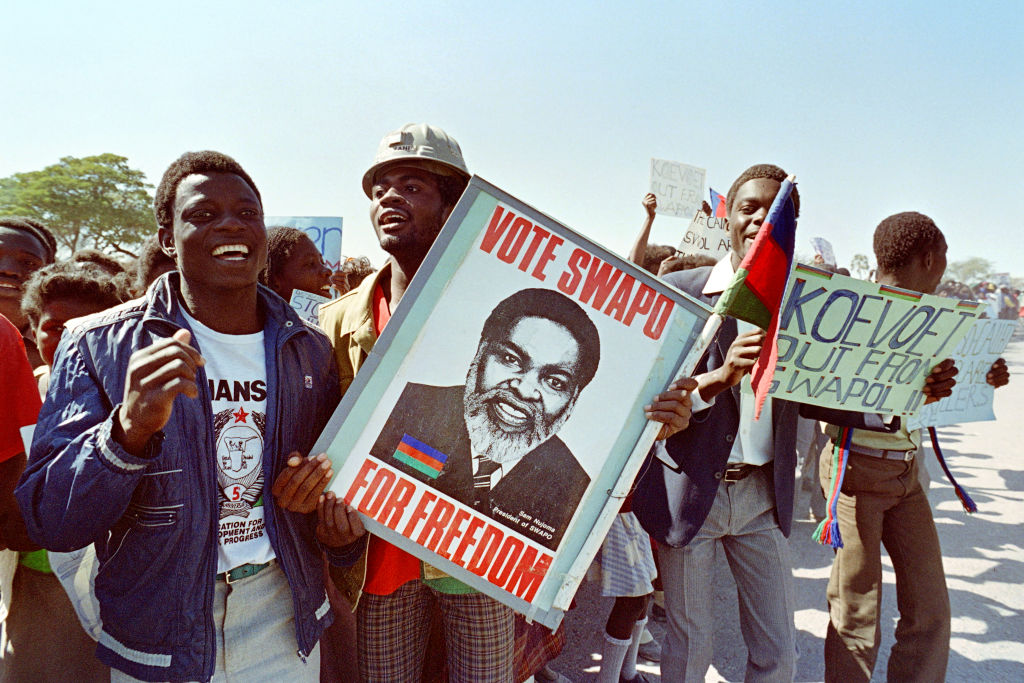
Mobilization by Namibian workers was an important factor in the struggle that culminated in the country’s liberation from South African rule. Namibia’s nationalist organizations century grew out of a long history of collective protest and resistance. (Walter Dhladhla / AFP via Getty Images)
Labor movements in Namibia have been rather fragile over the past few decades, ever since the country gained independence from South Africa in 1990. This was not always the case. Collective labor action, both spontaneous and organized, has had a long history in the country as a notable segment of anti-colonial resistance.
With their trajectories embedded in a political economy of settler colonialism, racial capitalism, and extractivism, Namibia’s emerging nationalist organizations of the mid-twentieth century grew out of a long history of collective protest and resistance. Mobilization by Namibian workers became an important factor in the struggle that culminated in the country’s liberation from South African rule shortly before the demise of apartheid in South Africa itself.
“Okaholo”
Namibia became a colony of the German empire from 1884. By December 1893, the earliest strike had been recorded at a mine at Gross Otavi. When the Allied powers stripped Germany of its colonies after World War I, the League of Nations entrusted Namibia’s administration to the Union of South Africa.