Congress Wants to Publicly Fund Lobbyists at the SEC

House Democrats worked with the GOP to advance a bill establishing a publicly funded corporate lobbying committee within the Securities and Exchange Commission. Several lawmakers pushing the bill are heavily funded by businesses overseen by the regulator.
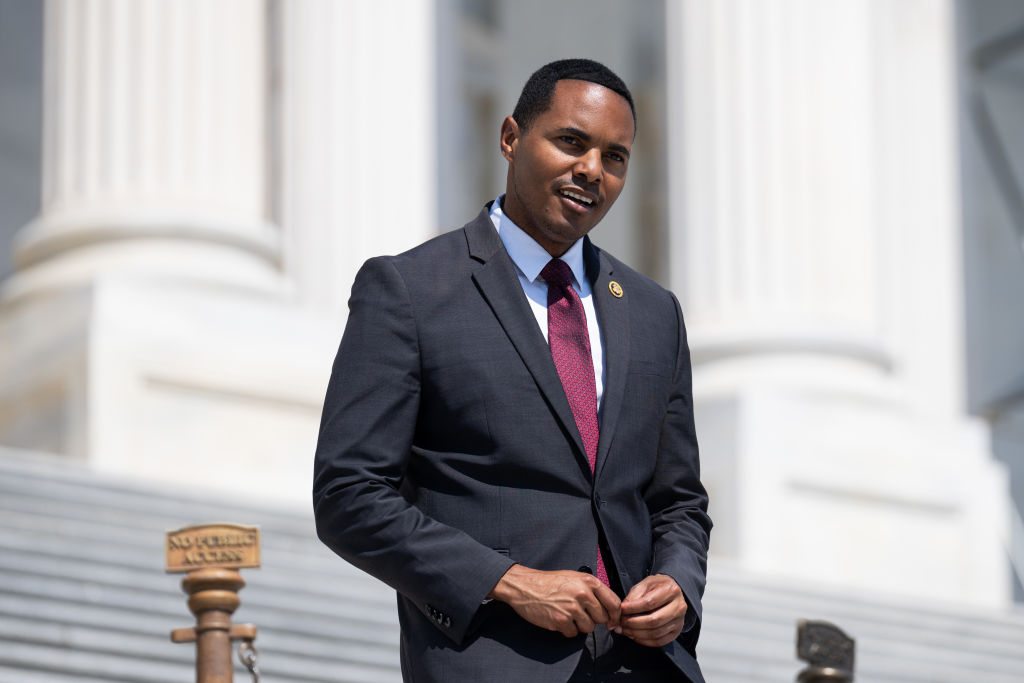
Rep. Ritchie Torres (D-NY) was one of nine Democrats to vote with the GOP to pass the Public Company Advisory Committee Act of 2026 in the House Financial Services Committee. (Bill Clark / CQ-Roll Call, Inc via Getty Images)

House Democrats just helped their GOP colleagues advance a bill establishing a taxpayer-supported corporate lobbying committee within Wall Street’s top regulatory agency, whose only purpose would be to give an even greater voice to pro-corporate and big business concerns.

Several of the lawmakers pushing the bill are heavily funded by businesses overseen by the regulator, including investment giants that have been sued by the agency.

The bill, called the Public Company Advisory Committee Act of 2026, passed the House Financial Services Committee on January 22 with nine Democrats — representatives David Scott (GA), Jim Himes (CT), Bill Foster (IL), Josh Gottheimer (NJ), Vicente Gonzalez (TX), Ritchie Torres (NY), Brittany Pettersen (CO), Janelle Bynum (OR), Sam Liccardo (CA) — voting with the Republicans.

The bill would establish a ten-to-twenty-member “Corporate Executive Advisory Committee” to provide the Securities and Exchange Commission (SEC), the federal agency that regulates the nation’s stock markets, with “advice on its rules, regulations, and policies” and other matters. Members would be appointed by SEC commissioners and would have to be either senior executives, trade association representatives, investment bankers, attorneys, or other professionals who provide advice to public companies. Notably missing from the committee? Anyone focused on consumer protection.

Introduced by Rep. Frank Lucas (R-OK), the legislation originally proposed using taxpayer funds to cover luxury travel accommodations and other related costs for the executives sent to Washington, DC, to advise the SEC. Those provisions were eventually struck, but according to Jon Golinger, an attorney at the consumer rights advocacy group Public Citizen, the bill still forces taxpayers to foot other costs associated with the lobbying committee, such as dedicated government staff to support it.

“This bill would increase the already enormous influence of large corporations over the SEC’s responsibility to effectuate disclosure obligations and shareholder voter rules,” Public Citizen warned in a letter to lawmakers before the committee vote last week. “This Corporate Executive Advisory Committee proposal has long been the dream of corporate lobbyists to diminish investor input by creating a way to amplify already loud corporate interests and drown out the voices of investors.”

The bill follows previous attempts to establish a taxpayer-funded corporate lobbying board within the SEC, which one lawmaker said was “straight out of the Project 2025 playbook.” In 2024, the Lever revealed how conservative, pro-business groups lobbied lawmakers and regulators to establish an advisory board similar to those established following the 2008 financial crisis that consisted of pension and retirement fund advisors, law professors, and others appointed by SEC commissioners.

The National Association of Manufacturers, a pro-business lobbying group that represents 14,000 companies nationwide, wrote in a 2023 letter to Congress that a pro-business panel was necessary to “provide the SEC with advice on how its rules and regulations impact public companies.”

Lucas’s top campaign contributors in the 2024 election include Andreessen Horowitz, a venture capital firm heavily invested in cryptocurrencies that routinely faces SEC scrutiny; SpaceX, a rocket company owned by Elon Musk, who has had multiple legal battles with the commission and called it “unconstitutional”; and Amazon founder Jeff Bezos’s space company Blue Origin, which was involved in a 2023 Amazon shareholder lawsuit over alleged anticompetitive practices.

Meanwhile, the campaign committee and leadership PAC of Democratic representative Brittany Pettersen (CO), the bill’s cosponsor, accepted roughly $342,000 in donations last election cycle from the securities and investment industry, through business’ PACs and employee contributions. That includes major gifts from firms with business before the SEC, including $6,000 from the trading platform Robinhood, which last year paid the SEC $45 million to settle securities violations; $10,000 from BlackRock, one of the largest public investment firms in the United States.; and $2,000 from cryptocurrency exchange Coinbase, which last year had its SEC civil investigation dropped after donating $1 million to the Trump inauguration.

This article was first published by the Lever, an award-winning independent investigative newsroom.

Share this article

Contributors

Freddy Brewster is a reporter with the Lever. He has been published in the Los Angeles Times, NBC News, CalMatters, the Lost Coast Outpost, and more.

Veronica Riccobene is a reporter with the Lever based in Washington, DC. She has experience in live television, long form, and vertical video as well as reporting.

Filed Under