Zygmunt Bauman’s Century
Polish-British sociologist Zygmunt Bauman was born 100 years ago today. He is best known as the theorist of “liquid modernity,” in which social bonds decline in favor of an atomized individualism.
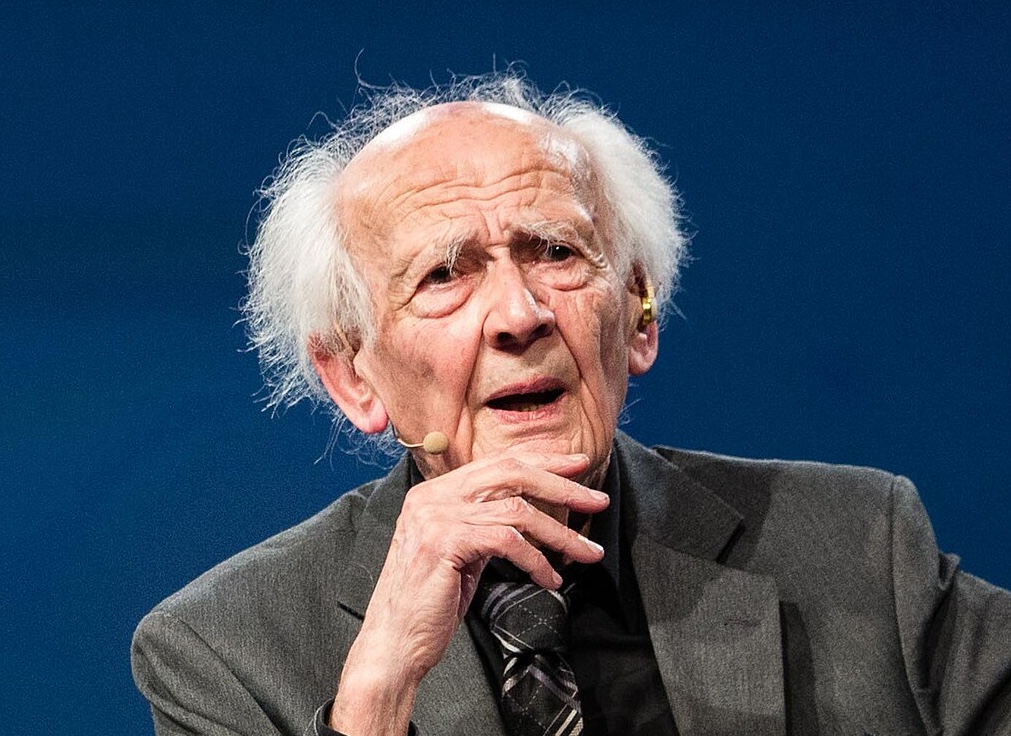
Zygmunt Bauman speaking at re:publica 2015 on July 5, 2015, in Berlin. (re:publica / Jan Zappner / Wikimedia)
Zygmunt Bauman is globally recognized as a theorist of “liquid modernity.” The term, which suggests that the main feature of the current stage of the modern era is increasing individual and collective uncertainty, gained widespread popularity due to his book of the same title published in 2000. Few remember that he began his academic career much more humbly as a researcher studying the British labor movement.
At the turn of the 1950s, in the early years of the Polish People’s Republic, universities became the target of a government campaign to establish Marxism-Leninism, the Eastern Bloc’s official ideology, as the hegemonic approach in higher education and research. Sociology was condemned as a “bourgeois” discipline. Following the principle of partisanship in philosophy, all higher learning was required to support the existing political order.
Navigating this highly restricted academic landscape became the defining experience for a generation of Polish intellectuals. Bauman was no exception. He was trained as an adversary of Western social scientists, exposing how their work did not conform to Marxist-Leninist orthodoxy. His formation took place on the front lines of the ideological Cold War.