When a Superpower Declines, Shared Reality Dissolves
When the Soviet Union fell, Russians lost their sense of past and future at once. Collective hallucinations flourished in the void. In the United States, our reality is now disintegrating in a similar way.
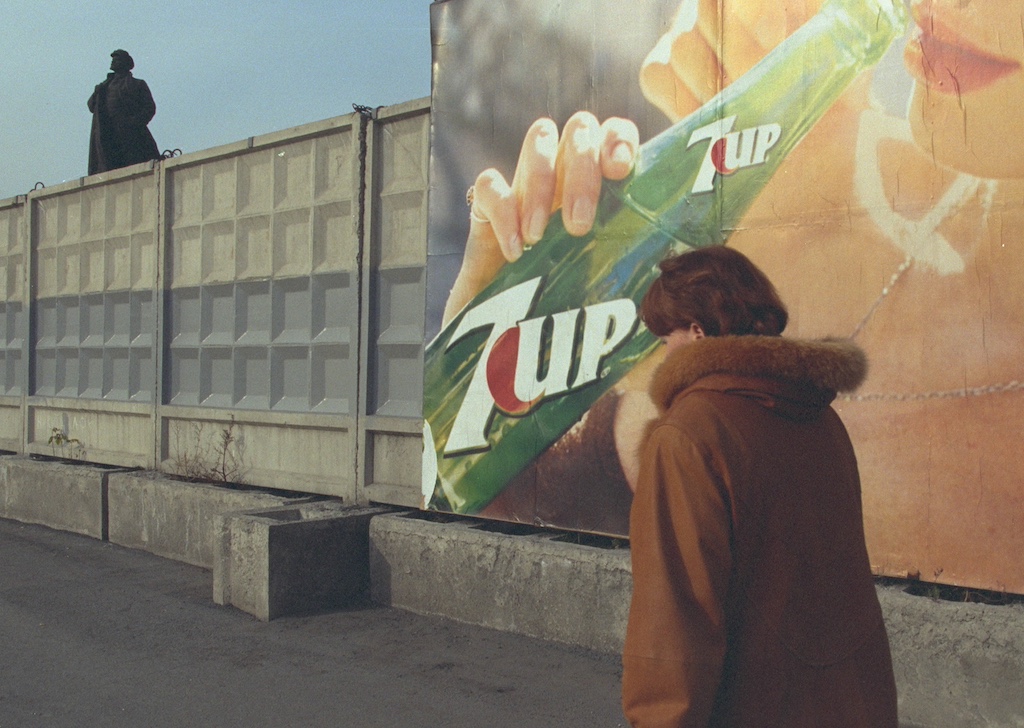
Russians in the 1990s felt themselves without a past or a future: the Soviet past felt like a fading dream, and the capitalist present was a nightmare. (Pascal Le Segretain / Sygma via Getty Images)
Following the Soviet collapse, millions of Russians came to doubt that there had ever been a Mongol invasion. The reality of the Mongols’ conquest of northern Eurasia, previously taken to be the defining event of the Middle Ages in the region, was cast into doubt not by a historian but by the renowned Soviet Russian mathematician Anatolii Fomenko, who reached these conclusions by mathematical means. Fomenko distilled hundreds of history books and manuscripts to their numerical essence (as he understood it), fed them into a Soviet supercomputer (running an algorithm of his own design), and connected the dots. He did the math, and the history did not add up.
Fomenko published his theory in dozens of blockbuster volumes throughout Russia’s hypercapitalist 1990s. Together they revealed a forgotten Slavic-Turkic “Great Empire” that ruled most of Eurasia from the fourteenth to the seventeenth century, and ruled well, such that Russians in the 1990s could take pride. The Great Empire was marked by peaceful development and ethnic and religious tolerance, including between Mongols and Slavs, although Fomenko just as often denied any distinction between the two. The Mongol “invasion,” he argued, was invented in a conspiracy between the usurper Romanovs and their Western accomplices to sully the Great Empire’s legacy and legitimize their seizure of the throne.
The theory’s unlikely success was a quintessential product of the Soviet collapse and transition — of capitalist “victory,” as seen from the West, and the attendant cascade of material and spiritual crises inside Russia. The bindings of the earliest volumes, for instance, bore the imprint of Moscow State University, once the premier university of the socialist world, now desperate and helpless before the popular book market.