Russia’s Social Breakdown Isn’t the Product of a Unique National Psyche
Russia’s atomized citizenry and dysfunctional economy are often blamed on a unique national psyche. Yet the social breakdown in modern Russia is best explained in terms of its recent history, and the Soviet leadership’s failed response to its crises.
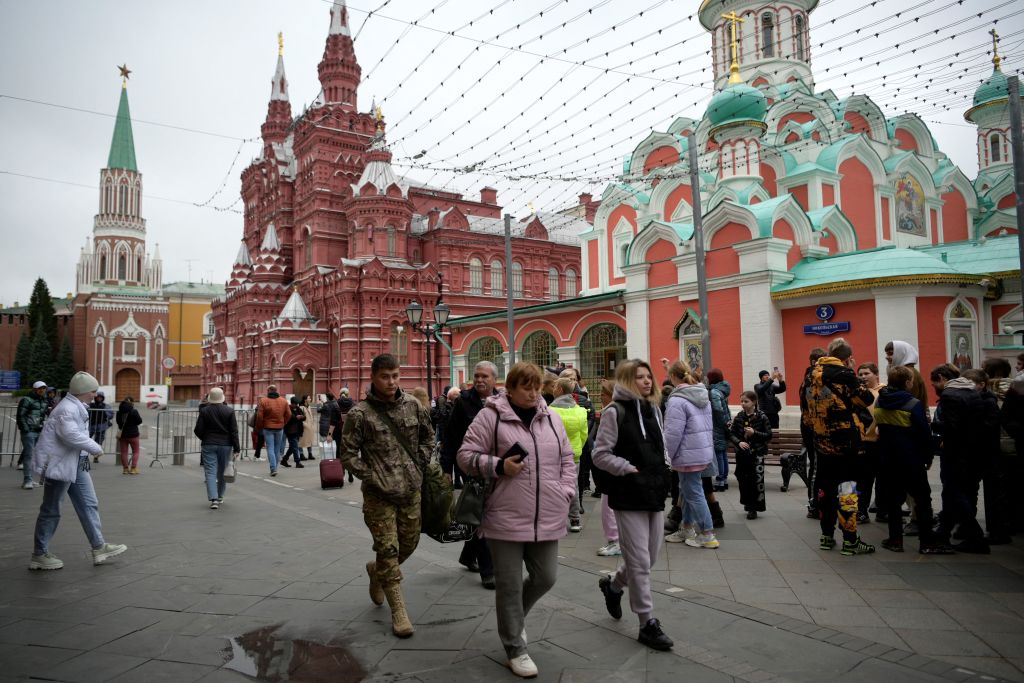
People walk in Nikolskaya Street outside Red Square in central Moscow on September 28, 2022. (Natalia Kolesnikova / AFP via Getty Images)
Elena Kostyuchenko’s I Love Russia: Reporting From a Lost Country collects over a decade of chronicles on the country’s decay into what the author calls fascism. Armed with the selfless courage and uncompromising journalistic style to be expected of a contributor to Novaya Gazeta, the newspaper effectively censored since 2022, Kostyuchenko describes the personal, social, and political environment of modern Russia.
She takes us from settings as varied as abandoned hospitals squatted by teenagers in Russia’s urbanized central plain, horrifying psychoneurological boarding institutions for children with mental illnesses in the south, and bombed-out Ukrainian cities on the front line. The variety of subjects and geography conveys Russians’ universal experience of being doomed to violence, criminality, official abuse, and decay.
This dehumanization culminates in the psychoneurological boarding institutions — the subject of Kostyuchenko’s chapter arguing that Russia “has been fascist for a long time,” even before the war in Ukraine. There, “child residents,” stripped of their legal standing, are left to live and die in complete isolation from society and the rule of law under the control of staff who punish any questioning of authority and practice forced abortions and sterilizations.