1960: The Year the Modern Horror Film Was Born
A combination of the breakdown of the Hollywood studio system, the decline of censorship, and the rise of wildly — and luridly — creative filmmakers across the world looking to cash in on sex and violence made 1960 the year of the modern horror film.
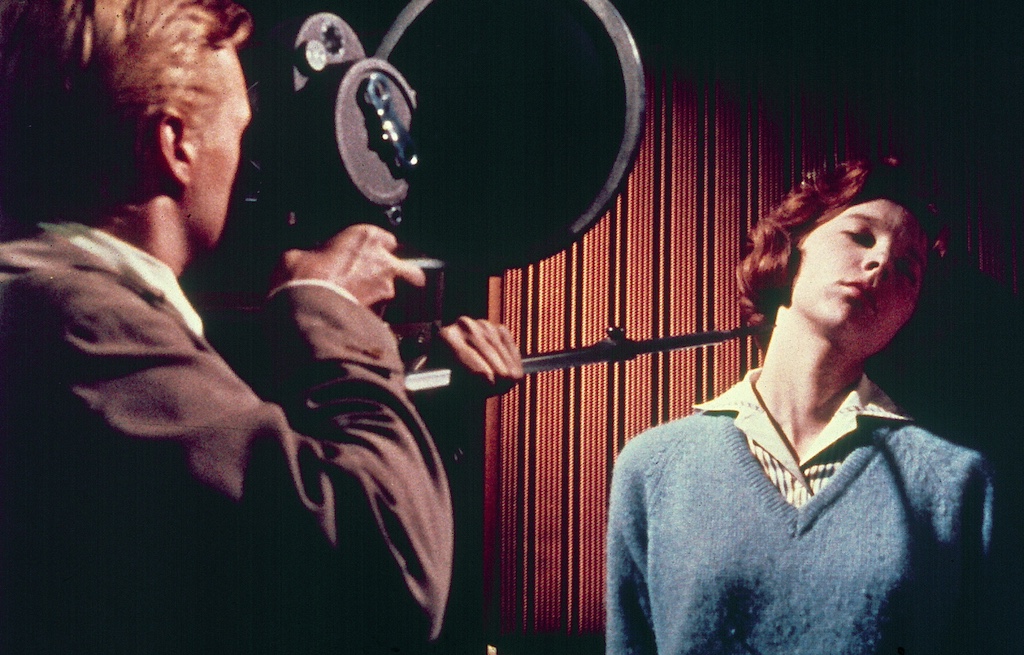
Still from Peeping Tom. (Anglo-Amalgamated Film Distributors)
For horror film aficionados, the year 1960 will always be associated with Alfred Hitchcock’s Psycho, which is generally argued to be the first “modern” horror film. The year is even more of a landmark if you consider that Michael Powell’s Peeping Tom — featuring many of the same traits as Psycho, including a sympathetic portrait of a sexually tormented serial killer who is not a reassuringly “othered” monster — debuted only five months before.
The two British directors knew each other, and Hitchcock was paying close attention to the grim fate of Powell, whose masterpiece so repulsed British critics and the public that his career never recovered. In a strategy designed to control the reception in America, Hitchcock oversaw a famous publicity campaign for Psycho intended to prepare his vast audience for a transgressive new experience. A major part of the strategy was defusing audience revulsion, using the celebrated director’s well-known black humor that had helped make his television anthology series Alfred Hitchcock Presents such a big hit. In a preview short film that circulated widely before the premiere of Psycho, Hitchcock himself toured viewers through the Bates Motel and the gothic Bates residence behind it, reacting with comically exaggerated distaste at the lurid violence, supposedly too horrible to fully describe, that would take place within.
Hitchcock also took obviously gleeful pleasure in showing audiences the first shot of a toilet flushing in an American film — the commode in Room #1 at the Bates Motel. It was a humorous indication of the crumbling of the strict Production Code of censorship that had dominated American movies since it was first enforced in 1934.