The US Abandoned Affordable Housing. We Can Create It Again.
America’s packed eviction courts and overflowing homeless shelters are the result of decades of deliberate policy choices. We once made better choices rooted in a commitment to providing decent, affordable housing for all. It’s not too late to reverse course.
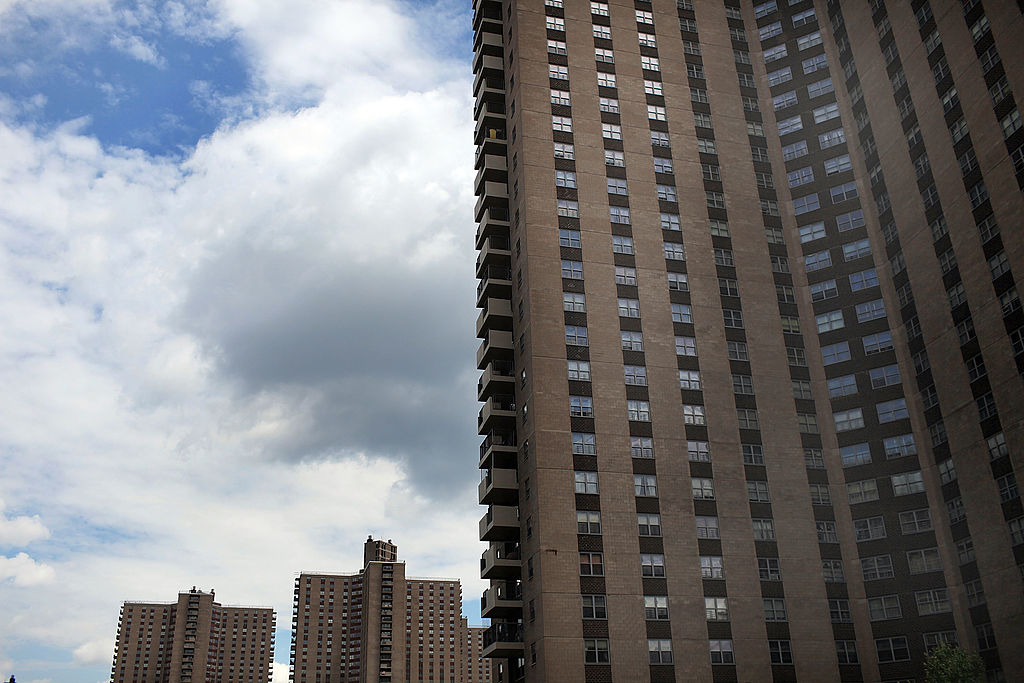
The US once made a commitment to housing all our people and made phenomenal progress on fulfilling that promise. Abandoning it was a choice, and we can still choose to recommit to decent, affordable housing for all. (Spencer Platt / Getty Images)
My colleagues and I work at a law school clinic that represents tenants in eviction court, which means we get a front-row seat to the US housing crisis. The people we see lined up in front of a judge waiting to see what day they will be forced from their homes are among the estimated 3.6 million households that face eviction each year. Prior to this moment, they were among the more than seven million people who are behind on their rent or mortgages at any given time. By the time we see them, they are at risk of joining the record number of unhoused people in the United States.
It doesn’t have to be this way. We know that because it didn’t used to be this way. As I wrote in my book Lessons From Eviction Court: How We Can End Our Housing Crisis, the United States once made a commitment to housing all our people, and made phenomenal progress on fulfilling that promise. From the end of the Great Depression of the 1930s through the ’70s, very few people in our country were homeless. Those who were homeless were mostly older men living in cheap hotels, so-called flophouses. At the time, researchers predicted that even that level of homelessness would be eliminated by the end of the 1970s.
As part of the New Deal, the United States created the Home Owners’ Loan Corporation and the Federal Housing Administration. These agencies and the Veterans Administration purchased, insured, and issued mortgages to protect at-risk homeowners. They also provided millions of others with opportunities to buy houses through significantly lower down payments and interest rates, often with monthly payments that were less expensive than renting.