Dangerous Heat Waves Are a Workers’ Rights Issue
In the UK, Labour is advancing the Employment Rights Bill, a rare positive intervention from this government. One of its greatest flaws is that it lacks provisions to ensure worker safety in very hot weather.
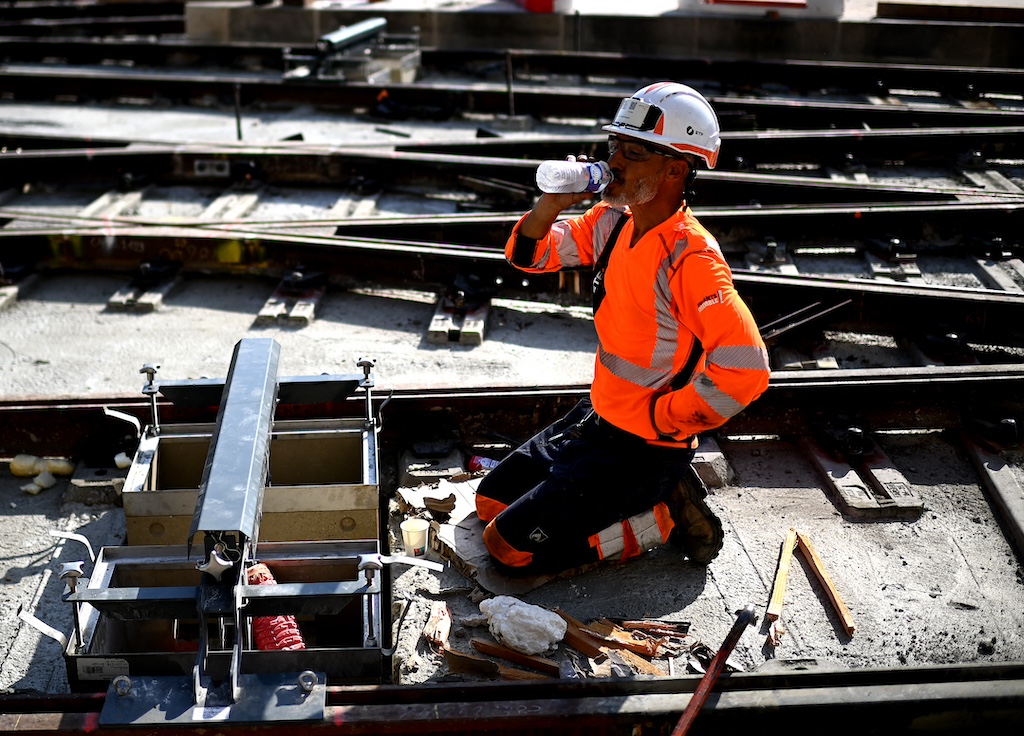
A European worker drinks water to cool down as he works on a construction site on July 1, 2025. (Christophe Archambault / AFP via Getty Images)
The Labour Party’s flagship Employment Rights Bill is currently in the final stage of its legislative journey in the House of Lords. Peers are making a final round of amendments to the bill — hailed by the government as the “biggest improvement in workers’ rights for a generation” — in the wake of a sweltering heat wave that has scorched much of Europe.
With temperatures recently soaring past 40 degrees Celsius (104 degrees Fahrenheit) in countries like Spain, Italy, France, and Portugal, and in the UK nearing 35 degrees Celsius or 95 degrees Fahrenheit (just off the back of the second-hottest June on record), many parts of the continent have issued serious weather alerts and taken measures like closing schools or winding down nuclear power operations. This extreme event — fueled by a persistent “heat dome” over the continent — is testing the resilience of public health systems, infrastructure, and adaptation strategies; all while we are warned that such conditions are set to become increasingly frequent under climate breakdown.
While it has been watered down considerably from what many initially hoped, the Employment Rights Bill represents a rare positive intervention from this government. But as temperatures rise, there remains a glaring gap in the legislation: provisions to ensure worker safety in very hot weather.