“Abundance” Against Organized Labor
A significant portion of the abundance movement views unions as a barrier that needs to be overcome in the name of efficiency.
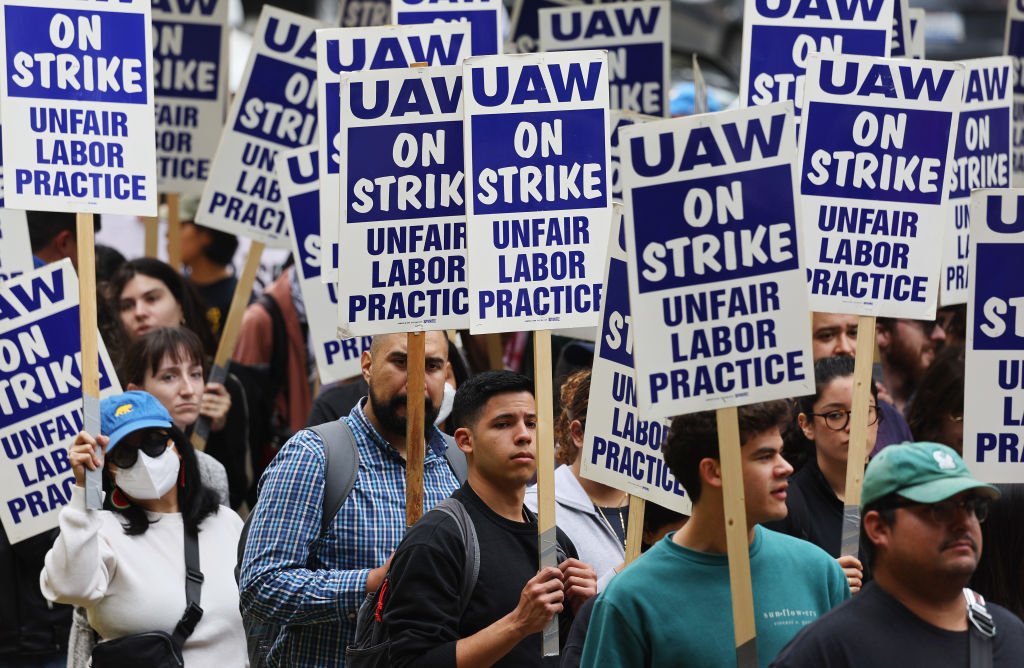
UCLA academic workers from United Auto Workers picket on the first day of their strike on May 28, 2024, in Los Angeles, California. (Mario Tama / Getty Images)
The post-Reconstruction United States has never seen durable progressive change without the labor movement’s involvement. The postwar economy’s rapid, widely distributed gains in material conditions for everyday Americans may be the banner accomplishment, but the movement’s contributions to progress go far further.
Working women organized through the labor movement became significant drivers of the suffrage movement. Unions played an essential role in the civil rights movement, including the steelworkers and United Auto Workers (UAW) providing crucial support for the March on Washington. Some of the earliest workplace discrimination protections for same-sex couples were won by the United Mine Workers of America.
Since industrialization, the labor movement has been the greatest engine not just of advancing worker interests but of achieving social progress more generally.