Europe’s Liberation 80 Years On: France
The struggle against Nazism in France was also a struggle against homegrown reactionary forces embodied in the Vichy regime. Eight decades after a seemingly decisive defeat, the heirs of Vichy are banging at the gates of power in Paris.
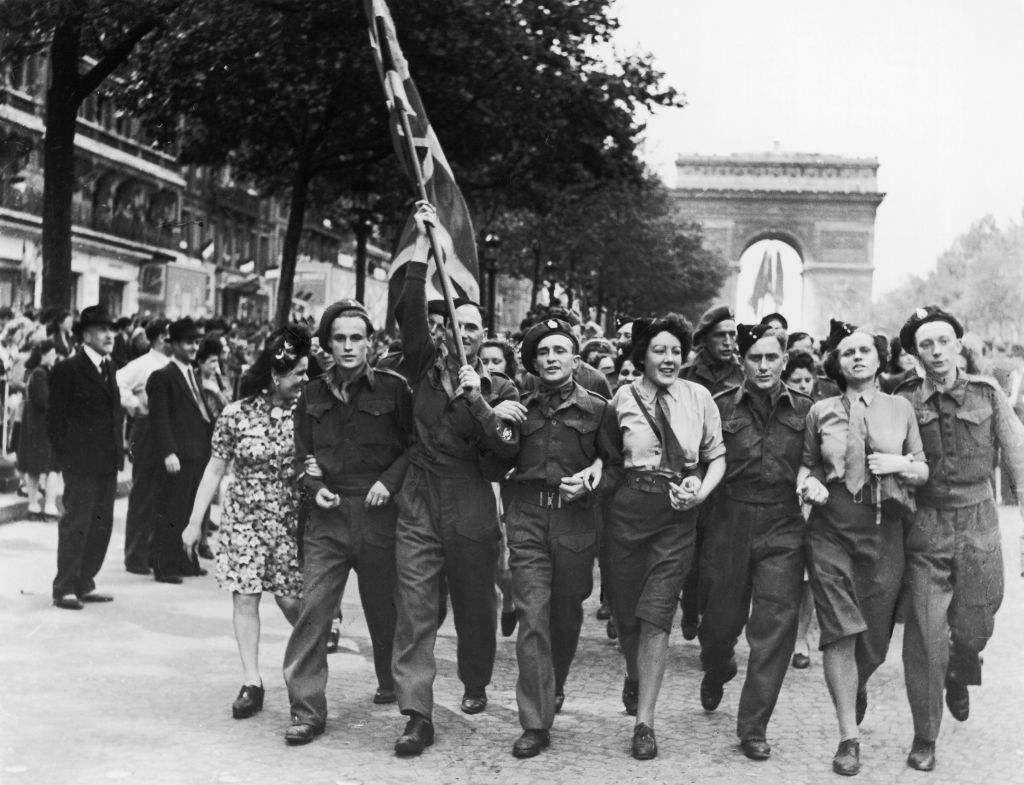
Victory Day celebration in Paris, France on May 8, 1945. (Serge De Sazo / Gamma-Rapho via Getty Images)
Firsthand accounts of the wartime Nazi occupation of France stress the messy, haphazard nature of the resistance. The groups that emerged in the chaotic circumstances following the French defeat of 1940 were fragmented and divided.
They were made up of hundreds of individuals, eventually numbering tens of thousands, brought together by a deep-seated refusal of their unbearable situation. In the words of Claude Bourdet, a member of the Combat group, these were the people who said no, “with all our being.”
Saying No
Multiple small groups, shot through with various political standpoints, stepped into the breach left by the collapse of the nation’s institutions and parties, in defiance of Nazi occupation and the collaboration of the Vichy regime led by Marshal Philippe Pétain.