Wisconsin Rejected Billionaire Rule
Elon Musk resorted to promising voters $1 million checks and other unheard-of acts of brazen election buying to swing a state supreme court race. It seems to have been a bridge too far for voters.
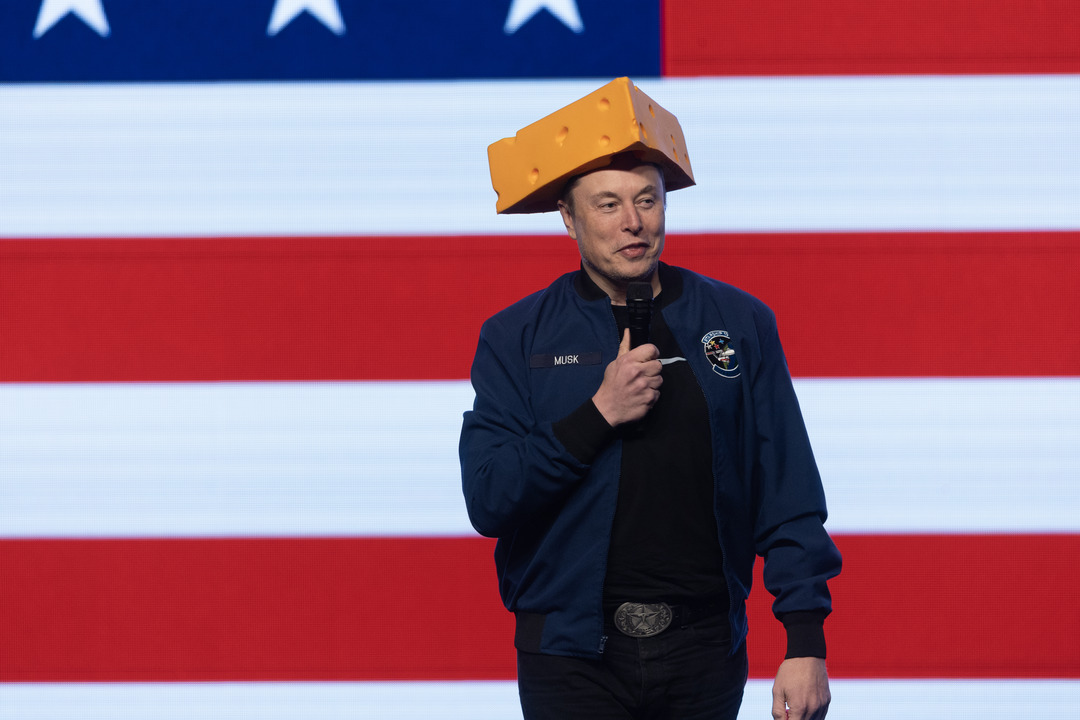
Elon Musk arrives for a town hall wearing a cheesehead hat at the KI Convention Center on March 30, 2025, in Green Bay, Wisconsin. (Scott Olson / Getty Images)
Last night’s Wisconsin Supreme Court election, which saw the candidate backed by President Donald Trump and billionaire Elon Musk lose to his liberal, Democratic-backed opponent, has swiftly become the political topic of the week. For some, it’s a delicious bit of schadenfreude regarding Musk and tangible proof of how badly he is disliked by the public. For others, it’s a story about the possible electoral comeback of a demoralized and badly damaged Democratic Party. Both are possible. But it also could be something more important: a modest but encouraging victory for democracy over organized super-wealth, a popular rejection of oligarchic rule and the way it has been rubbed in the public’s face the past few months.
The state Supreme Court race loomed for months as a symbolic battle for the next four years, an early referendum on Trump’s first term so far and, as he became more prominently involved in it, on Musk himself. With so much at stake, Musk carried out a series of unseemly antics to swing the election toward the GOP-favored candidate that served as a stark reminder of the alarming and increasingly bare-faced influence of big money in US elections.
Musk and his various groups poured a record total of $25 million into the race, an amount never before seen in a state Supreme Court election. Just as in the general election last November, Musk funded the kind of work usually done by grassroots volunteers, putting $6 million behind door-to-door canvassers, and offered to pay $20 to anyone who signed up to knock doors, as well as an extra $20 for anyone else they recruited and a bonus $200 if they referred ten people.