The Warsaw Ghetto Uprising Wasn’t Always Celebrated
The Warsaw Ghetto Uprising, which began 82 years ago today, is now universally hailed as a bold act of Jewish resistance against the Nazis. But at the time, many Poles watched — or cheered — as the ghetto burned. The parallels with Gaza are hard to ignore.
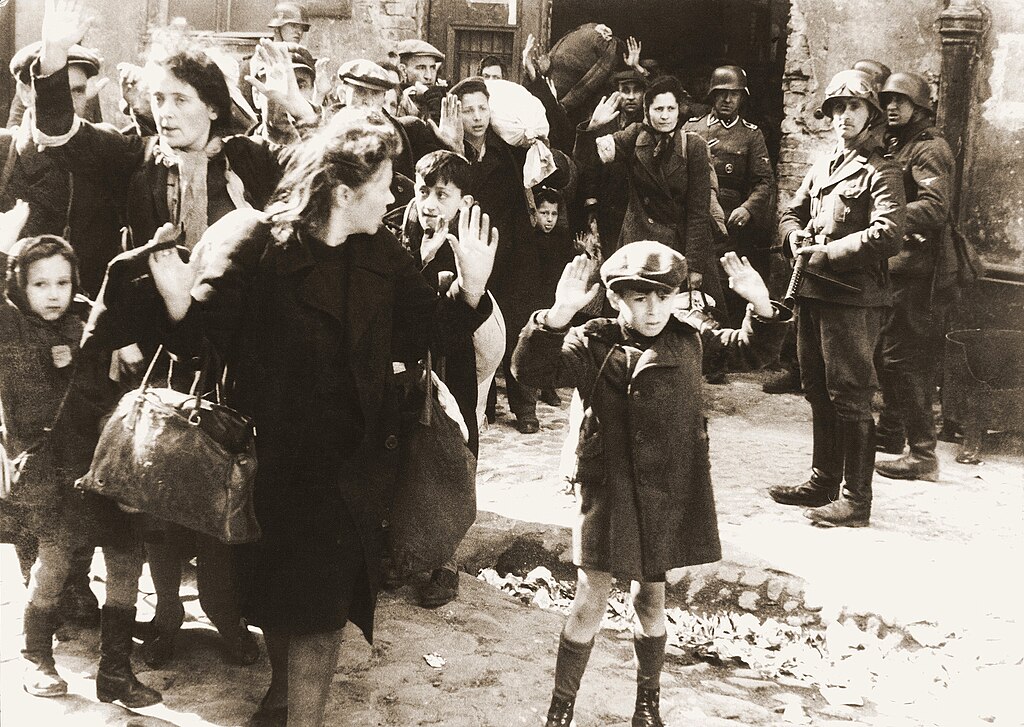
Polish Jews captured by Germans during the suppression of the Warsaw Ghetto Uprising. (Wikimedia Commons)
During the months of April and May 1943, a celebratory atmosphere took hold outside the Warsaw Ghetto’s walls. Children whirled around carousels, giddy crowds converged to holler at the explosive spectacle, and friends watched the pyrotechnics show from front-row rooftops. One onlooker described the streets of Warsaw as a “never-ending parade.”
Within the Ghetto walls, cries were not of laughter and wonder but of terror and anguish. The Warsaw Ghetto Uprising — the largest Jewish-led armed resistance to the Holocaust — prompted Nazi occupiers in Warsaw to raze the entire urban area. The open-air prison where 450,000 Jewish people had once dwelled suddenly ceased to exist.
Today the Warsaw Ghetto Uprising is universally commended in Poland and around the world as a bold act of resistance, but this was far from the case when it occurred. In the streets of Warsaw, many non-Jewish Poles rejoiced as their neighbors burned.