The Shared Logic of Censorship
Whether from religious conservatives or progressive educators, today’s book bans share a common moral claim: some texts are too harmful to circulate. But when ideologies compete to control knowledge, the pluralism and inquiry democracy needs begin to erode.
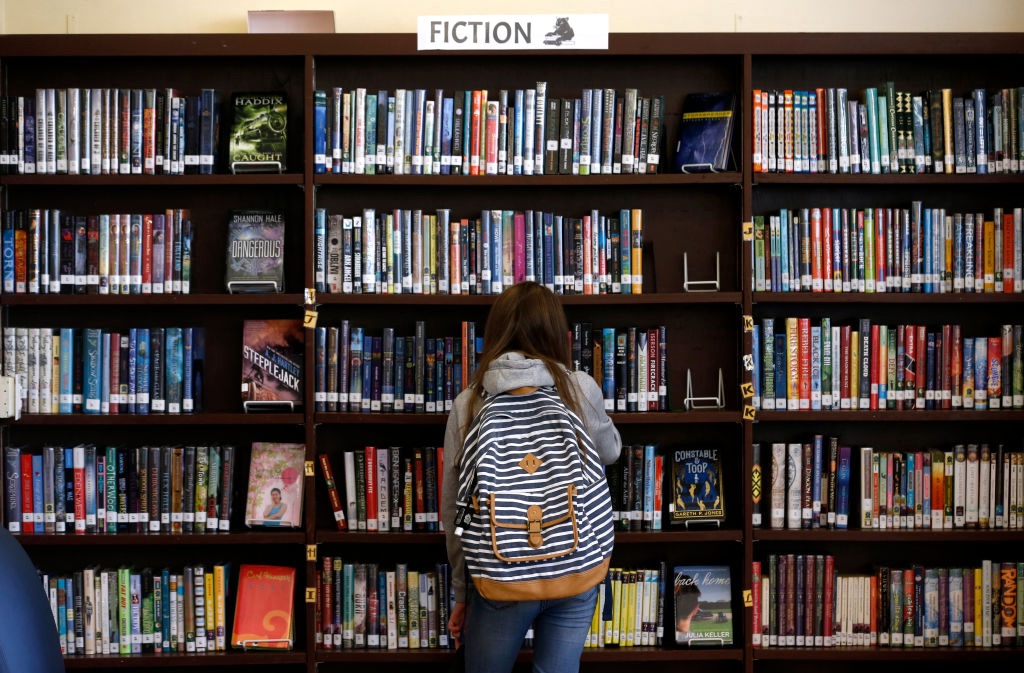
A student browses through books in the Presidio Middle School library in San Francisco, California, on September 10, 2019. (Paul Chinn / the San Francisco Chronicle / Getty Images)
Free speech is at risk around the world — including in the United States and Canada. Attacks on expression take many forms, from state crackdowns on protest to book bans in schools and libraries. These threats, a result of shifting cultural norms and policy decisions, have sparked growing resistance. Some are pushing back, warning of the dangers, and defending the principle of open debate, which is essential for any functioning democracy.
To explore the rise of censorship and what’s being done to resist it, Jacobin’s David Moscrop spoke with Ira Wells — essayist, academic programs director at the University of Toronto’s Victoria College, and author of On Book Banning.
David Moscrop
This might seem like an elementary question, but what is a book ban?
Ira Wells