The Ugly Battle for Control of a Prison-Tech Empire
Smart Communications has made a killing from charging prison inmates for emails and phone calls. A messy legal struggle for control of the prison-tech empire is exposing the big business of profiting off mass incarceration.
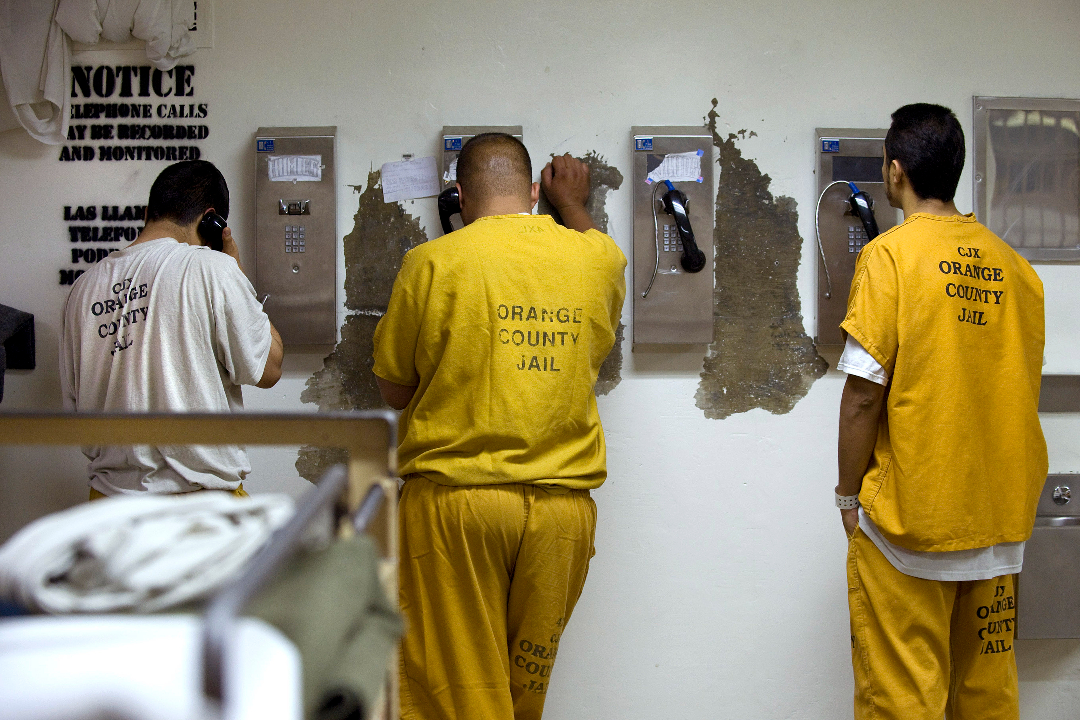
Inmates make collect phone calls at the Sheriff’s Central Men’s Jail in 2011 in Orange County, California. (H. Lorren Au Jr / MediaNews Group / Orange County Register via Getty Images)
The yacht is moored at the mouth of the Miami River, in the long shadows of the city’s luxury hotels and high-rises. It is of Italian design: sleek, imposing, with a flybridge and sundeck and five cabins, and a price point of about $10 million. On the hull, bold silver lettering declares its name: Convict.
The Convict is the crown jewel of prison technology company Smart Communications, whose CEO, Jonathan Logan, has a reputation for flaunting the millions he has made in the business of prisons and jails. There is also Logan’s $300,000 Lamborghini, with a license plate that reads “INMATE.” There are the photos he posts dressed in garish suits, posed in the driver’s seat of his Rolls-Royce.
The yachts, the cars — they all form part of Smart Communications’ “empire,” as insiders refer to it. The company rakes in tens of millions in revenue each year from its prison communications tech, a business model that mostly involves charging people incarcerated in the US prison system to send emails (50 cents a pop) or make phone calls (7 cents a minute) or leave thirty-second voicemails ($1 each).