Squid Game 2, an Allegory of Capitalism Versus Democracy
In the nail-biting new season of Netflix’s hit series Squid Game, players’ desperate circumstances push them to make fatally risky bets on individual success even when collective action might save them.
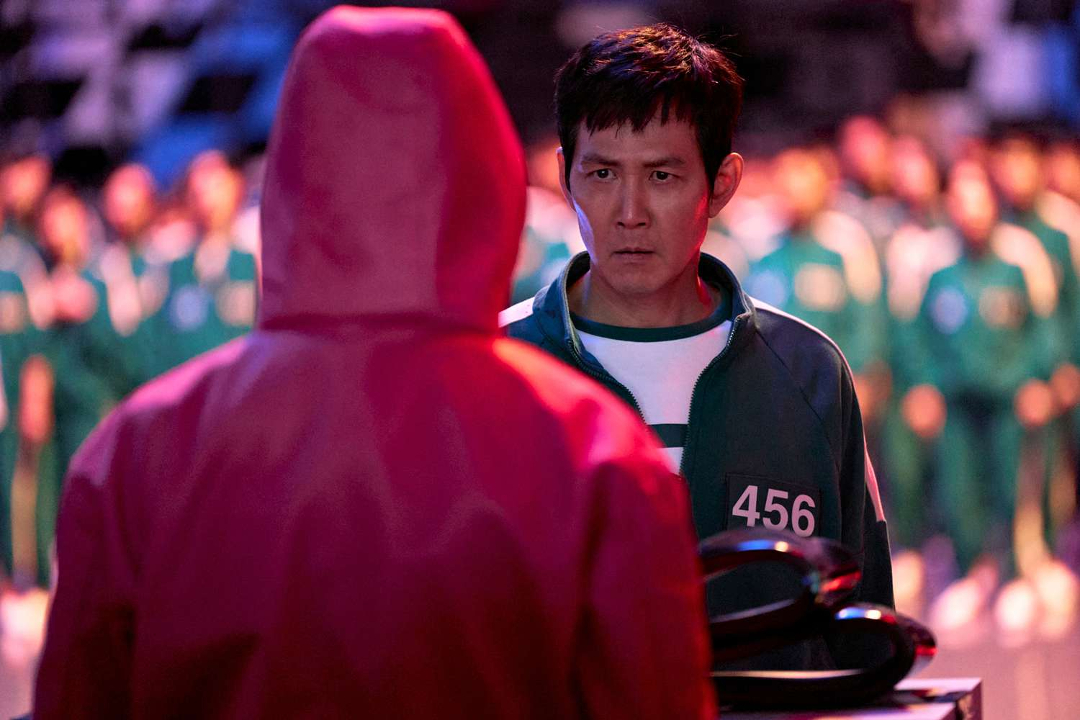
The futile elections in Squid Game 2 are a perfect analogy for how capitalism constrains and compels the actions of the working class. (No Ju-han / Netflix)
If the debut season of the Korean Netflix series Squid Game laid bare the ails of modern capitalism, its highly anticipated second season reflects the challenges to organizing against it.
Initially released in 2021, Squid Game became an overnight global phenomenon. In the dystopian survival show, financially desperate players enter into a series of challenges adapted from Korean children’s games in hopes of winning a hefty cash prize. The stakes are lethal: lose a game, and you’re eliminated — permanently.
Any time one of the roughly four hundred players dies, the total prize money is raised by 100,000,000 Korean won (approximately US$70,000). After each round, players are given the option to take a popular vote on whether or not to continue the games. If players vote to end the game before all six rounds are completed, the prize money will be divided evenly among the remaining players.