Why You’re Watching Squid Game
The extraordinary success of Netflix's Squid Game demonstrates how many people relate to a portrayal of capitalism's miseries — and how few feel there is any way to escape.
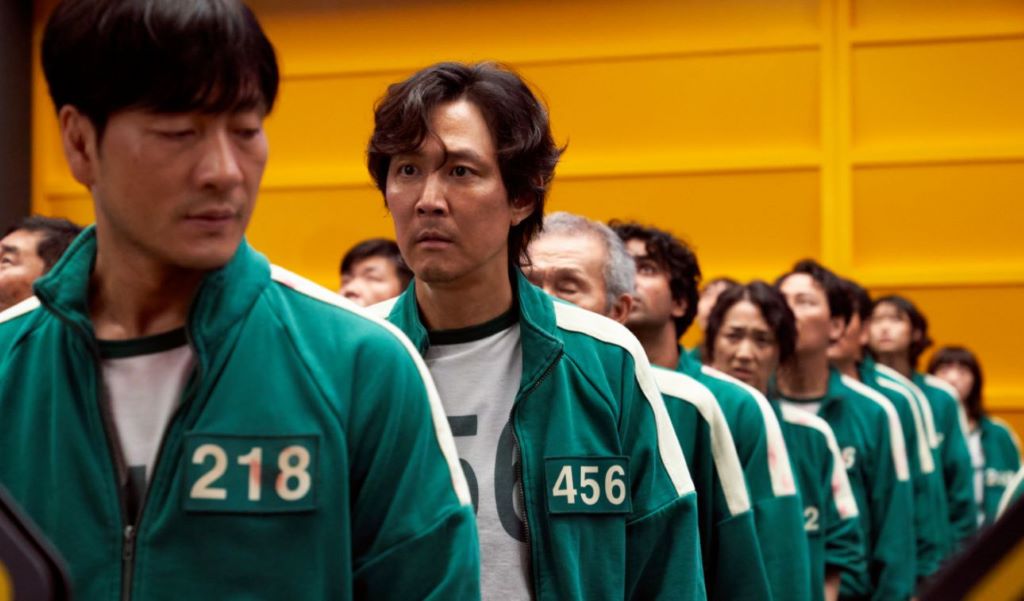
South Korean drama Squid Game has become Netflix’s most successful series launch ever, amassing more than 111 million views worldwide in its first four weeks. (Netflix)
At the end of July, the total private debt owed in the UK amounted to £1,741.7 billion — an increase of £62.9 billion over the previous year. The average adult had a debt of £32,931, and looming cuts to Universal Credit and furlough cliff-edges look set to send that figure soaring further upward.
Three months later, South Korean drama Squid Game has become Netflix’s most successful series launch ever, amassing more than 111 million views worldwide in its first four weeks. Unlike other popular dystopian fictions, Squid Game’s characters are not residents of an alternative universe, a near future, or another planet. The horror that makes up the show’s conceit isn’t what might be after a catastrophe, or if we were to allow crises to progress further. Squid Game’s dystopia is the contemporary world.
And while historical, cultural, and economic elements make the plot specific to South Korea — a country whose history has been scarred by establishment cover-ups of brutality, and whose present sees its households facing one of the highest rates of personal debt in the world — its global success shows that much of that dystopia resonates further afield. Not least, as we’ve established, in Britain.