After LA’s Fires, Don’t Weep for the Insurance Companies
It is absurd to suggest that insurance companies have been blindsided by increasing climate risks. On the contrary, they’ve been fully aware, highly prepared, and hard at work protecting profits at the expense of policyholders.
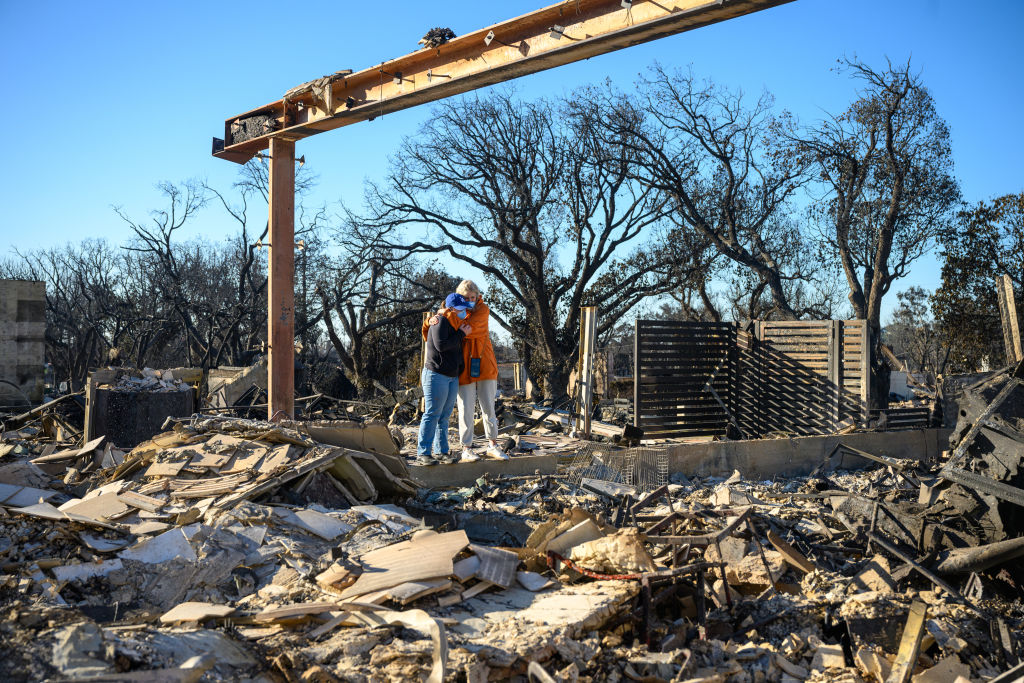
A mother and daughter visit their destroyed home on January 14, 2025, in the Pacific Palisades, California. (Alexi Rosenfeld / Getty Images)
The fires that ravaged residential areas in Los Angeles County, which likely began with the eruption of the Palisades fire on January 7 due to strong Santa Ana wind events, have killed at least twenty-five people, burned down upwards of ten thousand residences, and forced almost two hundred thousand people to evacuate. In the immediate aftermath of losing their homes, valuable belongings, precious keepsakes, and personal documents, however, thousands of families will not have time to mourn. Before picking up the pieces and starting over, they will have to spend weeks or months negotiating insurance settlements with companies that have been determined to provide increasingly inadequate coverage over the last several years — that is, if they’re lucky enough to still have a plan.
Since 2021, most of the largest home insurance providers have either stopped writing new policies for homes in high-fire-risk areas, decided not to renew thousands of existing policies, or raised costs by over 300 percent from one year to the next. In addition, a proposed class action lawsuit filed in San Diego County in December 2024 alleged that Liberty Mutual relied on demonstrably false pretenses to issue nonrenewals of plans that policyholders had paid diligently for decades. In other words, where insurance companies are unable to outright exit the market or push buyers away with exorbitantly high prices, they rely on fudging evidence of noncompliance to put the blame on homeowners.
In California, insurance firms benefit from a particularly benevolent insurance commissioner, Ricardo Lara, who has a history of accepting donations from lobbyists and passing draft regulations by them for approval before adopting them. As many private insurers fled California in the last five years, more and more homeowners have sought coverage from the California FAIR Plan, an insurer of last resort comprising insurance companies under the commissioner’s oversight. The influx has caused FAIR’s liabilities to balloon in the last year, even as it has been found in violation of hundreds of insurance code obligations. As investigative reporting in the Lever described, Lara graced insurance companies with a regulatory action last year that, in the event of a catastrophe that required the FAIR Plan to levy assessments, would allow them to pass on half of the liabilities up to $1 billion to their own policyholders.