Class Dealignment Has Devastated the Italian Left
In Italy, blue-collar industrial workers are abandoning the Left. As in other countries, they don’t represent the entire working class, but their loss of support should still deeply trouble the Italian left.
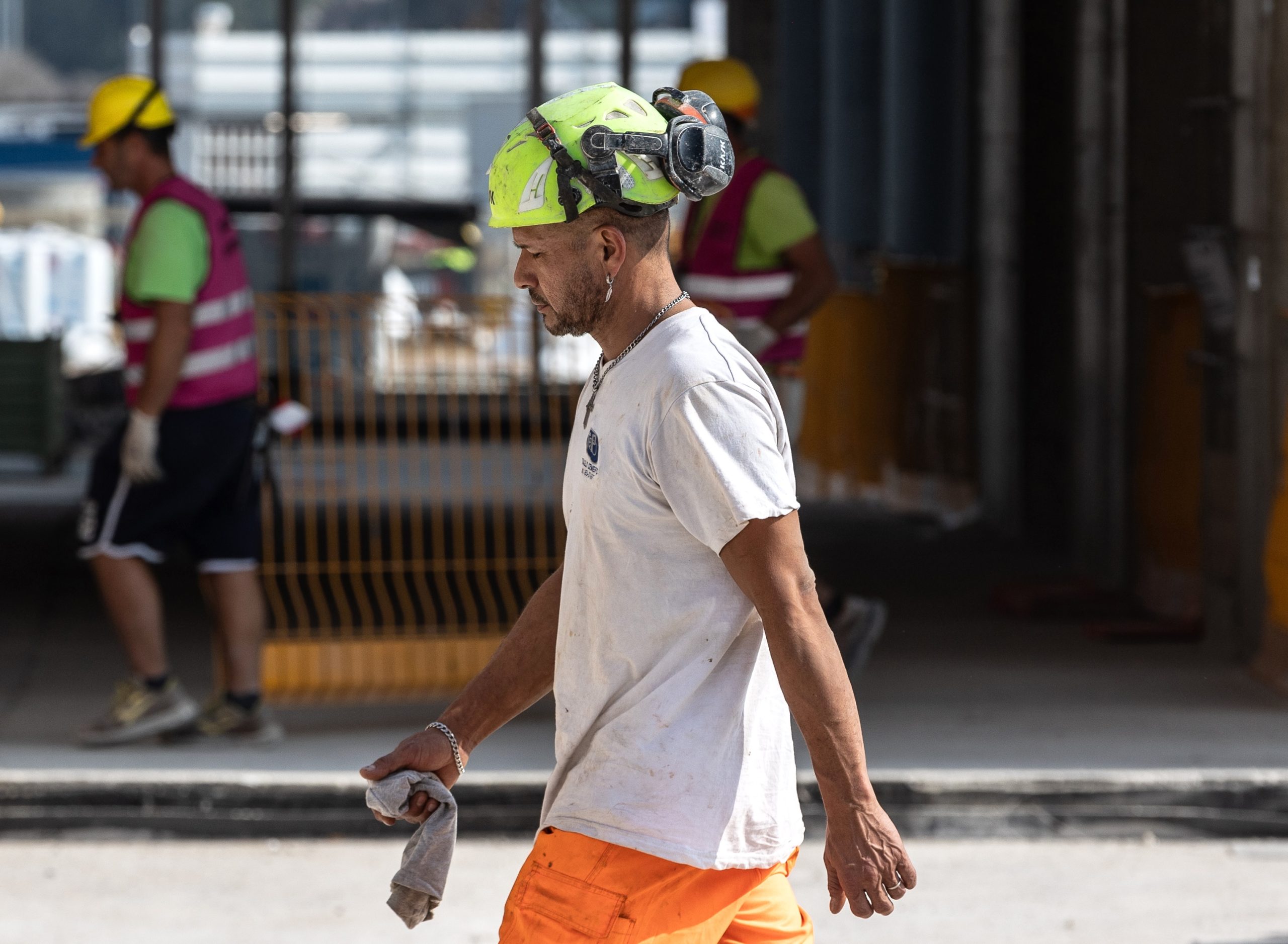
A construction worker in Milan, Italy, on October 2, 2023. (Emanuele Cremaschi / Getty Images)
“We defend workers better than the caviar left!” Campaigning for November’s regional elections in Emilia-Romagna and Umbria, Italian prime minister Giorgia Meloni was sure to emphasize her party’s connection to ordinary people. She argued that her coalition is “rooted in the heart of society, far from VIP salons and the radical-chic left’s lobbies.” While TV panel shows might make it seem like the so-called “salon left” is influential — Meloni told her supporters — any politician visiting a street market will see how “the people” support her government.
This rhetoric is not new: Italy’s far-right politicians have often used it in their culture war against the Left. They portray themselves as defenders of a supposed traditionalist hardworking people who stand against an elite in its progressive ivory towers. This elite, in their narrative, ranges from the moderate center-left Democratic Party to far-left activists and squatted social centers. In this way, the Italian right developed its own language of class politics, defining it in terms of cultural preferences rather than relationship to production. Terms like “caviar left,” the “salon left,” “ZTL left” (referring to the pricey historic city centers where restricted traffic zones, or ZTL, are enforced), “Rolex communists,” and “radical-chic left” are widely popularized through far-right rhetoric, from Meloni to Lega leader Matteo Salvini. These expressions were so ingrained in their rise to power that they are now familiar in Italians’ everyday language.
This is, without doubt, propaganda. It is a calculated and effective narrative crafted by the far right to present itself as fresh and appealing, adopting the customs, language, and culture of everyday Italians, to appear as though they are “one of them.” This image, however, stands in stark contrast to the reality: Firstly, the current government enjoys excellent relations with Italy’s capitalist elite (and foreign counterparts as well, as Meloni’s friendly ties with Elon Musk indicates). Secondly, under Meloni’s government, the material conditions of Italy’s working class have continued to decline, along with the quality of public services that primarily benefit them, such as public transport and the health care system.