The Devastation in Mayotte Isn’t Just a Natural Disaster
After Cyclone Chido hit the Indian Ocean islands of Mayotte, Emmanuel Macron told locals that they would be “10,000 times more in the shit” if they weren’t French-ruled. The mass casualties show how little France has actually done to protect the islanders.
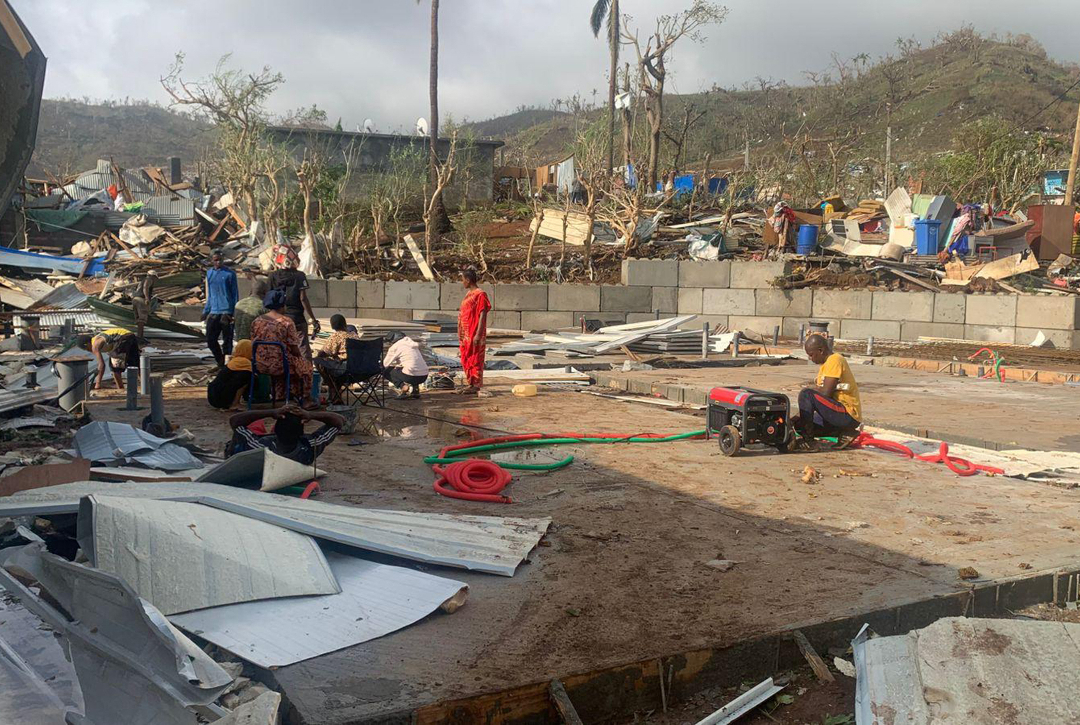
A photo taken on December 15, 2024, shows Mayotte residents sitting among piles of debris after homes were destroyed by Cyclone Chido. (Kwezi / AFP via Getty Images)
The French archipelago of Mayotte, located between mainland Africa’s east coast and northern Madagascar, was hit last week by the strongest cyclone in nearly a century. Winds howling above 220 kilometers per hour (136 miles per hour) peeled the roofs and walls from homes that collapsed around the people inside. Many residents still remain cut off from the world, without access to water, food, or electricity. Public health experts are now concerned that a lack of access to clean water could lead to disease, such as cholera.
The devastation is total in Mayotte, which is by far France’s poorest territory. Mayotte has suffered for years from extreme poverty and deep structural vulnerability — even before the cyclone, 77 percent of the population lived below the poverty line, while 29 percent of households had no access to running water.
The population is regularly subject to severe restrictions on drinking water. In late 2023 and early 2024, tap water was cut off two days out of three to cope with an unprecedented drought.