Lina Khan and the Return of Anti-Monopoly
In the past few years, Lina Khan has found herself at the vanguard of a new anti-monopoly movement. But is her worldview too limited to truly rein in corporations?
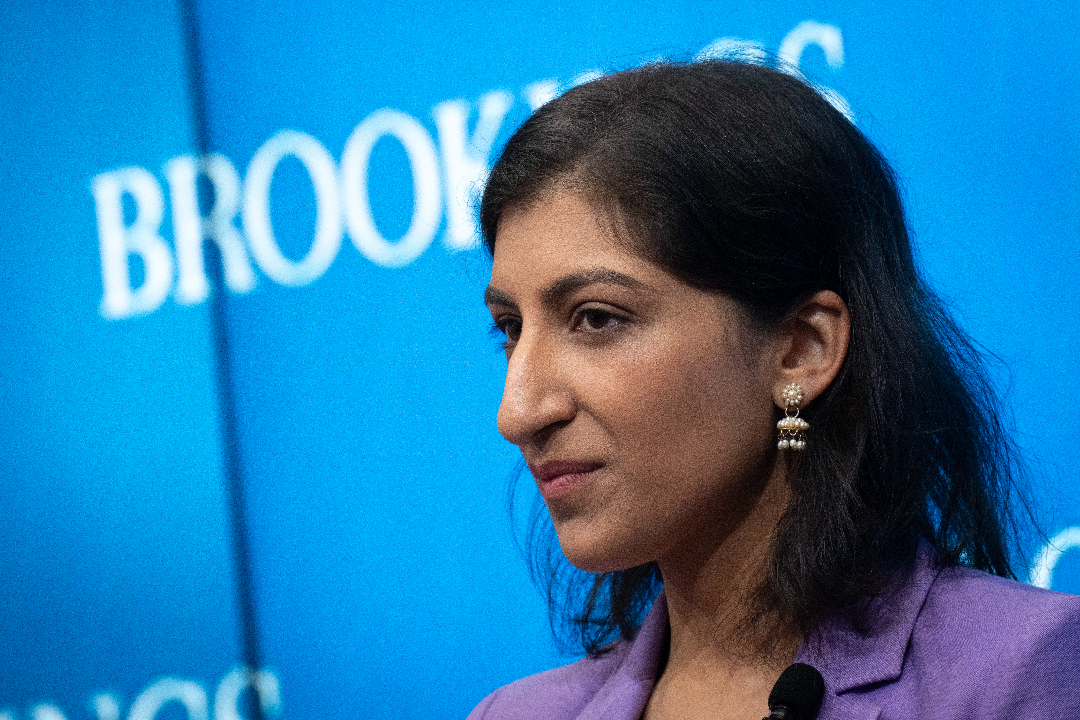
Federal Trade Commission chair Lina Khan speaks during a discussion on antitrust reforms at the Brookings Institution on October 4, 2023, in Washington, DC. (Drew Angerer / Getty Images)
As his presidency comes to an end, Joe Biden’s term will be immediately remembered for its political failure to prevent the return of Donald Trump. The better aspects of his economic vision, however, will perhaps leave a lasting legacy.
Biden’s decision to nominate Lina Khan to chair the Federal Trade Commission (FTC) and his executive order in July 2021 to promote competition in the American economy weren’t accompanied by much fanfare. But they were two of the most significant actions of his presidency. For members of a resurgent anti-monopoly movement, this was the true heart of Biden’s proclaimed paradigm shift in economic policy.
Biden’s move to encourage more competition in the land of free enterprise has antagonized corporate America in ways not seen in decades. Under Khan’s leadership, the FTC has challenged proposed mergers and helped advance antitrust lawsuits against monopolies such as Amazon and Google. Its numerous investigations and rules, meanwhile, have doubled as public service announcements about what counts as anticompetitive or predatory practice. This is an unusual turn for the 110-year-old bureaucratic agency, yet it is in line with the crusading spirit behind its creation under President Woodrow Wilson and Supreme Court justice Louis Brandeis. Like them, Khan believes educating consumers and workers about the law and their rights is central to the FTC’s mandate.