Democrats’ Antitrust Push Has Been Mostly Rhetorical
The Biden administration’s more aggressive approach to antitrust has been much discussed by proponents and critics alike. Yet the administration’s regulatory moves have really been small-bore tweaks around the edges, with little impact felt by voters.
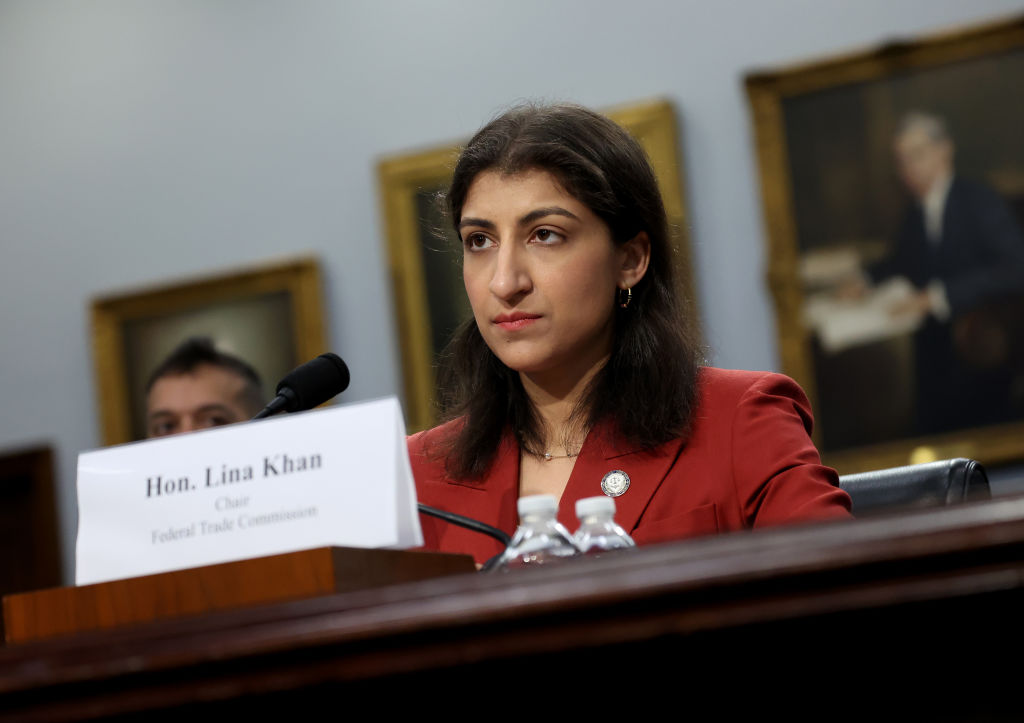
Chair of the Federal Trade Commission Lina Khan testifies before the House Appropriations Subcommittee on May 15, 2024, in Washington, DC. (Kevin Dietsch / Getty Images)
At the New York Times, Adam Jentleson wrote a piece about what Democrats need to do to win elections. In the aftermath of election losses, these kinds of finger-pointing pieces are standard fare. I didn’t find Jentleson’s piece all that interesting overall, but it contains the following tossed-off line that started its own little discourse:
By wishing away these complexities, a coalition-first mind-set produces many candidates who are the inverse of what voters want — people with the cultural sensibilities of Yale Law School graduates who cosplay as populists by over-relying on niche issues like Federal Trade Commission antitrust actions.
In the context of the piece, Jentleson seems to be arguing that this particular issue area is an electoral liability, or at least attracts certain kinds of pointy-headed politicians that are an electoral liability. But it also seems like a line that has been shoehorned in because Jentleson finds the entities and individuals involved in this area of advocacy — Open Markets Institute, American Economic Liberties Project, More Perfect Union, Institute for Local Self Reliance, the American Prospect, Elizabeth Warren, etc. — to be annoying, both interpersonally and because they overstate the significance of the policies they promote.