Jimmy Carter Held the Door Open for Neoliberalism
The presidency of Jimmy Carter was deeply constrained by economic and political crises. His unwillingness to take a radical stance forced him to respond to these events by imposing austerity and doing little to strengthen labor.
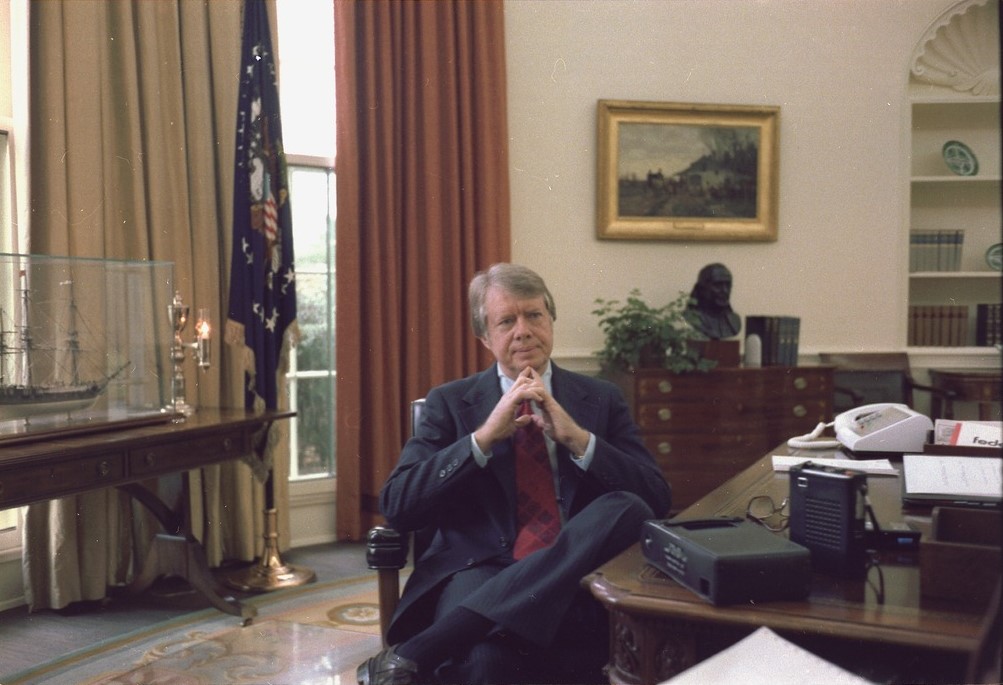
Jimmy Carter at his desk in the Oval Office, December 13, 1977. (US National Archives and Records Administration via Wikimedia Commons)
Whatever one might say about Jimmy Carter’s presidency, it was clear that the man himself meant for it to be transformational. From a subdued 1977 inauguration — Carter skipped the motorcade and black-tie balls in favor of business attire and an open-air stroll down Pennsylvania Avenue — to subsequent promises to restore American energy independence, reform welfare, and even transcend the “inordinate fear of communism” that had dominated US foreign policy since the 1940s, the thirty-ninth president put a lot on his plate.
Elected president in the wake of the catastrophic US intervention in Vietnam and amid divisive racial tensions and widespread economic distress, Carter hoped to, as he put it in his inaugural address, “bring a resurgent commitment to . . . basic [moral] principles” and establish a government “both competent and compassionate.”
Though Carter achieved more than he is generally given credit for — and remains among the more decent men to have held the office — his presidency failed to bring about the fundamental transformation he sought. Instead, his term helped establish a far more dubious pattern: Democratic presidents with admirably ambitious policy agendas stymied by an inability to form a durable coalition or stem the erosion of their party’s support among the working and middle classes.