Why Is Health Care Reform Absent This Election?
Despite polling consistently showing that voters are deeply concerned about medical care and its costs, neither Donald Trump nor Kamala Harris is offering a sweeping vision of health care reform.
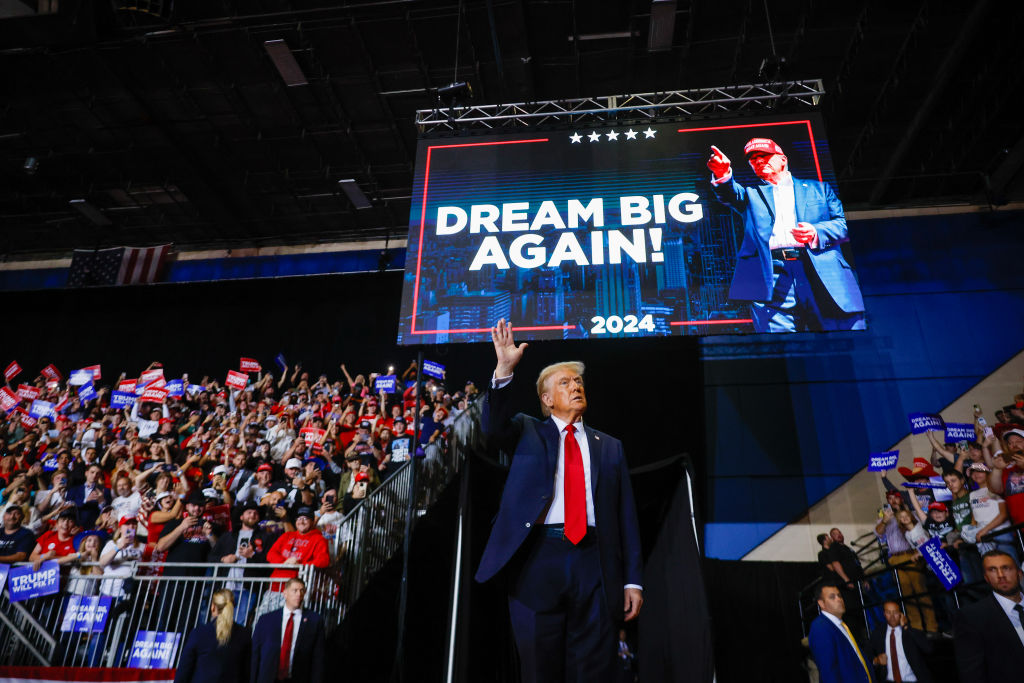
Donald Trump arriving at a campaign rally at the Salem Civic Center on November 2, 2024, in Salem, Virginia. (Chip Somodevilla / Getty Images)
At 5:30 a.m. on Saturday, October, 19, with the sky still pitch black, the parking lot of the Executive Education Academy in Allentown, Pennsylvania, was unusually active. The charter school, tucked between a minor-league baseball stadium and the Lehigh River, was about to open its doors for a free pop-up medical clinic providing essential medical, dental, and vision care for people who otherwise would go without. Folks seeking treatment had begun filling the lot the night before, with many sleeping in their cars.
Angel — a thirtysomething Allentown local dressed in sweatpants and Crocs adorned with little plastic charms reading Dior and Gucci — arrived at midnight, right as workers opened the lot. “I actually was dropped off by my husband,” she said, “so I was sitting outside in a chair. I had two really awesome people on both sides of me. One gave me a robe to borrow, and one gave me a blanket. So thank God for them. Amen. It got cooold.” But she had to make sure she got access to care, she explained: “I desperately need dental work done.”
Angel works in a grocery store full-time and overtime “whenever I can get it,” she said, and pays the premiums for her employer-provided medical and dental insurance. But that insurance is inadequate to cover the treatment she needs. She’s far from alone: according to a survey by the Association of Health Care Journalists, roughly half of working-age adults have health insurance that provides insufficient coverage and leads to delayed or skipped care.