Francesca Albanese: This Is Genocide
In an interview, UN special rapporteur Francesca Albanese explains how Israel is systematically erasing Palestinian life from Gaza.
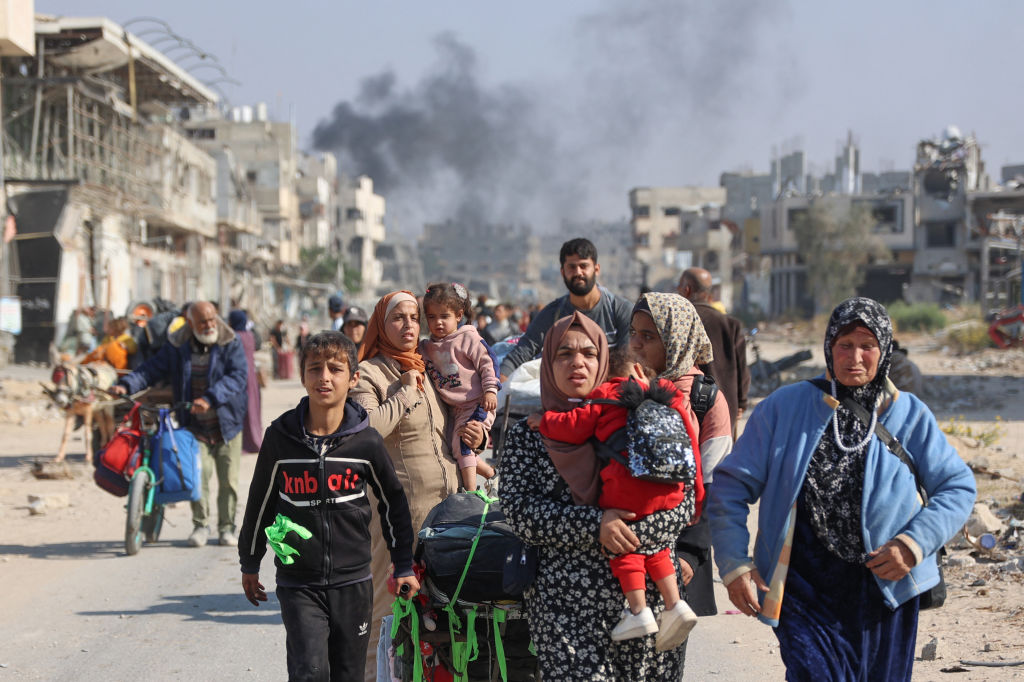
Palestinians displaced from shelters in Beit Hanoun cross into Jabalia on November 12, 2024, in the northern Gaza Stip. (Omar al-Qattaa / AFP via Getty Images)
Since the onset of Israel’s exterminationist war on the people of Gaza thirteen months ago, Francesca Albanese, United Nations (UN) special rapporteur for the occupied Palestinian territories, has acquired international renown as a public chronicler, legal anatomist, and political opponent of genocide. Appointed to the role in May 2022 — the month Israeli forces assassinated Palestinian American journalist Shireen Abu Akleh in Jenin — the Campagna-born international human rights lawyer has produced a succession of official reports detailing Tel Aviv’s apartheid regime, its renovation of the West Bank into a
“constantly surveilled open-air panopticon” crisscrossed by colonial settlements, and, since last October, its crimes of genocide against the Palestinians.
Spearheading the urgent demand within international fora for an immediate and unconditional cease-fire, and for the mobilization of all forms of global pressure upon the Israeli state, Albanese has been subjected to the same rote defamation campaigns familiar to all supporters of Palestinian liberation. Now, in the face of recent pleas from Israel advocacy organizations to bar her from Western college campuses, the special rapporteur has undertaken a speaking tour of London universities, addressing Israel’s present genocide and the role (and limits) of international human rights law in resisting it. As the Israel Defense Forces’ (IDF) so-called Generals’ Plan to ethnically cleanse northern Gaza proceeds, and as more Palestinian and Lebanese children join the thousands upon thousands slaughtered, it was recognized by all attending Albanese’s Monday night address at SOAS University of London that the hour could not be graver.
Approaching the campus off Russell Square, I initially found my path through the SOAS gates blocked by a microcosmic standoff: pro-Zionist demonstrators — brandishing Israeli flags and posters reading “BAN FRAN” and chanting “I-I-IDF!” — flanked by police, and between them and the university, a considerably larger, louder, younger, and more diverse pro-Palestinian cohort, mostly students. With cheers and drumbeats rising as she greeted the assembled crowd, Albanese’s celebrity reception dramatized the resonance felt by the pro-Palestine campaigners between her international stand for the people of Gaza in the face of personal attack and their own activism in the face of disciplinary repression at SOAS.