Labor’s Future in the Global Trade War
As trade tensions rise and industrial policies are reshaped, labor faces critical decisions in a world plagued by economic nationalism and climate change.
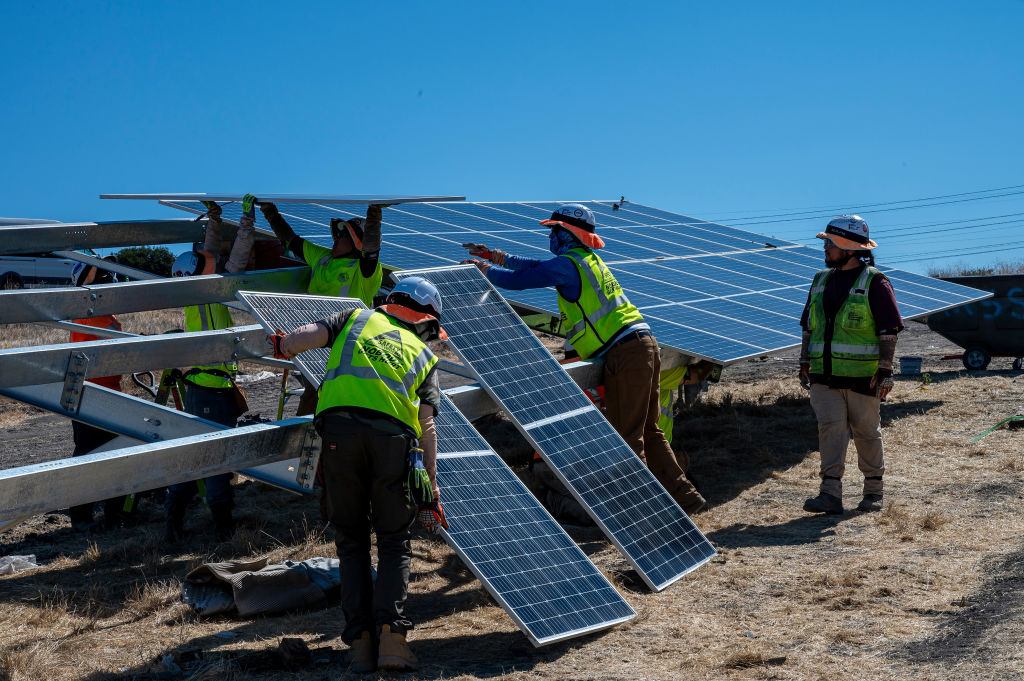
Workers install solar panels in Rodeo, California, on July 31, 2024. (David Paul Morris / Bloomberg via Getty Images)
The US-China trade war, which began in January 2018 under Donald Trump with the imposition of tariffs on Chinese goods is heating up again and drawing more countries into the fray. Closely related to these trade tensions are competing industrial policies between the world’s two largest economies.
This development presents significant challenges for labor movements worldwide. Tariffs are not only about protecting jobs; they can also result in job losses. Industrial policy, used by nation-states to create jobs and move up the global value chain, can also be driven by great power competition and national security concerns. Under these circumstances, workers’ interests risk being sidelined or absorbed into to the military-industrial complex under the guise of industrial policy.
With the added pressure of climate change, labor movements around the world are at a crossroads. Workers worldwide are being buffeted by the competing demands of industrial policy, trade wars, and the pressing need for climate-conscious production strategies.