Fredric Jameson and the Adventure of French Theory
After 1945, France produced an extraordinary wave of social theorists whose influence is still felt today. In his final work, Fredric Jameson discussed the excitement of watching this wave rise and fall and the conditions that made it possible.
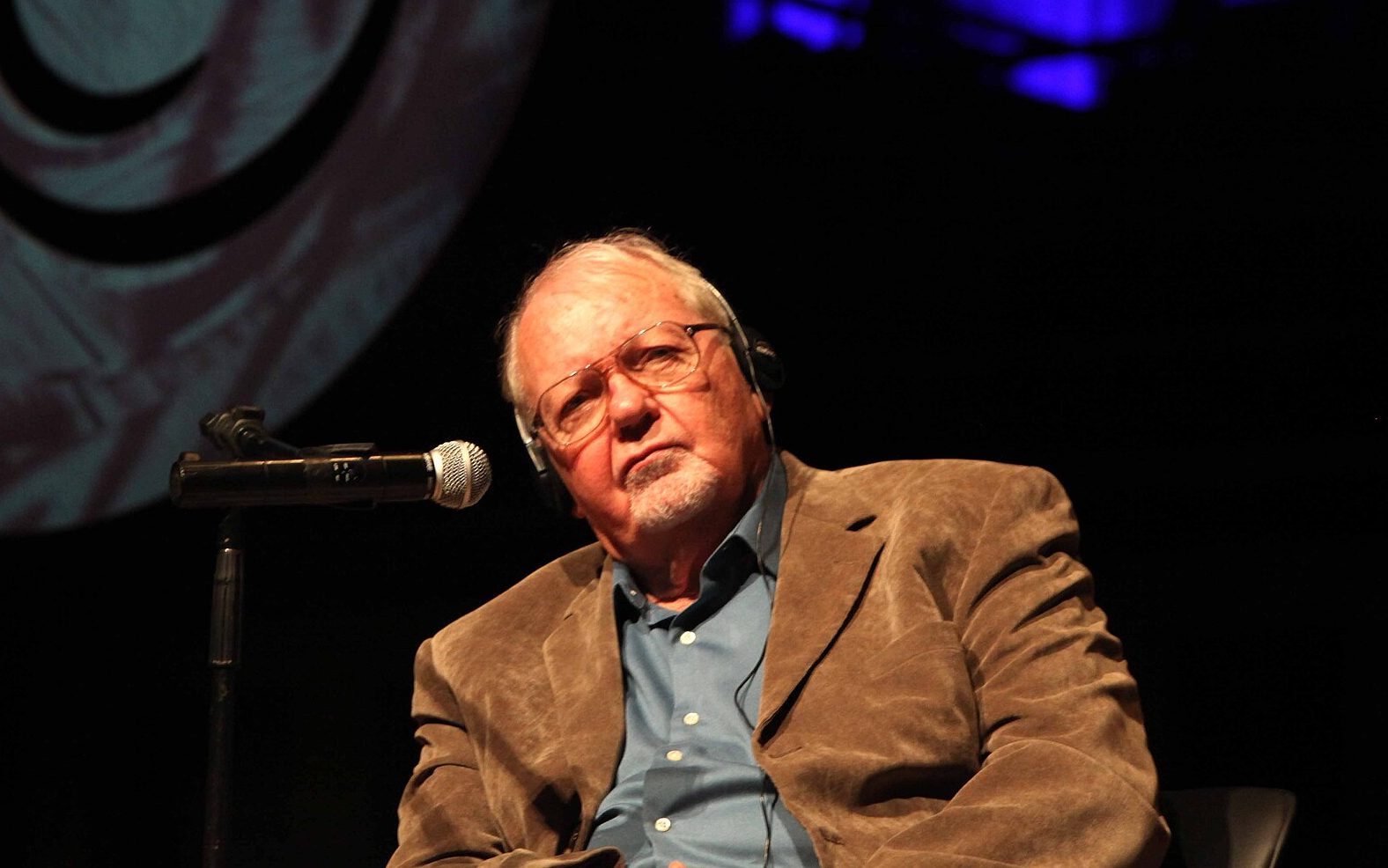
Fredric Jameson in São Paulo, Brazil, in January 2000. (Wikimedia Commons)
Georg Wilhelm Friedrich Hegel distinguished three kinds of history: that of participants or contemporary witnesses; a history reconstructed around a theme, possibly but not necessarily arbitrary; and, finally, history viewed as the progression of the Idea, as the realization of the Absolute.
The history of French theory I propose here can be grasped from all three perspectives. If, for the Hegelian Absolute, one substitutes the evolution of capitalism, then it will gradually become clear how the emergence of French theory in the 1940s and its gradual exhaustion in the neoliberal period can be seen to be an expression of the uniquely national intellectual response to this more fundamental trajectory.
As for the construction of a history in terms of a theme, and one certainly at issue throughout this whole period, the lectures foreground the relationship of the production of theory to Marxism and the varying solutions of mainly linguistic alternatives to an incomplete Marxist reading of the then current situations. This version could also be expressed as the construction of so many idealisms in the face of a philosophically unsatisfactory materialism, or indeed as the reverse.