Jacques Derrida’s Defense of Marx and the Birth of Hauntology
French philosopher Jacques Derrida is best known as one of the champions of postmodernism. But in the early 1990s, at the height of capitalist triumphalism, Derrida took up the cudgels in defense of Karl Marx — and inadvertently spawned a whole musical genre.
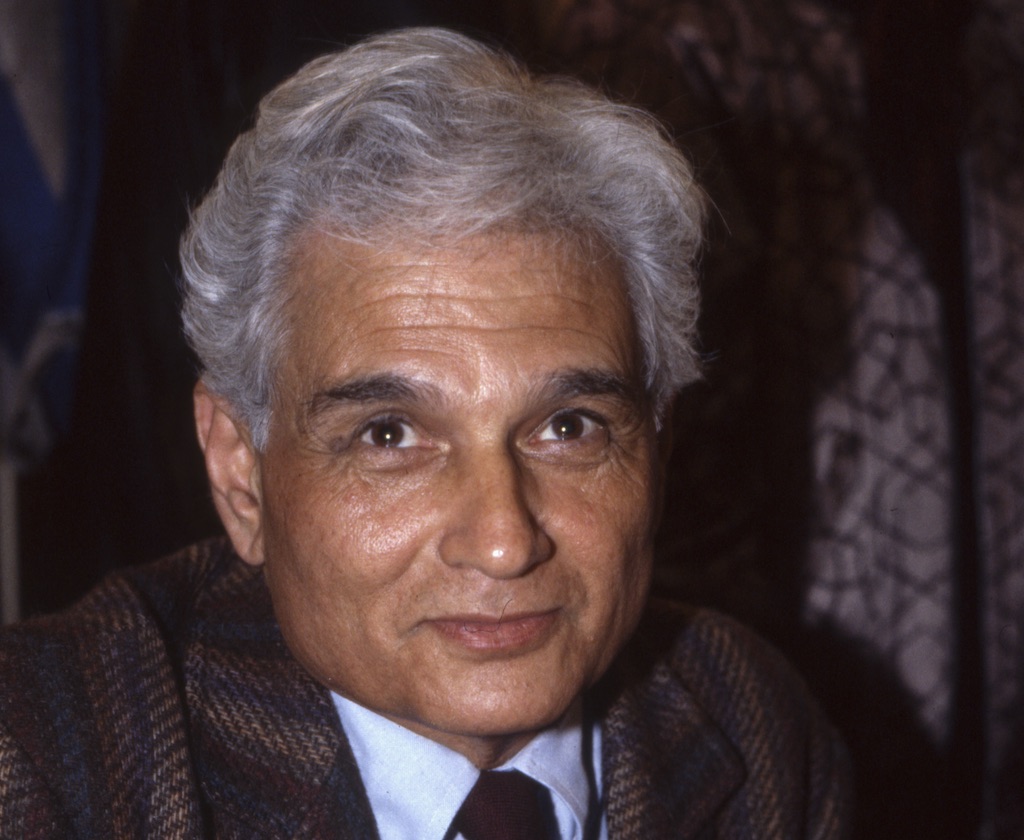
French theorist Jacques Derrida in France in 1994, about a year after he published Specters of Marx. (Louis Monier / Gamma-Rapho via Getty Images)
When the Berlin Wall fell on November 9, 1989, a narrative of Western triumphalism rushed into the space it had occupied. This was, so the story went, a victory for Western liberalism against the malign forces of communism.
Poland had already elected a noncommunist prime minster and Hungary was preparing for a multiparty election. A week after the fall of the wall, Czechoslovakia began its Velvet Revolution, with Bulgaria and Romania following soon after. On December 26, 1991, the Soviet Union was dissolved, the Soviet flag having been lowered at 7:32 PM the night before.
By now Jacques Derrida was combining his teaching at the École des hautes études en sciences sociales in Paris with teaching at the University of California, Irvine. The United States at the time seemed to him more open to French theory. “L’Amerique, mais c’est la deconstruction,” he once joked. “America is deconstruction.”