No, Raising the Minimum Wage Does Not Hurt Fast-Food Workers
Fast-food corporations opposed a California minimum wage increase under the guise of concern for workers, claiming it would result in lost jobs. The bill passed, and the numbers are in: that concern was just scaremongering.
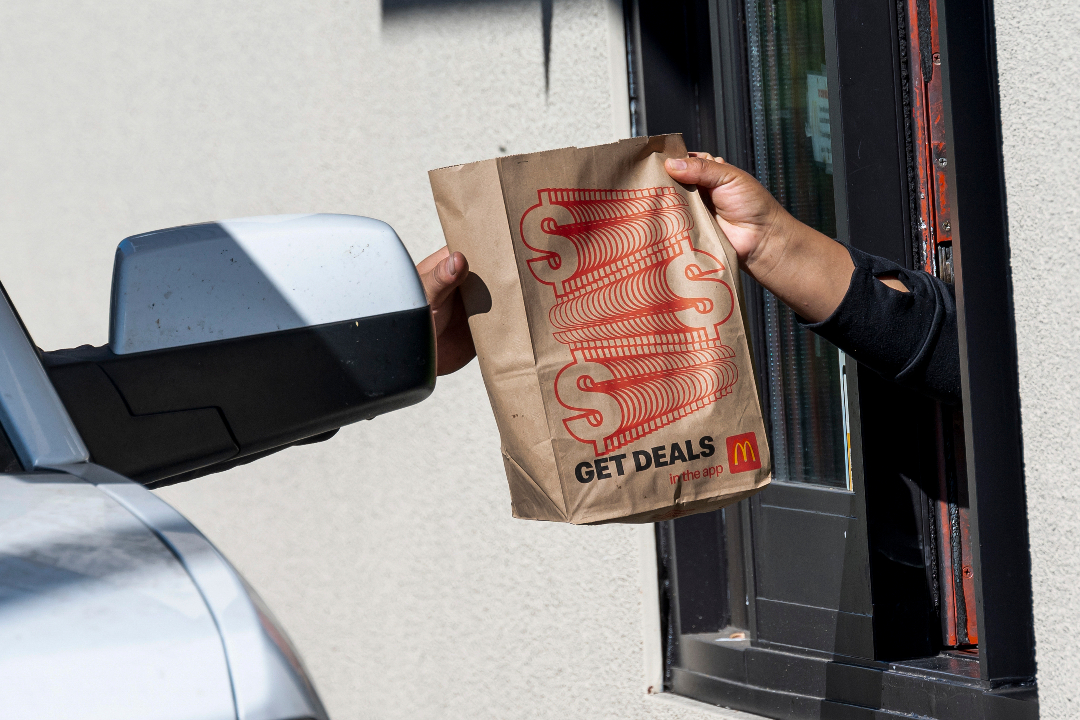
A worker hands a customer a bag at a McDonald’s restaurant in Hercules, California, on Wednesday, October 23, 2024. (David Paul Morris / Bloomberg via Getty Images)
When California passed AB 1228 last September, raising the minimum wage for fast-food workers from $15.50 to $20 per hour — the highest in the nation — the industry responded with a familiar litany of threats. If fast-food corporations and their franchisees were forced to pay workers closer to a livable wage, they would have to raise prices, lay people off, and replace workers with robots en masse to make up the difference.
Now that the wage floor has been in effect since April, those threats appear hollow.
According to a working paper by Michael Reich and Denis Sosinskiy of the Institute for Research on Labor and Employment at the University of California, Berkeley, raising the minimum wage for fast-food workers to $20 led to an average pay increase of 18 percent per worker but did not reduce fast-food employment. Prices did go up, with some variation between chains and menu items, but the average increase of around 3.7 percent (“about 15 cents on a $4 hamburger,” as the Reich and Sosinskiy put it) was marginal. The researchers estimate consumers absorbed almost two-thirds of the increased costs.