The Left Can’t Cede Patriotism to the Right
Instead of allowing the Right to dominate discussions of patriotism, socialists should emulate past successful left projects that wed national belonging to an inclusive, progressive politics.
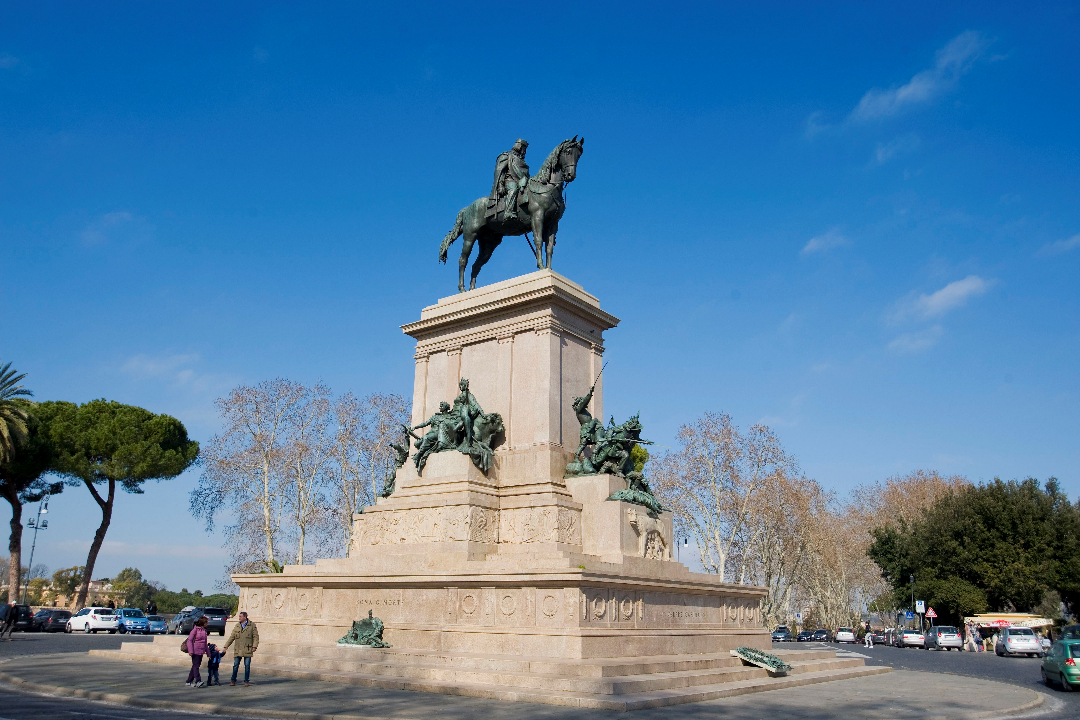
The monument to Giuseppe Garibaldi in Rome, Italy. (Claudio Ciabochi / Education Images / Universal Images Group via Getty Images)
National belonging has profoundly influenced politics over the past two centuries across much of the world, from the Americas to Europe and from Africa to Asia. Few major historical events of the nineteenth and twentieth centuries can be recounted without mentioning nationalism. Wars, geopolitical tensions, crimes against humanity, and totalitarian regimes as well as anti-colonial uprisings, minority rights, and societies unified toward goals of freedom and emancipation — nationalism is almost always present behind the key issues of modernity.
In this article, I will engage in a discussion of how the Left should address the enduring sense of national belonging and pride, an issue that has crisscrossed the history of left-wing politics since its origins and that remains crucial today. While it seems important for the Left to “constitute itself the nation,” as Karl Marx and Friedrich Engels wrote in the Communist Manifesto regarding the proletariat’s struggle, this does not imply that such a politics is straightforward or devoid of risks. But let us first discuss why this issue remains pertinent in a globalized world.
Goodbye Nations?
At various points in history, many authors have argued that nationalist politics was entering its final phase. In early nineteenth-century liberal thought, there was already the belief that nationalism was a declining phenomenon, destined to disappear soon with the expansion of global trade. The idea that people’s national identity (their nationality) was losing importance due to the expansion of world capitalism was shared by Marx in his youth (though not in his more mature writings). This position enjoyed a certain popularity in both the nineteenth and twentieth centuries, albeit cyclically: it disappeared during periods when nationalisms erupted or clashed militarily, only to resurface in subsequent periods.