Burning Man’s Gentrification Was Inevitable
Burning Man wanted to escape capitalism’s ills. It ended up recreating them.
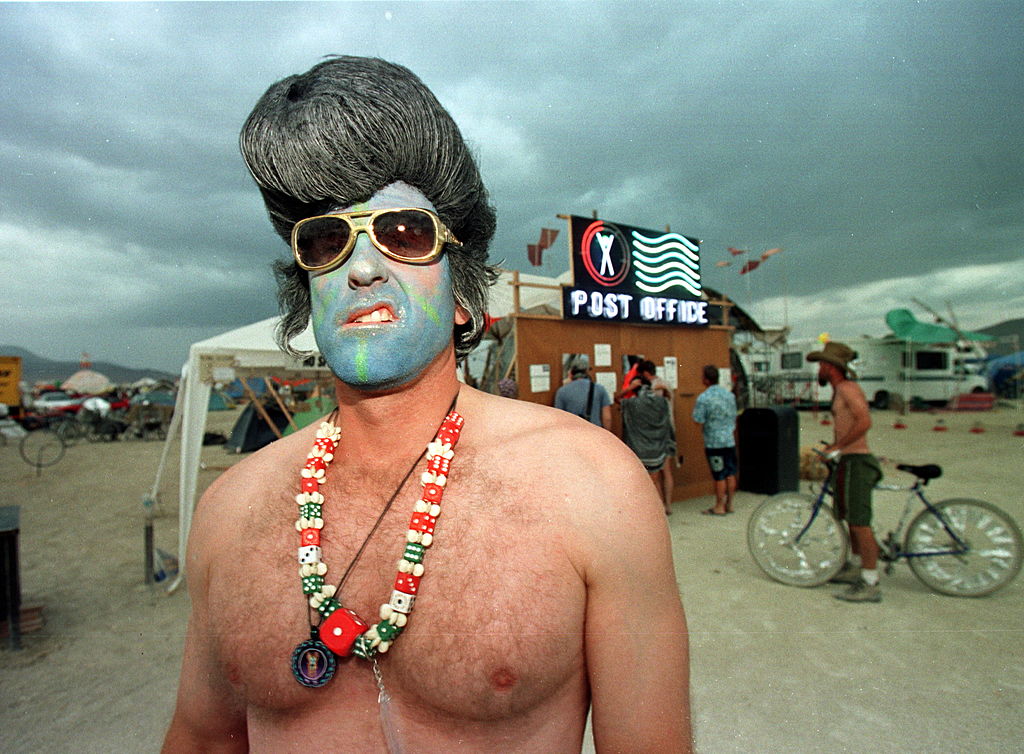
A Burning Man attendee from Las Vegas sneers in an Elvis Presley costume on September 6, 1998, in Black Rock Desert, Nevada. (Mike Nelson / AFP via Getty Images)
Burning Man might seem like the ultimate “escape” from capitalist reality: an annual anarchic gathering in the Black Rock Desert in Nevada, full of pyrotechnics, nudity, drugs, robots, and bizarre vehicles. The short-lived city that attendees create each August, dubbed Black Rock City, has no corporate sponsorships or advertisements — no money changing hands, even.
You might think a week and a half spent camping in the desert sounds like the epitome of “roughing it.” Yet Burning Man is increasingly the province of the wealthy. Burning Man has evolved over thirty-five years from a small affair made up of hippies, drifters, and artists into a must-see event for the jet-setting global elite, up there with Art Basel, Cannes, Coachella, and the Met Gala. Among the titans of industry, the tech barons are particularly enamored of the festival — so much so that Google’s cofounders used Burning Man to vet potential CEOs, and Jeff Bezos, Elon Musk, and Mark Zuckerberg all count themselves as fans. As prices of attendance rise and demography shifts, attendees of lesser means have been increasingly squeezed out.
That Burning Man would become a getaway for one-percenters was not always so apparent. In its early days, Burning Man was a bona fide bohemian experience, a sanctuary for misfits and libertines. Longtime attendees I’ve interviewed over the years describe it in glowing terms, as more “real” than the real world (or the “default world,” to use Burner slang). Many see being a Burner as a crucial part of their identity.