SCOTUS Says Cruelty Is a Solution to Homelessness
Last month, the Supreme Court ruled that local governments could punish people for sleeping outside even when they lack adequate options for shelter. It’s a cruel decision — one that underlines the need to make housing a human right.
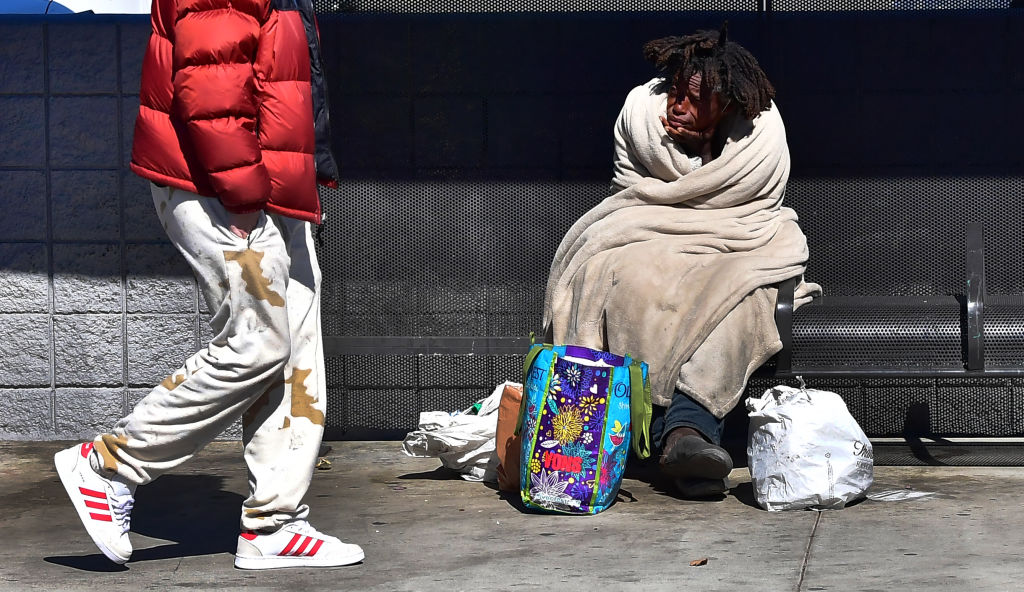
A pedestrian walks past a homeless on the streets of Los Angeles, California, on February 24, 2022. (Frederic J. Brown / AFP via Getty Images)
Last month, the Supreme Court overturned a ruling by the Ninth Circuit Court of Appeals and granted cities the ability to criminalize homelessness, even when shelter is unavailable. The substance of the decision, City of Grants Pass v. Johnson, concerns the appropriate application of the Eighth Amendment: whether jail time and fines for people forced to sleep outside constitute excessive bail or fines, or cruel and unusual punishment. The court’s opinion relies on a comically narrow interpretation of the Constitution, demonstrating their trademark “originalism for thee but not for me” school of jurisprudence.
It may seem obvious that levying fees and court costs on people who are forced to sleep outside because they cannot afford housing meets the definition of an “excessive fine,” but the majority decision is too preoccupied with preserving the ability of local governments to solve their problems with cruelty — even though it’s abundantly clear that punitive approaches to homelessness only make the situation worse.
An expected outcome of the lower-level court decisions, had they been upheld, was that cities would at least be forced to expand shelter options if they wanted to clear the streets of homeless encampments; now they face no such pressure. But that doesn’t stop local city and state governments from codifying the Eighth Amendment rights of the unhoused in their laws or aggressively pursuing a housing-first strategy. While the Supreme Court’s latest ruling is a win for cruelty, the efforts of activists, advocates, and the unhoused to address the homelessness crisis continue on.