Basic Rights for Homeless People Are on the SCOTUS Agenda
Later this month, the Supreme Court will hear a case brought by plaintiffs in Oregon who are contesting a law that criminalizes camping. They argue that the Constitution applies to everyone, regardless of whether they have access to housing.
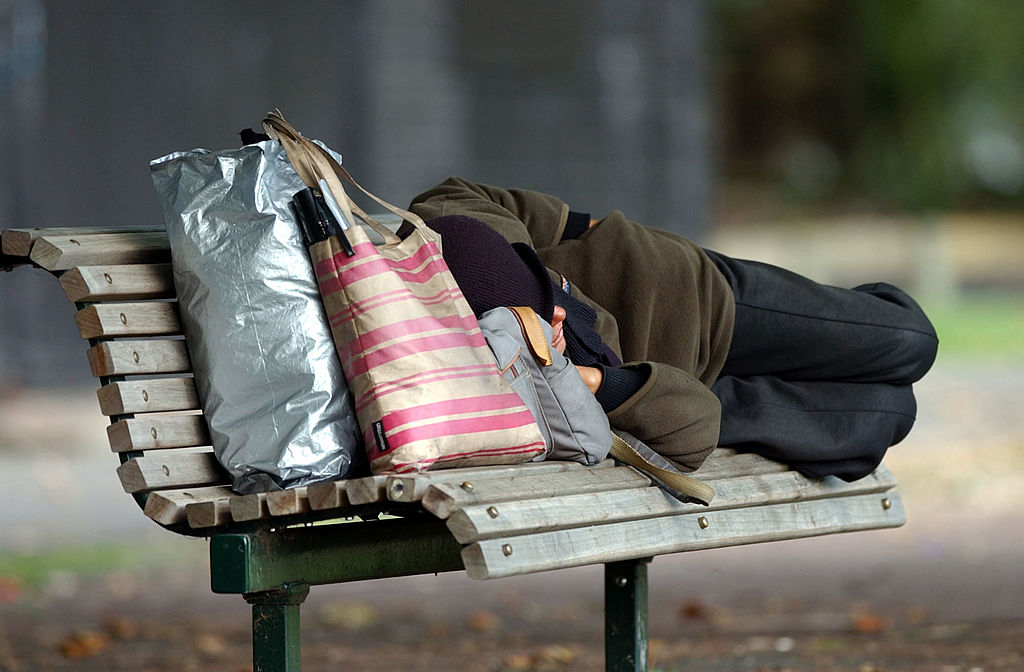
The nearly 700,000 homeless Americans are facing increasingly punitive laws designed to force them to uproot and leave their towns. (Dean Purcell / Getty Images)
On most nights, John Logan drives his pickup truck to a rest stop five miles north of Grants Pass, Oregon. A licensed home care provider, Logan has lived without permanent housing for the last twelve years. For a time, he was able to spend his nights in the spare room of a client for four to five nights a week, but that job ended in 2019, and these days he must make his way to the Manzanita Rest Stop off I-5 in order to get a night’s sleep in his truck.
Gloria Johnson, a retired nurse who is living off social security, also leaves the city each night to park her van on Bureau of Land Management (BLM)–owned land or on county roads. The trip is not far, but it costs gas money that people like Johnson and Logan can barely afford, and the extra miles accelerate wear and tear on their vehicles, which serve as their only protection from the elements at night.
Both Johnson and Logan would prefer to sleep within the city limits of Grants Pass, where they for all intents and purposes live — but to do so would risk harassment, fines, and criminal prosecution from a local government whose only solution to its growing problem with homelessness is to drive people in dire need of support and resources out of their city limits.