Democracy Requires Disempowering the Supreme Court
New rulings on presidential immunity, workers’ rights, and Chevron deference make it clear: we can have social progress, or we can have a powerful Supreme Court, but we can’t have both.
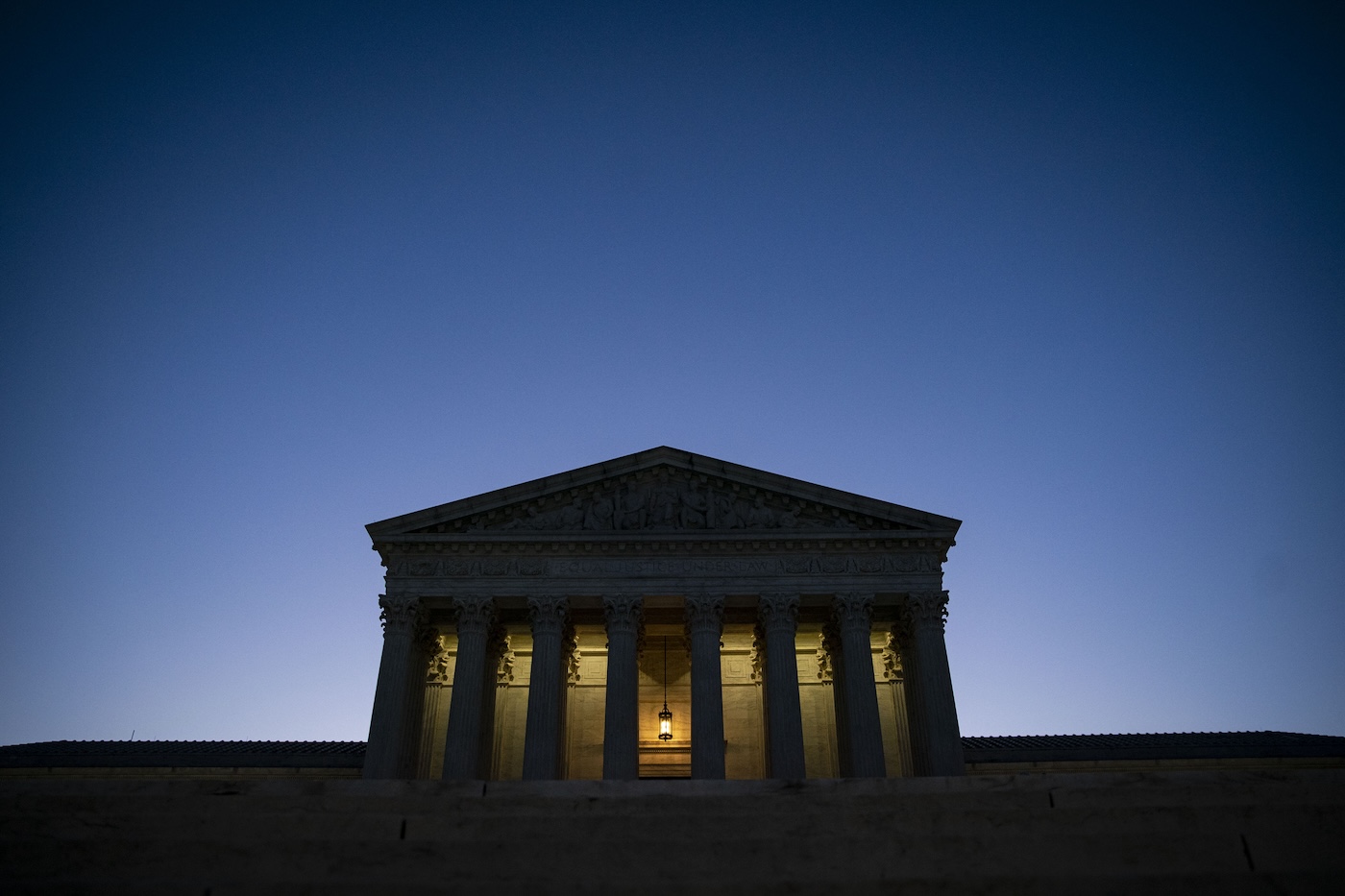
There’s no path forward for meaningful social progress in the US that doesn’t go through disempowering the Supreme Court. (Al Drago/Bloomberg)
Last month, the Supreme Court delivered a ruling that few people seemed to notice. It didn’t involve a 6–3 split and fiery dissents from liberal justices. It had nothing to do with Donald Trump. But it did shift the balance of power in American workplaces even further in the bosses’ direction.
Seven workers had been fired by Starbucks in apparent retaliation for union organizing. The official story is that they were fired for minor violations of policies the company rarely bothers to enforce. The National Labor Relations Board (NLRB) had ordered them to be reinstated on the grounds that there was “reasonable cause” to believe that labor law had been violated. Eight of the nine justices sided with the union busters, arguing that the NLRB had to meet the higher standard of showing there would be “irreparable harm” if the workers didn’t get their jobs back. (The ninth offered an opinion concurring with some aspects of the ruling and dissenting from others.)
Without a finding of irreparable harm, the court found, the workers will simply have to wait for their day in court to have any hope of getting back their jobs. The obvious effect, as Jacobin’s Alex Press noted at the time, was to create a “chilling effect.” She wrote, “If other workers see that Starbucks can fire seven workers for engaging in protected activity and those workers have to wait years for justice to prevail in the legal realm, it will make them think twice about organizing.”