Migrants Die at Sea Because Governments Let Them Drown
Over the last two weeks, six migrants died trying to cross the English Channel. An aid worker at the French port of Calais writes on the political choices that condemn them to early graves — and the need for safe routes for people on the move.
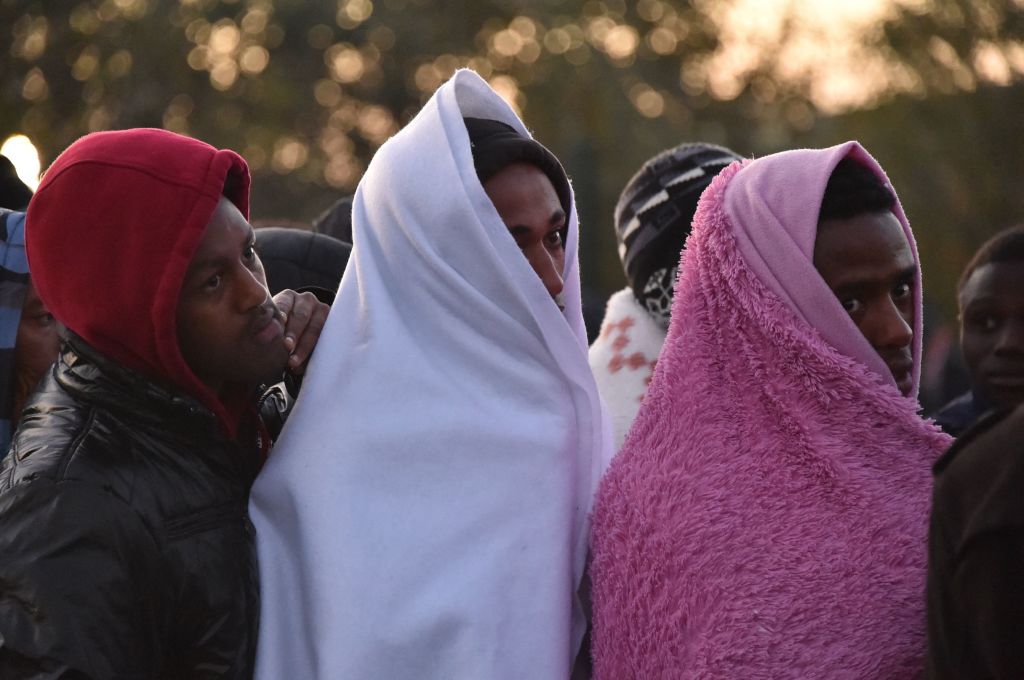
Migrants line up outside an aid station near the “Jungle” migrant camp in Calais, France, on October 27, 2016. (Philippe Huguen / AFP via Getty Images)
When someone drowns, we gather in the Parc de Richelieu. We arrange ourselves in a circle. Somebody might bring a microphone and speaker. Behind us, statues of Winston Churchill and Charles de Gaulle stare into the void before a row of metal arches shaped like the borders of France. We try to give words to our anger because, properly speaking, we cannot grieve. You cannot grieve a human being without a face or name. You cannot mourn the drowning of someone whose decades of life, achievements and failures, joys and follies, are hidden from you. There is only a void at the center of our circle.
This ritual has become all too common in Calais. In just the past two weeks, six people have drowned in the narrow stretch of water separating England from continental Europe. One incident on July 12 killed four people from one boat. A rubberized dinghy, vastly overloaded and already launched at an obscene distance from the English coast, began to deflate off the shore of Boulogne-sur-Mer. By the time the French coast guard reached the boat four of its passengers had drowned, their bodies retrieved from the sea by helicopter. Their names are not released by the maritime prefect — we know only that they were men, citizens of Somalia, Eritrea, and Ethiopia. The drownings of two more unidentified migrants last Thursday and Friday put the death toll at the French-British border at twenty-one so far this year.
That is too many times to gather in the Parc de Richelieu. Too many times to wonder whether our makeshift memorials will be echoed by proper funerals in absentia far away in Tigray and Darfur, by those who know the names and histories of the drowned. It is unlikely that their bodies will ever be repatriated to their families. They will rest in French soil, permitted a small corner of Europe only in death.