Armenia Has Erupted in Protest Over Border Adjustments
Armenian prime minister Nikol Pashinyan’s controversial territorial concessions to Azerbaijan have sparked massive protests. The unrest underscores the deep-seated tensions and vulnerabilities faced by the Armenian state.
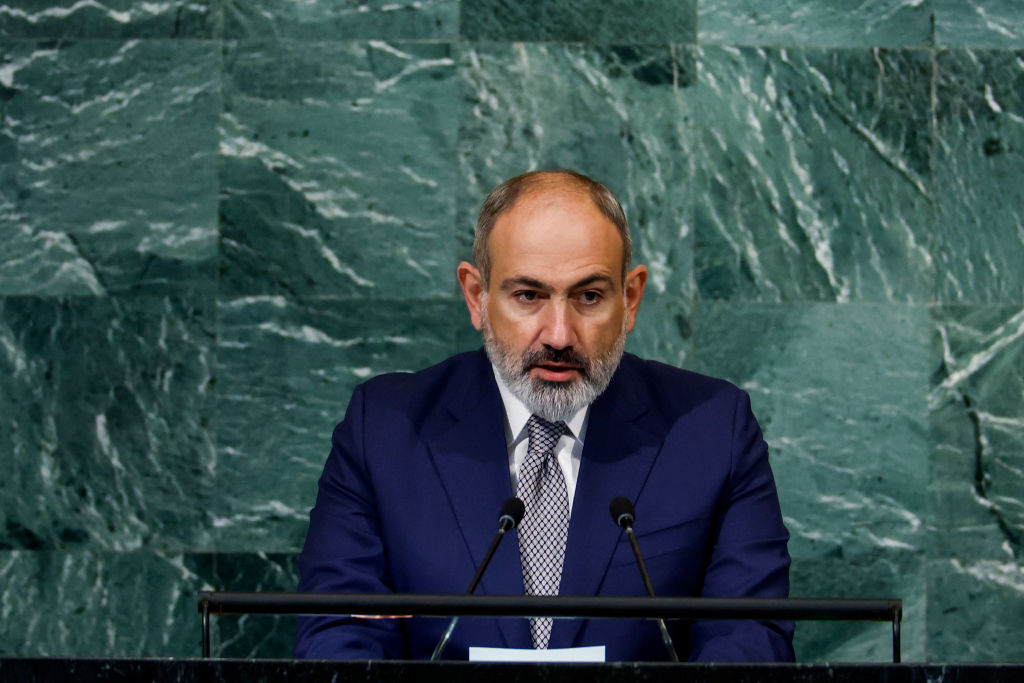
Armenian prime minister Nikol Pashinyan speaking at the United Nations on September 22, 2022, in New York City. (Anna Moneymaker / Getty Images)
Last month, speaking before forty thousand protesters in Armenia’s capital, Yerevan, Archbishop Bagrat Galstanyan called for Armenian prime minister Nikol Pashinyan’s resignation. The protesters opposed Pashinyan’s decision to hand over four villages to Azerbaijan, Armenia’s foe, without any concessions in return.
Pashinyan rose to power during the 2018 Armenian revolution, leading protests against President Serzh Sargsyan’s decision to seek a third term. He promised to ensure Armenia’s security against Azerbaijan. However, when Azerbaijan decided to ethnically cleanse the Armenian region of Artsakh last year, Pashinyan withdrew troops. Many Armenians now feel betrayed by Pashinyan’s decision to cede territory to Azerbaijan in the name of peace. They have had enough.
Revolution Betrayed
After a decade of rule, Armenians were furious in 2018 when Sargsyan sought a third term. His presidency had been marred by corruption, including possible election fraud. The opposition movement that emerged was diverse, including the socialist Armenian Revolutionary Federation and the far-right Sasna Tsrer Pan-Armenian Party. However, due to his emphasis on democracy and rule of law, it was the liberal pro-European member of parliament, Pashinyan, who became the most prominent leader.