How the Term “Hoosier” Became a Weapon in the Class War
In Indiana, “hoosier” is a badge of honor. In St Louis, it’s the nastiest insult around. The reason for the difference can be found in labor history, and it reveals the intraclass prejudice that breaks worker solidarity.
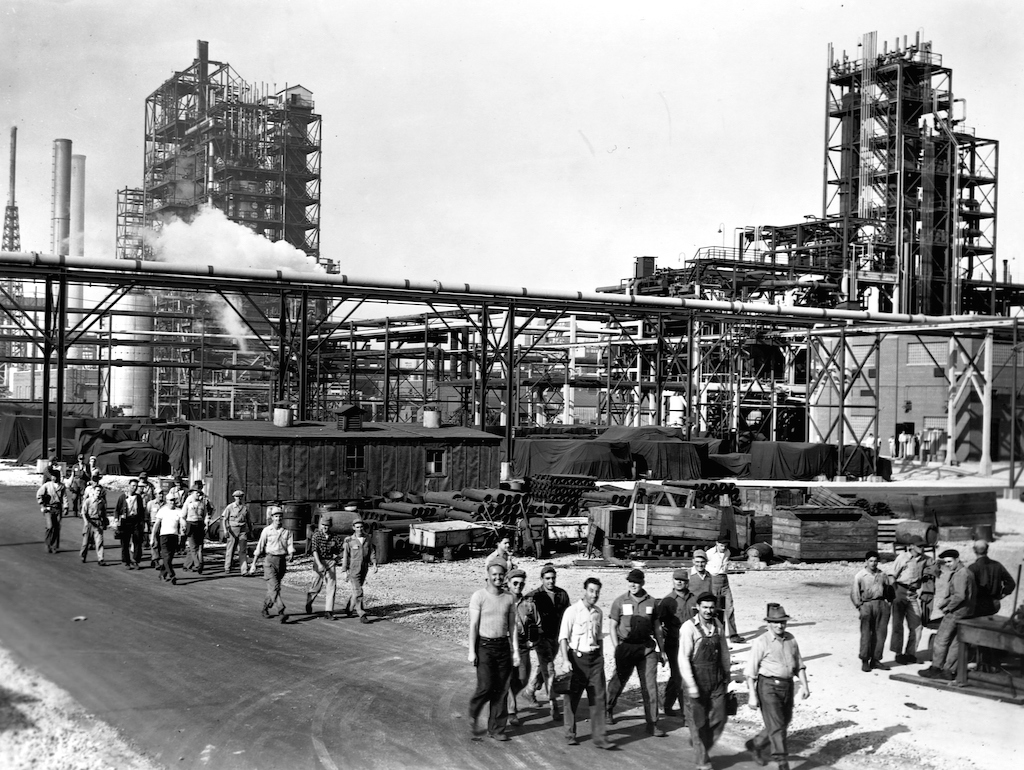
Workers leaving the Standard Oil Company refinery in Whiting, Indiana, 1952. (Robert Yarnall Richie / Library of Congress / Corbis / VCG via Getty Images)
Bougie. Bum. Stinking rich. Skid row. Moneybags. No scrubs. In English, we’ve got an excess of terms that reinforce the boundary between the rich and the poor.
But we also have a vast lexicon meant to divide the working class, separating the diligent and noble poor from their supposedly lazy or ungrateful counterparts. Those monikers are a rare window into the granular sociopolitical realities of people who often don’t have their history recorded at all.
The terms separating “good workers” from “bad workers” are often used by working-class people themselves and tend to be more obscure and regional. For instance, in South St Louis, Missouri, the hardworking German immigrant poor were termed the “scrubby Dutch” for their refusal to use mere mops, preferring to get down on all fours with a brush and go at it.