In Australia, Fitness Workers Are Organizing
Last year, instructors at over 150 Fitness First and Goodlife Health Clubs launched a union campaign to halt underpayment, wage cuts by stealth, and deteriorating work conditions. Within a few months, management caved to their demands.
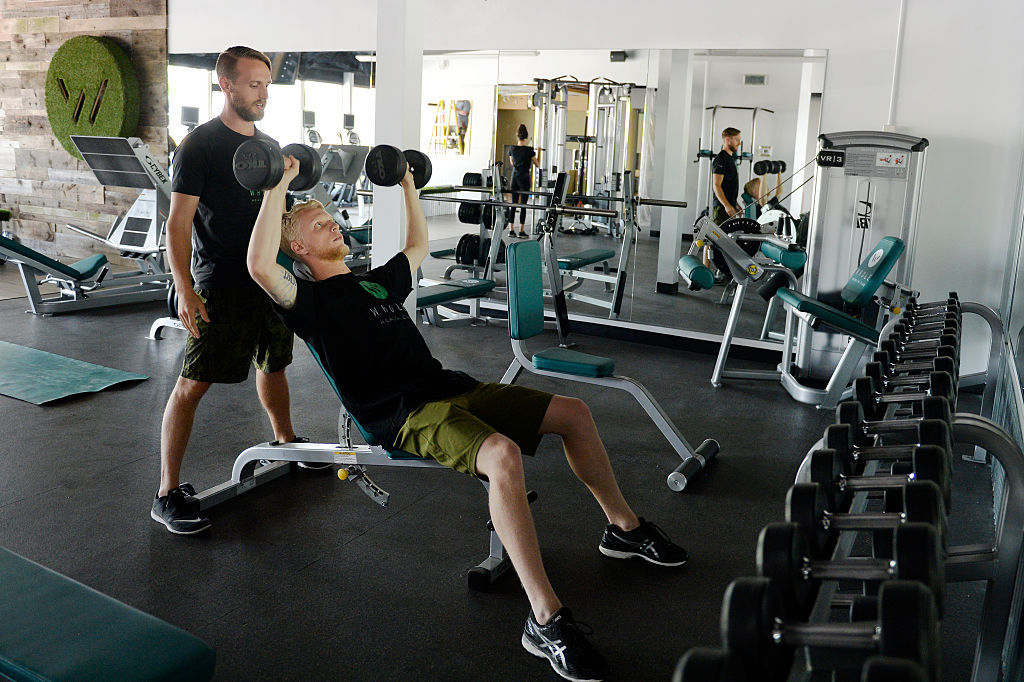
A fitness instructor spots a client as he lifts weights in the gym on June 16, 2016, in Littleton, Colorado. (Anya Semenoff / the Denver Post via Getty Images)
As a sector plagued by underpayment, sham contracting, and hypercasualization, the fitness industry there has no shortage of issues to mobilize around. It’s common — as fitness instructors explain in United Workers Union (UWU) meetings and forums — for employers to expect them to shoulder costs associated with travel, time spent learning choreography, and gaining “optional” training and certificates.
According to some group fitness instructors (GFIs), these financial overheads are so onerous that the expenses for delivering a class can, at times, outweigh remuneration entirely. “The only reason this is the case,” one fitness worker and UWU member explained, “is because people have perpetuated it for so many years. But there’s is no reason or excuse for unpaid work.”
Those who stay in the industry do so because they love their work deeply. And fitness workers make this clear themselves in union meetings, where it becomes obvious they are unanimously passionate about their communities and dedicated to educating and encouraging club members. However, thanks to the cost-of-living crisis combined with employers desperate to drive up profits at workers’ expense, many instructors have begun seriously questioning whether their labor of love is sustainable.