Palm Royale Is a Weak Critique of the “Bubble” of the Rich
Showing that rich women in 1969 are “living in a bubble” is like demonstrating that, as ever, water is wet. But even if Palm Royale was meant to deliver messages of great satirical significance, it’s too weak to carry them.
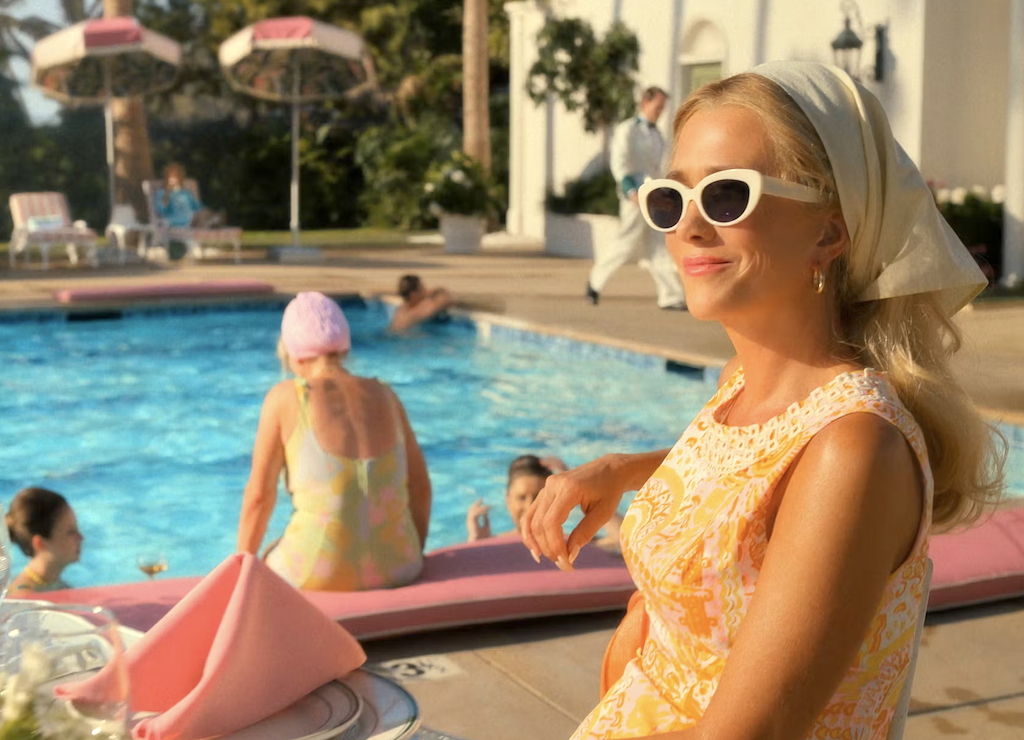
Kristen Wiig as Maxine Simmons in Palm Royale. (Apple TV+)
I’ve been trying to stick with Palm Royale. There’s a lot of talent involved, and the ten-episode Apple TV+ series always seems like it’s just about to take off and become something more than a brightly colored, blandly satirical take on the absurd ultrarich of Palm Beach, Florida, and the people who long to crash the gates of their tacky fiefdoms.
Kristen Wiig stars as Maxine Simmons, a former pageant queen who literally breaks into the exclusive club, the Palm Royale, by climbing the flower-covered wall. From there, she finds endless ways to worm her way into a position of social acceptance and then social prominence among the territorial elite.
Her only assets in this stupid quest are her unquenchably chirpy, delusional optimism, her high-haired blonde-bouffant and overall good looks, and the assets of her husband’s wealthy great aunt, Norma Dellacorte (Carol Burnett, still game at ninety), who’s in a long-term coma. Her condition allows Maxine to borrow her somewhat outdated designer clothes and pawn her jewelry and knickknacks for ready rolls of cash.