When Communists Tried to Build Paradise on the Steppe
From 1925 to 1932, a thousand Europeans took the monthlong train ride to Soviet Kyrgyzstan as new members of the Interhelpo workers’ co-op. Their story tells of the utopian hopes placed in the Soviet project — and how they were crushed.
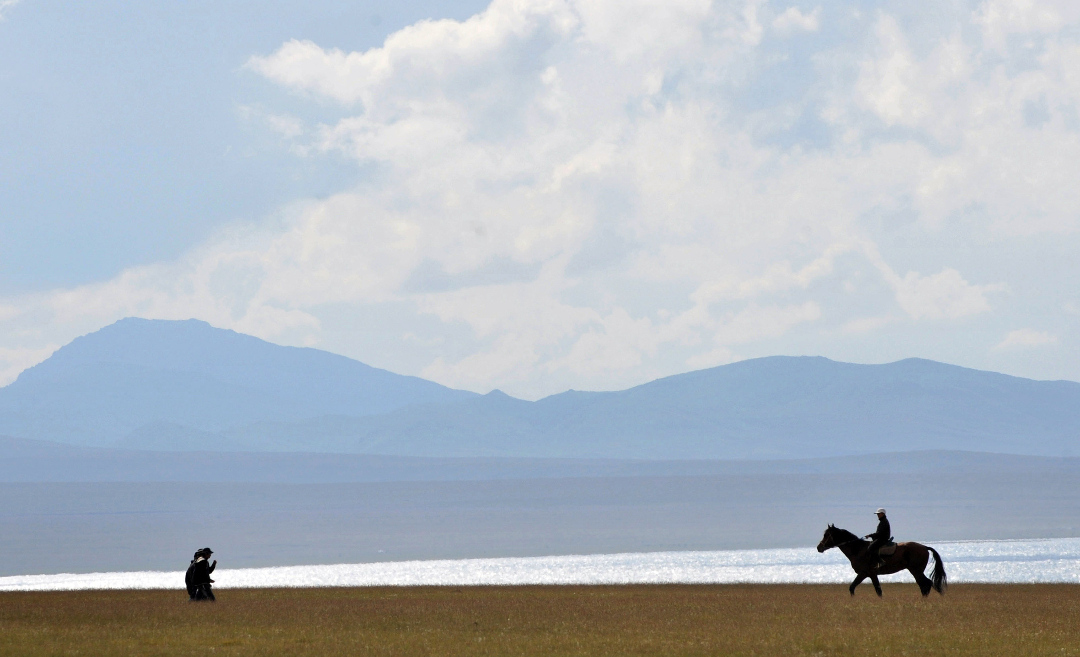
Kyrgyz walk in the steppe during a traditional folk festival held at Son-Kul lake, about 430 kilometers from Bishkek, on July 21, 2011. (Vyacheslav Oseledko / AFP via Getty Images)
Looking out of the plane window at night, one can see the dark Kyzylkum desert, with occasional lights recognized by the satellite navigation as Komektaev, Lenino, and Kyzylorda. From up here, the journey from Central Europe to Central Asian Kyrgyzstan seems long and desolate.
At that point in my journey, I wasn’t yet aware that a hundred years ago a group of idealistic Central Europeans, including the parents of future Czechoslovak leader Alexander Dubček, came to Kyrgyzstan in the hope of building their idea of a socialist paradise.
I first came into contact with the name “Interhelpo” upon landing in Bishkek. “The tenacious Czechoslovak volunteers of the Interhelpo co-operative celebrate victory; in 1934 their factories produced 20 percent of the industrial output of Soviet Kyrgyzstan,” the English guidebook reads. At that moment I am reminded of the lights in the Kyzyl desert, the distance between Central Europe and Central Asia, and ask: Why would anyone do this?