Bob Marley: One Love Is a Feel-Good Fake
The story of Bob Marley’s reggae music and his politically infused Rastafarian beliefs is fascinating. Not that you’ll learn anything about them from watching the new feel-good biopic Bob Marley: One Love.
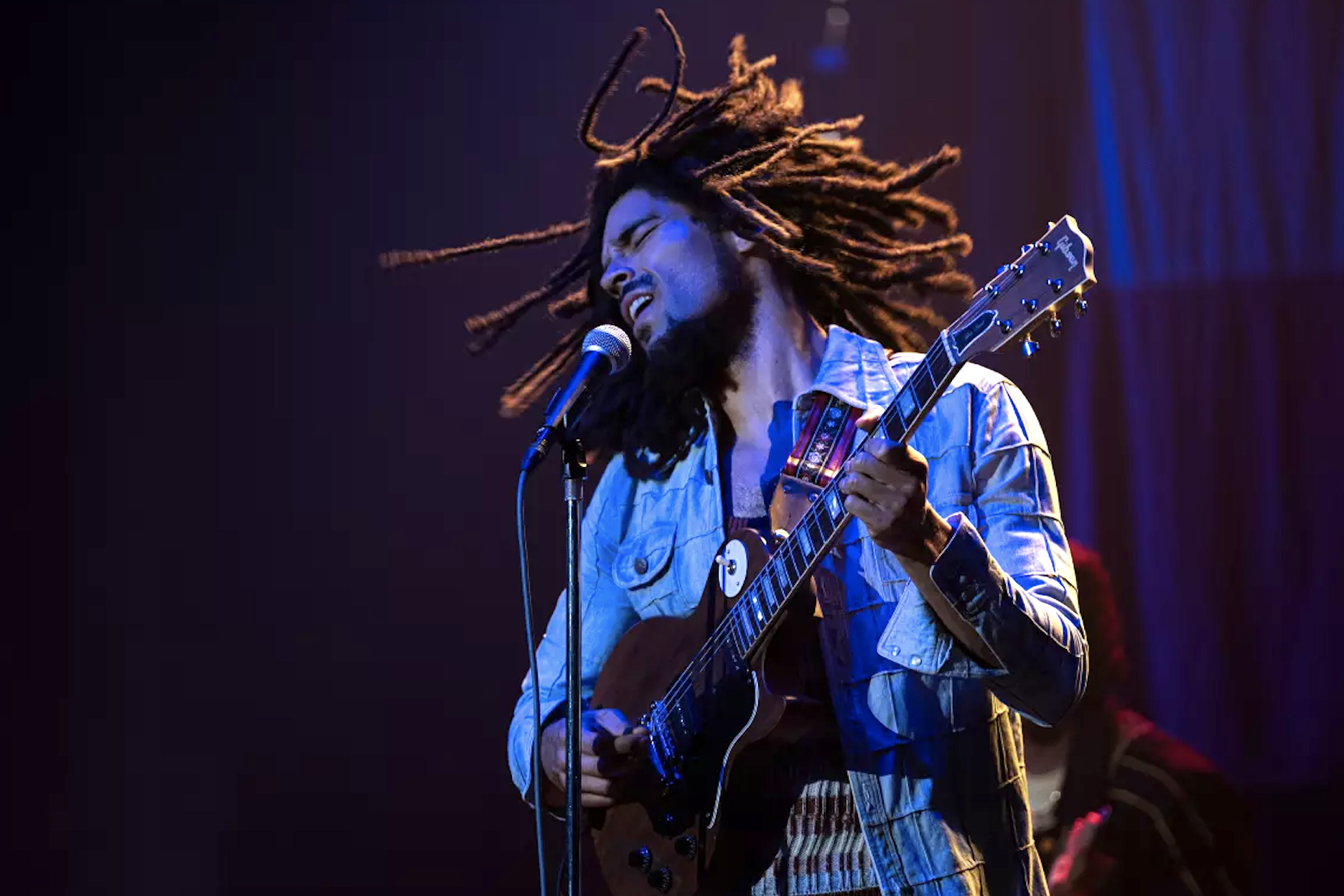
Kingsley Ben-Adir as Bob Marley in Bob Marley: One Love. (Paramount Pictures)
I didn’t know all that much about Bob Marley or reggae or the Rastafarian religion and its attendant political movement when I watched the new biopic currently playing in theaters called Bob Marley: One Love. But I know a lot more now that I did some research in order to figure out what the hell is going on in the movie. The great benefit of the biopics boom is how educational it is — not the movies themselves, which are almost invariably a mass of lies and evasions and oversimplifications, but the research you are spurred to do afterward, when you read up on the subjects’ actual lives and find out all sorts of amazing and suppressed facts about them.
This Bob Marley biopic is a huge hit, and it’s easy to see why. It’s a feel-good cloud of a movie, a vaporous mass of peace and love and pot smoke and danceable reggae rhythms. Floating somewhere in the center of it, there’s a very handsome actor (Kingsley Ben-Adir of Peaky Blinders) smiling and cavorting in an endearing herky-jerky dance imitation of Bob Marley. Marley’s “sins” are presented in the usual silly, rote, second-act way — he gets too interested in going to parties with rich people and aristocrats, and there are raffish-looking women hanging around waiting for him while his wife, Rita (Lashana Lynch), looks angry about his adulterous impulses. But this side plot is the typically temporary downturn in the overall upturn of Marley’s inspirational life. Even Marley’s tragic early death from cancer is made part of the film’s blurry vision of how he overcomes earthly frailties and challenges in his ascent to the pantheon of nice, talented singers we like but prefer not to understand.
Like so many biopics, this one pushes forward a few benevolent biographical points that will make the person’s story more popular with mainstream audiences and gloss over all the spikier information that’s central to their lives but that might prove controversial. It’s a strategy that’s working very well, commercially. Bob Marley: One Love is such a success, in surprising contrast to the tanking of the new superhero movie Madame Web, that it’s generating think pieces about the possible end of superhero movie mania.