2023 Was the Year the Liberal West, Led by Joe Biden, Betrayed Palestinians in Gaza
As we begin a new year, the horrors in Gaza continue, prosecuted and sustained with a flagrant combination of US weapons and European blessings. History will not look kindly on those who keep running cover for Israel’s war crimes.
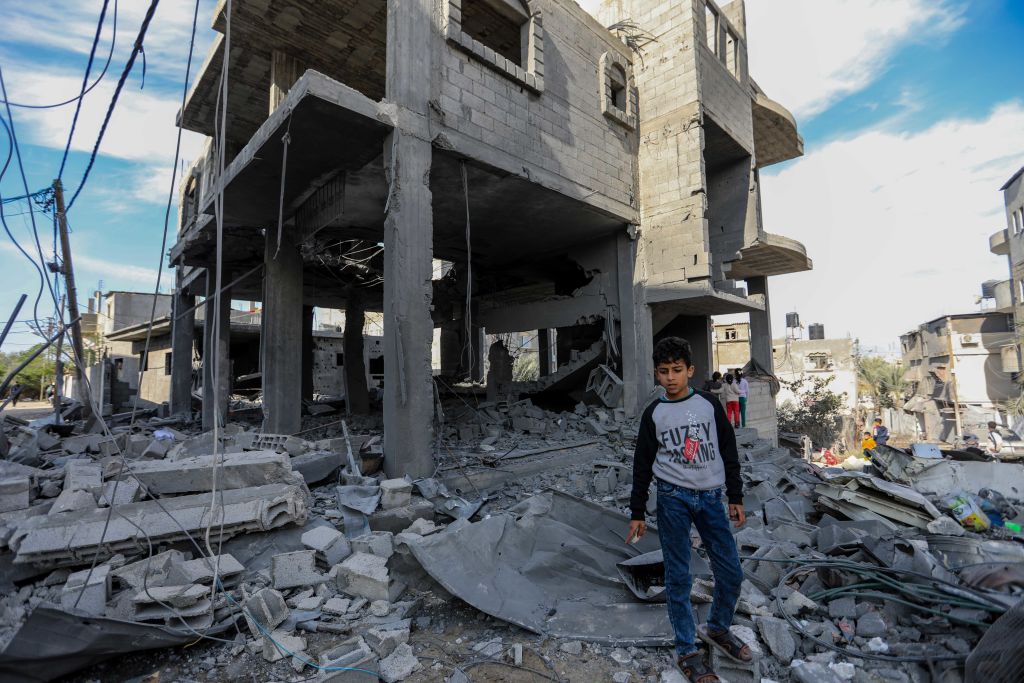
People inspect damage to their homes caused by Israeli air strikes on January 3, 2024 in Rafah, Gaza. (Ahmad Hasaballah / Getty Images)
At Israel’s founding, in a brutal campaign that Palestinians call the “Nakba” (“catastrophe”), the new state ethnically cleansed and destroyed over five hundred Palestinian villages and towns, killing more than ten thousand Palestinians. As Zionist forces seized over 78 percent of historic Palestine, at least 750,000 Palestinians, out of a population of 1.9 million, were expelled from their homes. Many of those uprooted fled to Gaza, tripling its population and transforming the tiny coastal strip into a colossal refugee camp.
While Palestinians always feared the prospect of a second Nakba, most never imagined it would unfold before their eyes in broad daylight, believing that genocides belonged in the past century. Last year, the United Nations (UN), for the first time in its history, commemorated the anniversary of the Nakba, assuring Palestinians that the injustices of the past would never be repeated.
They were wrong. Since October 7, Israel has killed twice and displaced three times as many Palestinians in Gaza as it did in all of Palestine during the Nakba. The staggering death toll has now exceeded twenty-two thousand Palestinians, including over nine thousand children. Half of the population is on the brink of starvation. About two million Gazans have been displaced. Hundreds of thousands have left Gaza through the Rafah Border Crossing in exodus trails, evoking tragic scenes from the Nakba. Just this week, two far-right Israeli ministers openly advocated ethnic cleansing: “If there are 100,000 or 200,000 Arabs in Gaza and not two million Arabs,” said finance minister Bezalel Smotrich, “the entire discussion on the day after [the war ends] will be totally different.”