Joe Biden Shouldn’t be Able to Just Unilaterally Bomb Yemen
Joe Biden continues to bomb Yemen without even seeking congressional authorization. His justifications for doing so don’t stand up to scrutiny — and they mask the dangers of this operation becoming another open-ended US war.
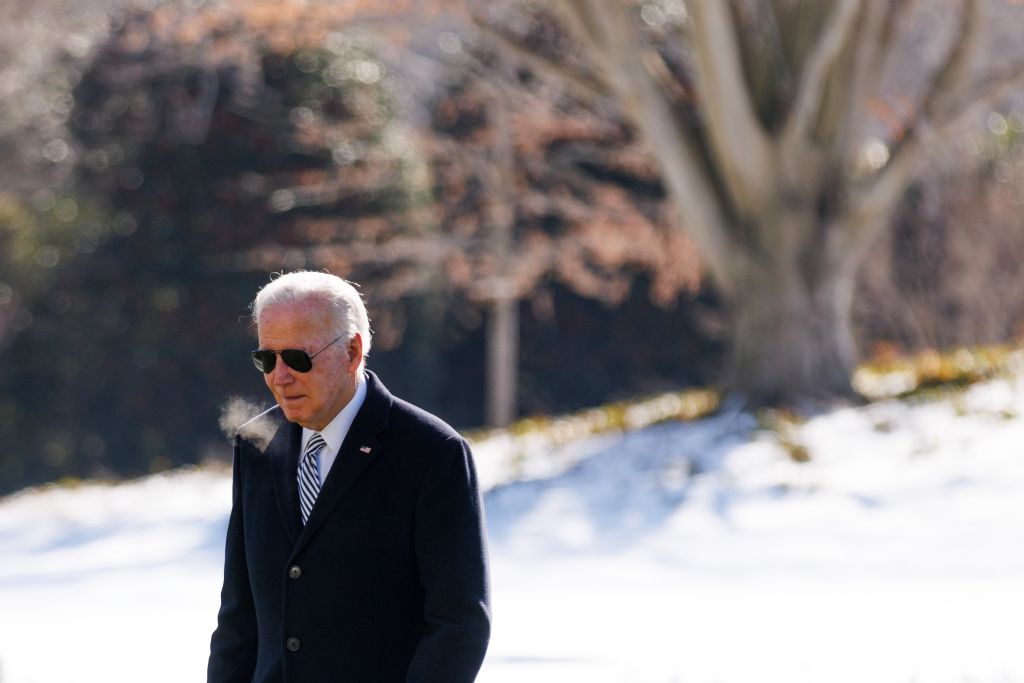
President Joe Biden is pictured at the White House in Washington, DC, the United States, January 22, 2024. (Aaron Schwartz / Xinhua via Getty Images)
One of the stranger developments in US political discourse these past few years is that even as the “rule of law” and the urgency of defending it from unscrupulous presidents has taken center stage, the ability of presidents to use and abuse what was once called the “imperial presidency” has drawn a collective yawn. But with President Joe Biden’s bombing campaign in Yemen, that might be changing.
The Constitution doesn’t really mince words when it comes to making war, making it clear that “The Congress shall have the Power . . . to declare War.” So it’s hardly surprising that some members of Congress across ideological lines — from progressives and centrist Democrats, to establishment and MAGA Republicans — are now questioning the legal basis for Biden’s bombing of Yemen, which two-plus weeks in is at growing risk of turning into something much bigger, and much worse.
What started as seventy-three airstrikes on the country on January 11 soon morphed into six more rounds of (less extensive) bombing by the US and British militaries. It’s now set to become, according to the Washington Post, a “sustained military campaign,” with US officials telling the paper that while it probably won’t go on for years like earlier US wars in the region, they also have no idea when it will actually end. According to Politico, the Biden administration’s vision of an endgame is based on some fairly generous assumptions: that US bombings and sanctions will choke off the ruling Houthis’ ability to keep attacking, and that Israel will eventually stop killing as many people in Gaza, while other countries will eventually demand an end to the shipping crisis.