State Repression Is What Fuels the Conflict in Balochistan
An exchange of air strikes between Iran and Pakistan put Balochistan on the global news agenda this month. Pakistan’s largest province is also its poorest, and the only way to establish peace there is by ending a long history of discrimination and repression.
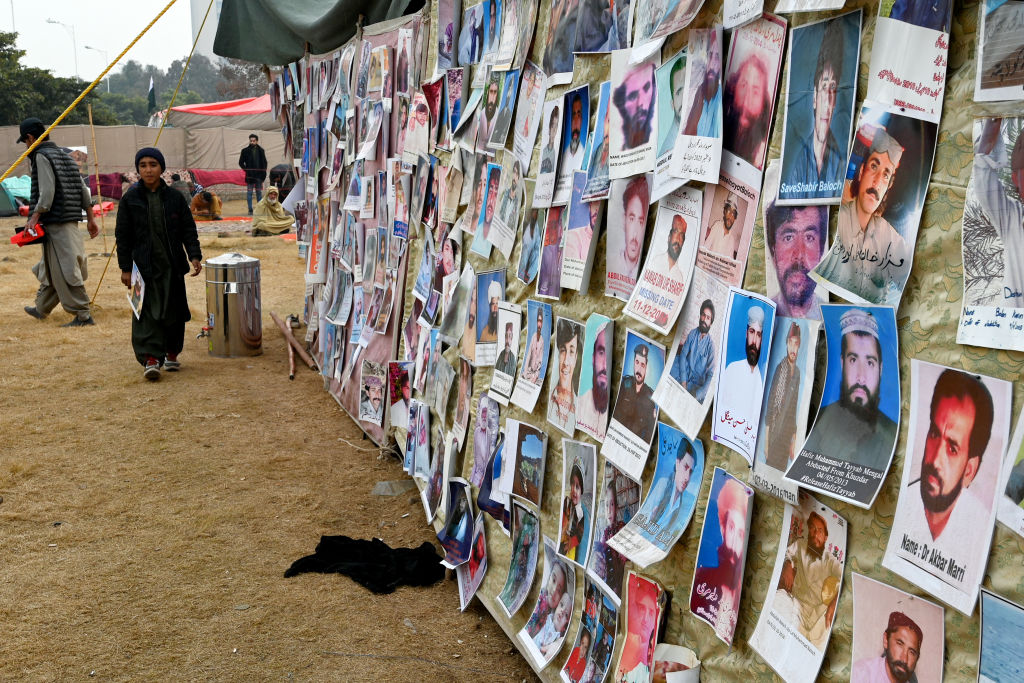
A boy walks past photographs of missing persons from southwestern Balochistan province, displayed during a demonstration in Islamabad, Pakistan, on January 22, 2024. (Farooq Naeem / AFP via Getty Images)
Balochistan suddenly came under the spotlight of the international media in the wake of air strikes conducted on Pakistani soil by Iran against the Jaish al-Adl group on January 16. This led to retaliatory action by Pakistan against targets in Iran’s Sistan and Baluchistan province. In both cases, the strikes were directed against Baloch militants who are respectively at war with the Iranian and Pakistani states.
The historical territory of Balochistan is currently divided between three states — Pakistan, Iran, and Afghanistan — with the largest part under Pakistani rule. While international attention has shifted toward the possibility of an escalating crisis and its wider regional implications, there remains a central political issue in Balochistan itself.
That issue may be eclipsed in the heat of the moment. But it urgently demands sustained political action from Pakistan’s leaders to address the grievances of the Baloch people.