This Massive Oil Refinery Illustrates the Challenges of Colombia’s Clean Energy Transition
President Gustavo Petro has pledged to transform Colombia’s energy industry in a greener direction. But the country’s heavy economic dependence on hydrocarbons, illustrated by the legacy of its massive refinery in Barrancabermeja, poses steep challenges.
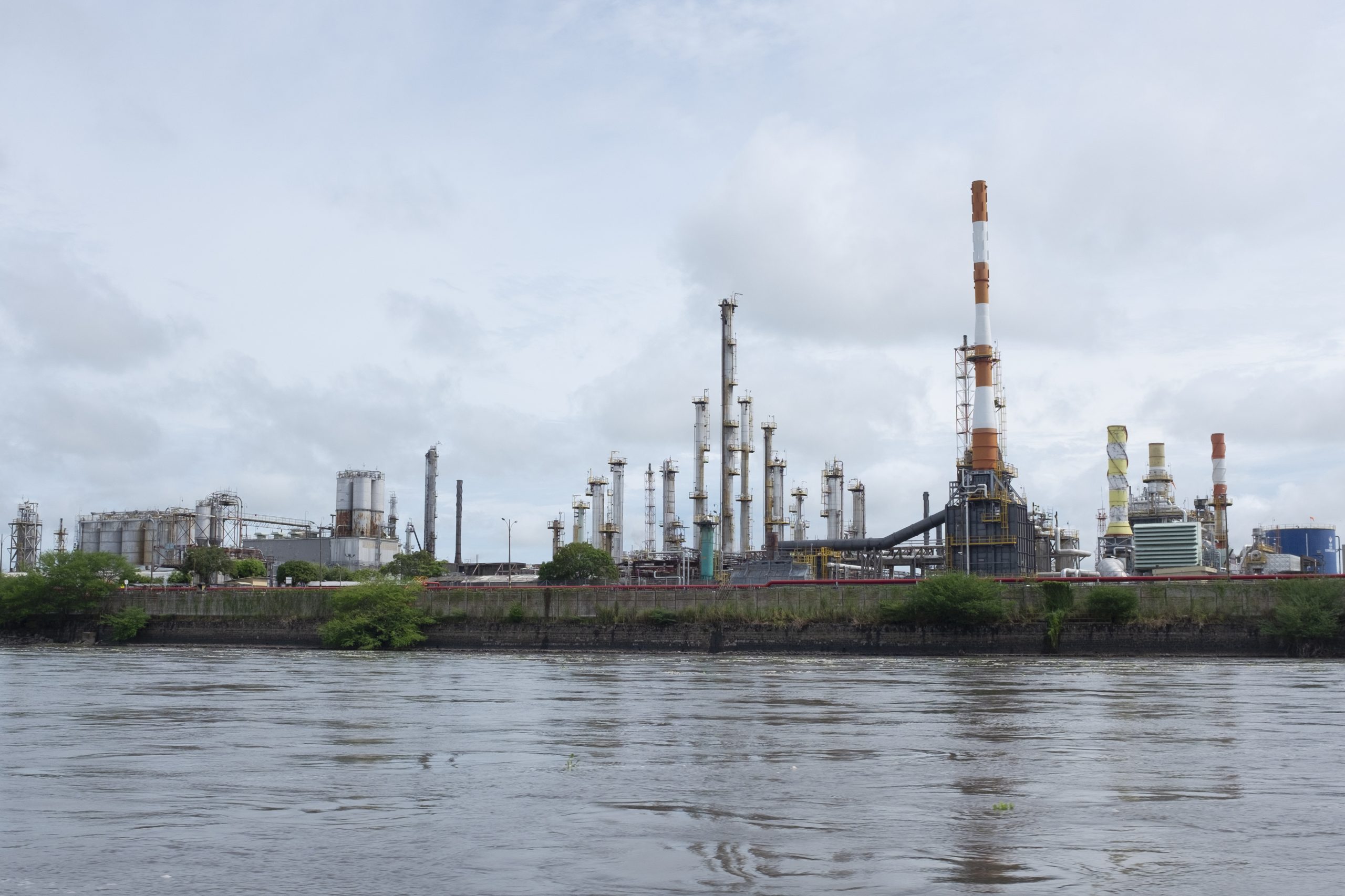
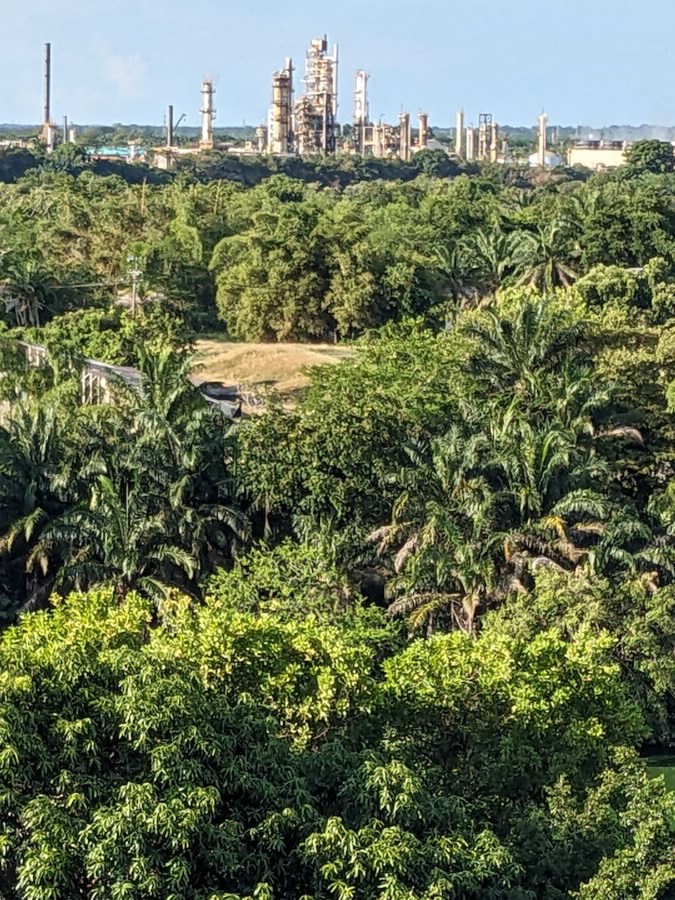
The Barrancabermeja Refinery as seen from Río Magdalena. (Courtesy of Kurt Hollander)
With his recently proposed Fair Energy Transition Plan, President Gustavo Petro has pledged to transform Colombia’s energy industry, which is heavily dependent upon hydrocarbons, and to move toward cleaner, renewable sources. But decreasing and eventually ending the country’s dependence on petroleum won’t be easy.
The Colombian government owns a majority (88.5 percent) of Ecopetrol, the company that controls most of the country’s oil and gas extraction, refining, and transport. Ecopetro not only supplies 80 percent of all fuel to Colombia — it is also responsible for half of the country’s exports and accounts for roughly 10 percent of the country’s GDP.
As part of President Petro’s new plan, Ecopetrol has pledged 40 percent of its 2023 budget to supposedly develop clean energy and to lower by 25 percent its emissions of greenhouse gases. Almost one-quarter of this budget is slotted for renewable energies (including solar panels to provide electricity to the plants), energy efficiency, and carbon capture, but most of the funds will go to improve energy security and transportation, designed to actually increase the amount of petroleum or gas that can be extracted, refined, and exported.
To truly transition Colombia’s energy industry away from oil and toward clean energy, however, Petro will have to confront the huge Barrancabermeja Refinery, in existence for over a century and currently responsible for providing 60 percent of the country’s energy needs. This industrial complex refines crude oil into gasoline for cars, diesel for trucks, jet fuel for airplanes, and propane gas for cooking. It also houses the country’s largest petrochemical plant that produces plastics, paint, pesticides, pharmaceuticals, asphalt, and explosives — all petroleum derivatives with greater profit margins than oil. The refinery’s immense productivity and profit may stand in the way of President Petro’s plan to phase out fossil fuels.
The History of the Barrancabermeja Refinery
Located in the northeastern state of Santander, a huge industrial complex the size of six hundred soccer fields, with forty-nine processing plants and 290 storage tanks, and with 1,500 directly employed and 3,000 subcontracted workers, the Barrancabermeja Refinery is a world unto itself.
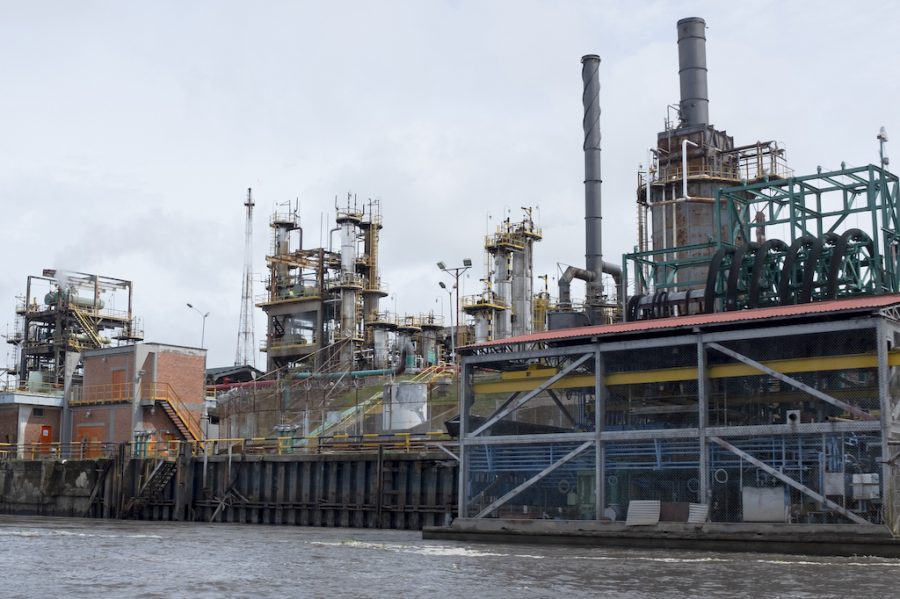
The refinery occupies miles of riverfront property on the Río Magdalena, one of the country’s largest rivers, and has been the beating heart of Barrancabermeja for over a century. The soccer stadium for the city’s team, Alianza petreolero, is located so close that the heat generated from the machinery can be felt within the stadium by fans and players.
The eternal flame (with tongues of fire twenty meters long) atop the ninety-meter-high iron tower, burning off residual gas, lights up the sky at night and can be seen from all points of the city. The ear-shattering steam-powered whistle that blew every day to mark the different shifts from 1922 was removed in 2003, but the metallic vibration of the huge machines within this giant industrial complex, which have been working nonstop for the past hundred years, produces a constant rumbling noise throughout the city.
Before the arrival of Europeans, the local indigenous people (Yaraguiés and Motilón Bari) would rub the black muck that bubbled up from the ground on their bodies to reduce tiredness and strengthen their muscles, and also to waterproof their canoes. Until crude oil began to be extracted from the earth by foreign companies, European-descended people had not yet settled in the region, mostly because of the intense heat and humidity When the refinery was first built, the town had only a few hundred inhabitants living in rustic homes. With the widespread deforestation of the area for the construction of the refinery, the local indigenous communities, as well as much of the flora and fauna, soon disappeared, and a city grew in their place.
At the start of the twentieth century, over 5,000 square kilometers of land in and around Barrancabermeja, was acquired by Standard Oil, John D. Rockefeller’s oil empire, for $33 million dollars. The oil company town, with large California-style homes, well-equipped schools, paved streets, electric lighting, and imported food and alcohol — and with English serving as the official language, soon became the most modern city in all of Colombia.
The town of Barrancabermeja itself grew rapidly and haphazardly outside the tall barbed-wire fence surrounding the refinery, and has experienced high rates of poverty, unemployment, and violence since. Barrancabermeja has been plagued by what some call the “Dutch Disease,” the curse of regions rich in natural resources (such as petroleum) in which its environment and resources are exploited for profit while the rest of the economy suffers from underdevelopment.
In 1952, when the hugely profitable thirty-year concession to Standard Oil ended, Colombia nationalized the company, which became Ecopetrol. While oil profits passed through the refinery, the city of Barrancabermeja was left to its own devices. In the 1980s, the presence of the Revolutionary Armed Forces of Colombia (FARC) and the National Liberation Army (ELN) guerrillas grew in the region, and they came to control as much as one-fifth of the city. To enter those parts of the city, people needed a special pass, and snipers located on the rooftops of buildings kept the police out of the area.
At the end of the 1990s, through a strategy of selective assassination of guerrillas and massacres in the guerrilla-controlled parts of the city, paramilitaries wrested control of most of the city and the surrounding region from them. By 2005, oil production was booming in the region, but so were criminal organizations, paramilitary groups, and drug trafficking along the Río Magdalena.
Oil towns tend to attract criminal organizations that tap into company profits through extortion and kidnapping, and take advantage of their river routes to transport drugs. At the beginning of the twenty-first century, the city had three times the homicide rate of the rest of the country. (In late 2023, the US government included the area in northern Santander where the refinery is located among four areas that it advised US citizens to avoid.)
The oil and gas ducts in and around Barrancabermeja are still targets for guerrillas, with eleven attacks occurring since 2021. When the ducts aren’t being bombed, they are siphoned off with illegally installed valves into large trucks capable of carrying up to 12,000 gallons at a time, a common practice known as barbacheo. In addition, a group of prominent Colombian businessmen have recently been accused of buying cheap, poor-quality oil in Venezuela to sell illegally to Ecopetrol, using the Barrancabermeja Refinery to mix it, transport it, and ship it out to other countries.
Health and Environmental Impacts
Living inside or near such a giant industrial complex means being exposed to health risks. Due to the emission of microparticles, especially those coming from the catalyzer used to refine crude oil, Barrancabermeja has a high rate of chronic lung illnesses and respiratory infections, especially among the youngest population (including the children who attend the workers’ school located inside the complex).
Up until a little over a decade ago, the refinery processed only light crude oil, but due to the discovery of a huge oil field nearby, the refinery now processes heavy and extra heavy crude oil. Because it was not designed to handle these kinds of crude, the process is less efficient and releases a greater amount of toxic substance into the air, including a fine white powder that covers all surfaces and leads to nasal congestion, irritation of the eyes and throat, and coughing. The effects on humans from these emissions are especially toxic during heat waves and the increasingly severe dry seasons.
A government watchdog reported that the Barrancabermeja Refinery had been lax in its treatment of chemical residues and was responsible for twenty-seven oil spills in 2020, while a local environmental group claims that there have been over three hundred oil and gas spills in the area over the years. These spills have directly affected Río Magadalena as well as several ciénegas surrounding the refinery that act as nature sanctuaries. The ciénega located right in front of the refinery, crawling with alligators, iguanas, kingfishers, has had its water change from crystal clear to a nearly phosphorescent green.
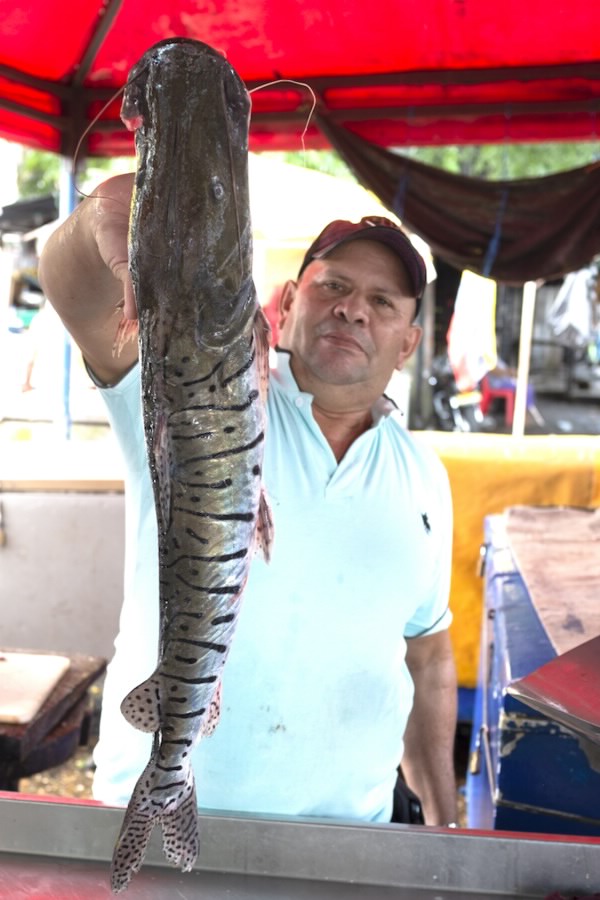
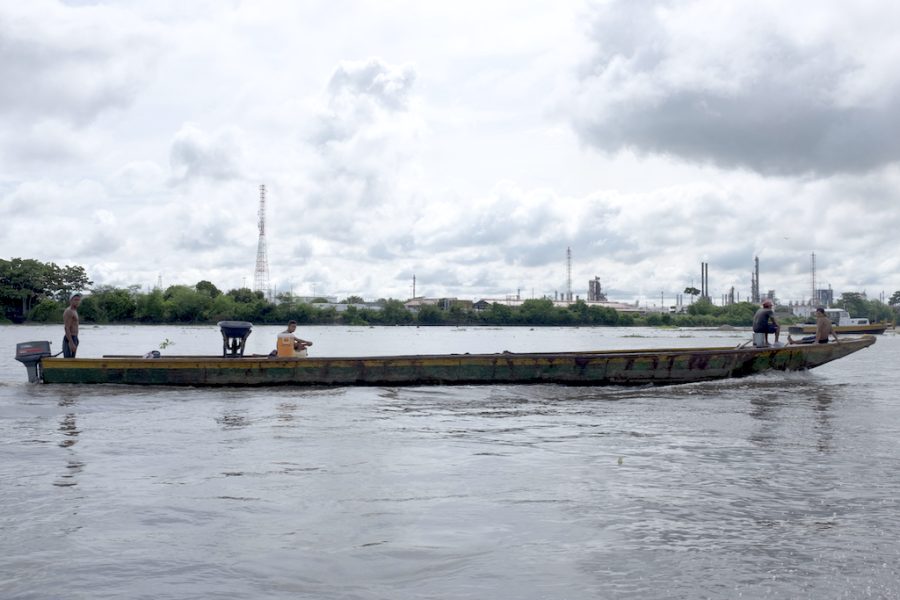
Río Magdalena has some of the most productive fishing areas of any river in Colombia, but since 1975 there has been a decrease in the harvest by as much as 90 percent, and nearly twenty different species of fish are now at risk of extinction. The river downstream from the refinery has been the site of several mass events of fish death. Barrancabermeja depends in large part upon its fishing industry, with fish markets and dozens of restaurants located on the riverfront just a mere block from the refinery. The fear of contamination is a constant worry by those whose livelihoods depend on the fish.
Besides the global warming created by refining and burning fossil fuels, there is also a problem of local warming, that is, a microclimate change within the city. Barrancabermeja is one of the hottest and most humid cities in Colombia, but in and around the refinery the heat is even more intense, with the industrial complex acting as a huge radiator. Thousands of people work in the refinery in this extreme heat for hours on end, which directly affects their health and well-being.
The more the city grows, the more it kills off the forests around it, and the greater the increase in construction and motorized vehicles, the hotter the city becomes. Higher levels of heat year-round also affect the water levels of the river and the amount of precipitation, increasing the likelihood of extreme climate conditions such as flooding and drought.
A Clean Energy Transition?
In 2014, the Colombian Congress approved a law to promote the construction of clean energy projects, (mainly solar and wind) by means of tax breaks and other fiscal incentives. In the years that followed, only a tiny fraction of the electricity in the country came from renewable sources, and up until the end of his term ex-president Iván Duque actively promoted fracking, auctioned off new oil, gas, and coal projects, and looked to fossil fuels as the way out of the economic hole the COVID pandemic had created.
Over the past few decades, the right-wing governments in Colombia, under constant pressure from the United States, did everything they could to privatize the oil industry. In 2007, the government sold off 2.6 percent of Ecopetrol to JP Morgan and other minority stockholders, and sold 51 percent of the refinery in Cartagena, the second-largest in the country, to Glencore, the owner of the largest coal mine in Colombia (the refinery was soon embroiled in one of the biggest cases of corruption in the country ever). The Barrancabermeja Refinery would have been sold too if it were not for massive protests.
President Petro is currently caught between expanding drilling in newly discovered fields and modernizing the existing fossil fuel industry, or scaling the oil industry back to allow for the rise of renewables and meet the levels of greenhouse gas emissions that are part of international climate crisis treaties Colombia has signed. To fully disinvest from the oil industry, however, the government would have to find a way to recoup the economic loss of half of all its exports, which pays most of the bills for the federal and state government, and to relocate over a hundred thousand workers.
In addition, the government would have to help the cities and regions that have been dependent upon the petroleum and gas industry for over a hundred years to clean up the huge environmental damage the industry has caused the environment in those areas, no small feat when faced with an industrial complex as large and as old as the Barrancabermeja refinery.
One possible future scenario for Barrancabermeja would be to convert the city into a tourist and cultural destination, using the refinery (operating or abandoned) as an attraction. There is currently a plan underway to transform the riverfront in the city into a promenade by relocating the restaurants and fish market (which are currently housed in an open-air, concrete structure) into a modern building one block away.
The need to employ riot police to protect the construction of this new building doesn’t bode well for the project, however — and the current level of insecurity, widespread poverty, and social inequality, added to the constant heat, noise, and contamination caused by the refinery, makes the successful conversion to a tourist destination look unlikely.
Whatever the challenges, though, the success of Petro’s Fair Energy Transition will hinge in large part on whether his government can transform the oil sector in general, and the Barrancabermeja Refinery in particular, into a more modern, efficient, and environmentally sustainable industry — one that equitably shares the wealth it produces with indigenous and campesino communities and the inhabitants of Barrancabermeja.